Writing Oxygen, A One-Short Nigerian Web Comic, by the Fablingverse, written by Fabling Pam - Cover Page

Writing Oxygen, A One-Short Nigerian Web Comic, by the Fablingverse, written by Fabling Pam - Page 1

Writing Oxygen, A One-Short Nigerian Web Comic, by the Fablingverse, written by Fabling Pam - Page 2

Writing Oxygen, A One-Short Nigerian Web Comic, by the Fablingverse, written by Fabling Pam - Page 3

Writing Oxygen, A One-Short Nigerian Web Comic, by the Fablingverse, written by Fabling Pam - Page 4

Writing Oxygen, A One-Short Nigerian Web Comic, by the Fablingverse, written by Fabling Pam - Page 2

Writing Oxygen, A One-Short Nigerian Web Comic, by the Fablingverse, written by Fabling Pam - Page 7

Hello, Did You Enjoy This One-Shot Comic? Did You Know, before this was a comic book, it used to be a short story? Writing Oxygen, click the name to read it.

All of You – Tortoise, The Birds, and The Feast in The Sky

Keywords: All of You, Tortoise, The Birds, and The Feast In The Sky, The Fablingverse, Igbo Folktale, Igbo Mythology, Tortoise Tales, Ekwensu, Igwe

Once upon a time in the animal kingdom, Igwe, the Arụsi of the sky, sat upon his throne of clouds and silence, bored. The stars shimmered like sleeping courtiers, and the wind refused to gossip. Even the thunder, his most dramatic servant, had grown lazy from disuse.  

Then Ekwensu, the sly god of mischief and silver tongues, slithered into his boredom with that grin that could curdle wisdom, and found Igwe staring at the earth below. “You sit up here, high and hollow,” Ekwensu mocked. “Why not bring the world to you? Throw a feast. Let every creature that can climb, crawl, or conjure its way up join you in your loneliness.” 

Igwe’s eyes brightened, like lightning trying not to strike. A feast. Music from thunder, wine pressed from rainbows, platters of cloud-birds, and roasted sky fishes. The sky itself would be the table, wide and blinding. He would call it Ọzụ Igwe—the Feast of Heaven. 

So he sent out a call that rippled through the air like drumbeats over water. The winds carried his voice across the forests and rivers, whispering into every ear that could listen. “Come to the sky,” the message said. “Come and eat with the gods.” 

When the news of the feast reached the forest, it came like thunder rolling through dry leaves. The parrots were the first to hear it; they always were. One bright morning, Parrot swooped down to the great tree where the birds gathered and shouted, his voice sharp as a drumbeat, Igwe! The Sky King himself has called us! A feast in the heavens!” 

The other birds froze, their wings half-folded, beaks open. 

“Feast?” asked Hornbill, his heavy beak gleaming like polished wood. “The gods don’t share. They take.” 

“Not this time,” Parrot said, fluffing his feathers. “Ekwensu told Igwe to invite us all. There will be palm wine made of lightning and fruits that grow on rainbows.” 

At that, Weaverbird nearly fell off his branch. “Then what are we waiting for? I’m already hungry!” 


Overhead, the wind carried the same words to every nest, hill, and hole. Soon, flocks darkened the sky like a moving storm. From the forest’s edge, the tortoise craned his neck, watching feathers whirl and flash. 

“What’s happening?” he called. 

“Igwe has invited all animals that can fly to the sky for a great feast!!” Sparrow chirped, wings trembling. 

“The sky god?” Tortoise frowned, blinking his small eyes. “Why did he not invite us who walk?” 

But Sparrow had already taken off, singing to anyone who would listen. 

Down by the riverbank, the herons and cranes stretched their wings, testing the air. The vulture cackled and said, “At last! Maybe finally my stomach will be full, I’ll finally eat what the gods eat.” 

“Your stomach can never be full.” Dove hissed. “Besides, It’s a holy feast.” 

Vulture grinned. “Then I’ll eat holy meat.” 

Above them, the air buzzed with wings and anticipation. Feathers brushed feathers. The great canopy shook as birds gathered, arguing, boasting, and comparing plumage. 

Eagle, who ruled among them, rose on a high branch and called out, his voice deep enough to part the chatter. “We go to dine with Igwe himself. There must be order. No bird flies before me.” 

“Always order, always pride,” muttered Crow, though softly enough not to be heard. 

The smaller birds whispered to one another, trying to imagine what food the gods might serve. Maybe thunderberries, someone said. Maybe roasted stars. 

Those who couldn’t fly watched the birds with jealousy simmering like yam forgotten on fire. The air was full of feathers and songs, and the ground, suddenly, felt heavier than ever. 

Goat chewed grass too quickly, pretending not to notice. “Feast? Hmph. I have better things to do than eat among clouds.” 

Monkey snorted. “Liar. You can’t even reach the clouds. If I had wings, I’d already be there.” 

“Igwe never remembers us land folk,” muttered Antelope, pawing the dirt. “Always sky this, sky that. One day, the ground will rise up and swallow the heavens whole.” 

Some nodded in agreement, others looked away, their envy too bitter to spit. Even the rivers whispered bitterly, the ripples carrying their resentment downstream. 

But no one made a greater scene than Tortoise. 

He came clattering into the village square at noon, his shell gleaming. “It is injustice!” he shouted, stamping his stubby feet. “A feast for all, they said! Does ‘all’ not include me? Am I not a creature of this world?” 

The goats glanced at each other. The monkeys chuckled. But Tortoise wasn’t done. He climbed onto a rock, waving his short arms like a town crier gone mad. 

“I have shared this earth with the birds since the world was young! I have endured their songs at dawn, their droppings on my shell, their arrogance in the sky! And now, when the gods open their tables, I am left to watch from the dust?” 

“Go home, Tortoise,” Dog barked lazily. “You’ll only slow them down.” 

“I’ll crawl to the sky if I must!” Tortoise wailed, throwing himself dramatically on his back. “Let the gods see me suffer! Let them know injustice still lives beneath their clouds!” 

A few hens stopped scratching the ground to stare. Even Vulture tilted his head, amused. 

Soon, the entire animal village gathered—beasts, reptiles, and even insects buzzed around to hear him. “I only ask for one thing,” Tortoise continued, his voice trembling with sorrow. “One kind bird, with a generous heart, to carry me upon its wings. Is that too much for the gods to allow?” 

He sighed like a dying poet. “If I had wings, I would share them. But alas, I am grounded—cursed by creation itself!” 


The animals murmured, almost feeling guilty. The hare whispered, “Maybe he’s right. Shouldn’t one of us represent the land at least?” 

“Yes,” said Deer softly. “Let the birds take him. One land animal for all.” 

And so the pleas began. One by one, the animals turned to the flock of birds.

“Please,” Goat said, bowing slightly. “Carry him with you. He speaks for all of us.” 

The birds exchanged uneasy glances. Parrot fluffed his feathers. “Carry him? To the sky? That’s no small burden.” 

“Please!” Tortoise begged, wiping his fake tears. “I am small! Light as a feather when joy fills my heart. You’ll hardly feel me.” 

Crow cackled. “You? Light? The only thing heavier than your shell is your greed.” 

But Tortoise clasped his claws together. “Crow, my friend, must you wound me so? Think of it—not as a favor to me, but to the land that birthed us all. Let me witness the glory of Igwe and return to tell the tale. Would you deny your brothers and sisters such a story?” 

The birds hesitated. The animals kept pleading. The square filled with sighs and mutters, and finally, the sound of pity. 

Eagle, tired of the commotion, stepped forward. “If it will silence this endless noise, let him come. But he must not delay us.” 

Tortoise sprang up, joy shining through his pretend humility. “Ah, noble Eagle! True king of the skies! The gods themselves will sing your praises!”

“Fine,” Eagle said, glaring down at Tortoise. “If this will quiet you, then let it be done. But no bird will carry you. Instead, each bird shall give you one flight feather; this way you can fly up on your own.” 

Tortoise dropped to his knees, clutching his chest like a widow at a funeral. “Oh, noble creatures of the sky! The kindness in your hearts is brighter than the sun itself! You shall not regret this, I swear by the yams of my ancestors!” 

The birds rolled their eyes, but one by one, they plucked a feather each. The parrot’s bright green, then the dove’s white and soft. The crow’s feather glowed like oil. Soon, there was a pile of feathers so dazzling that even the peacock felt envious. 

Tortoise, eyes wide with greed, began gathering them. “Ah! I shall never forget this generosity!” he said, stuffing them into a woven leaf pouch. “You have lifted not only me, but all of creation!” 

They followed him to the base of a mighty ụdara tree, whose trunk oozed a sticky white sap the locals used as glue. Tortoise scooped the sap in his short hands and smeared it over his shell, humming to himself. 

“Careful with that,” said Hornbill. “Too much and your feathers will clump.” 

Tortoise nodded distractedly, sticking on the first feather. “I know what I’m doing,” he murmured, though sap was already dripping down his neck. He pressed another, then another, until his whole back shimmered in a patchwork of colors—green, gold, blue, black, and red. 

He spun around proudly, preening like a bride. “How do I look?” 

Crow snorted. “Like the sky coughed on you.” 

“Jealousy,” Tortoise said, admiring himself in a puddle. “That’s the problem with you, Crow. You can’t stand beauty when it isn’t yours.” 

He flapped his makeshift wings and gave a testing hop. The feathers trembled but held. “It works!” he cried, hopping again, this time higher. “It really works!” 

The birds clapped their wings half-heartedly. “Be ready at dawn,” Eagle said. “We fly as soon as the sun touches the hills.” 

Tortoise nodded furiously. “At dawn,” he repeated. “Yes, yes. I’ll be ready.”

When he got home, his wife was pounding cocoyam. She glanced up as Tortoise burst in, feathers gleaming and chest puffed. 

“My wife!” he said, twirling clumsily. “Do you see? Do you see what your husband has become?” 

She wiped her hands on her wrapper, staring at him. “Chineke me, what have you done to yourself?” 

“Don’t you see?” he said, stepping closer. “The birds—the birds!—have given me their feathers. I am to fly with them to the feast of Igwe himself! I’ll be the only land creature to dine in heaven. Me! The great Mbe!” 


His wife stared, speechless. “You’re going to the sky?” 

“Yes!” he said, already imagining himself on golden clouds. “To eat with the gods, to speak with them as equals. The whole earth will know my name after this!” 

She frowned, her pounding stick resting against the mortar. “You and your pride again. Have you forgotten the famine incident? How your greed nearly got you killed?” 

He waved a dismissive hand. “Ah, woman, must you spoil every good thing with your worrying? This is not like before.” 

She folded her arms. “You said that last time. Remember? You tried to climb the ladder to the moon before Dog, just to get to his mother’s store first. You fell, remember? That’s how your shell cracked.” 

Tortoise winced, but quickly masked it with a grin. “Old stories. I have learned since then.” 

“Learned?” she repeated softly. “Or just gotten better at deceiving yourself?” 

He scowled. “You sound jealous. You can’t stand that I, your husband, will dine among the gods.” 

Her voice hardened. “No, Mbe. I just don’t want to sit alone, mourning your foolishness again.” 

But Tortoise was already turning away, admiring his reflection in a metal mirror. “Enough of this nagging,” he said. “Serve me some palm nuts and dry fish. When I return from the sky, the gods themselves will bless this house.” 

She sighed, watching him strut toward the door with his assorted feathers rustling. “You never return the same way you go, Mbe,” she murmured. But he didn’t hear her. He was already halfway gone.

The morning of the feast broke bright. The air was cool and sweet, the kind that makes even lazy wings itch to rise. From every corner of the forest came birds dressed in their finest feathers, but none shone brighter—or louder—than Tortoise. 

He strutted into the clearing like a masquerade at a funeral, his patchwork of feathers catching the sunlight: peacock green, parrot red, vulture gray, dove white. Every step he took seemed rehearsed. 

“Ah, good morning, children of the sky!” he called out, his voice rolling across the field. “What a glorious day to dine with the gods! Don’t I look divine?” 

The animals who had been left behind gathered at the edge of the clearing, watching with a mixture of awe and irritation. Goat chewed his cud bitterly. “So he really did it,” he muttered. “That stubborn shell has found his way into the clouds.” 

Monkey folded his arms. “Hmm. Just wait. That shell will fall back down soon enough.” 

But Tortoise didn’t care. He spread his makeshift wings dramatically and turned in slow circles for them to see. “Don’t envy me too much,” he said, puffing up his chest. “It’s not every creature that can rise above his limitations.” 

“Nor every fool who wins.” Dog growled, but Tortoise was too busy admiring his reflection in a puddle to hear. 

When the birds gathered, ready to take off, Tortoise cleared his throat. “My dear friends,” he began, raising a claw. “Before we ascend to Igwe’s realm, there is one small matter to settle.” 

Eagle frowned. “What now, Mbe? We’re already late.” 

“Ah, no, no, not Mbe,” Tortoise said quickly, wagging his finger. “That name is far too common for such an occasion. Today, I will use my true name—the name my spirit carries among gods.” 

The birds blinked at him. “True name?” asked Sparrow. “Since when do you have one of those?” 

“Since always,” Tortoise said solemnly. “My name—my real name—is AllOfYou. 

The birds exchanged glances. Parrot tilted his head. “All of… who?” 

“All Of You,” Tortoise repeated, enunciating like a teacher correcting a stubborn child. “When Igwe welcomes us, he will ask who has come. You will all say, ‘AllOfYou has come.’ It will show our unity—our togetherness. It will show that I represent the unity between the land and sky animals!” 

Crow squawked out a laugh. “That’s the most ridiculous thing I’ve ever heard.” 

But Dove, soft-hearted as always, smiled. “He means well. Unity is a good thing. We’ll call him that, just for the day.” 

“Yes, yes!” Tortoise said eagerly. “Only for today.” 

Eagle shrugged. “Fine. But make it quick. The sky doesn’t wait for chatter.” 

“Wait, as the only representative of the land, should I not also be the leader?” Tortoise asked. “This way Igwe doesn’t feel guilty like he did not acknowledge the land animals as living beings.

“That’s true, Dove said, and the other birds agreed.

And with that, the birds leapt into the air, wings slicing through the morning sun. The forest shrank below them, rivers coiling like silver snakes, mountains melting into mist. For a moment, Tortoise flapped wildly, wobbling under his patchwork wings—but soon, the wind caught him, and he rose, laughing. 

“Look at me!” he shouted. “I fly! I, who was bound to the earth, now sit upon the wind like royalty!” 

The birds ignored him, though a few grinned despite themselves. 

As they climbed higher, the blue of the sky deepened into a shimmer. Then, with a sudden burst of light, they broke through the final veil of cloud and entered Igwe’s realm. 

Everything glowed. The clouds below their feet were firm as ground, soft yet solid, stretching endlessly. The great hall of Igwe rose before them, carved from mist and thunder, its columns flashing with streaks of diamond lightning. The walls hummed with divinity, every echo a hymn. 

The table itself was a wonder—long as a river and wide as a dream. Its surface was made of pure cloudstuff, yet upon it stood plates of gold, cups that sang when touched, and bowls filled with food that shimmered between forms—fish one moment, fruit the next, each bite promising to melt into joy on the tongue. 

The air smelled of rain and roasted sunbeams. 

Igwe sat at the head of the table, radiant and calm, his robe flowing like a storm given shape. Beside him stood Ekwensu, smiling that sly, knowing smile. 

“Welcome, children of the earth and sky,” Igwe said, his voice like thunder softened by distance. “You have traveled far.” 

The birds bowed low, wings spread in reverence. 

“Who among you leads this noble gathering?” Igwe asked. 

And as they had agreed, the birds lifted their heads and said in one voice, “AllOfYou has come.” 

Tortoise straightened proudly, smiling. 

They all took their places around the great table, eyes wide with awe. The spread before them shimmered like a living dream — plates of gold filled with food that smoked and glowed in colors no one had seen before. Steaming bowls of yam the size of stones, rivers of honeyed palm wine, roasted fish that refilled themselves once touched. Even the air tasted sweet. 

Tortoise could barely keep still. He rubbed his palms together, eyes darting greedily from platter to platter. “Ah, Igwe truly knows how to host,” he whispered, his tongue wetting his beakless mouth. 

“Wait,” Dove said gently. “Let’s give thanks first.” 

“Yes, yes,” Tortoise said, though his gaze lingered on a mountain of jollof rice still puffing steam. 

Igwe rose from his seat, towering over them like sunlight wearing a crown. “Eat,” he said warmly. “You have flown far, and the sky does not forget those who brave the wind.” 

Before anyone could lift a claw or beak, Tortoise sprang up, wings flapping for attention. “Ah! Great Igwe!” he called, voice booming across the hall. “Before we begin, might this humble servant ask a question of reverence?” 

Ekwensu’s grin twitched in the corner; he leaned in, whispering something only the god could hear. Igwe chuckled, amused. “Speak,” he said.  

Tortoise straightened his feathers and masked his face in pious humility. “Your Eminence, this—” he gestured dramatically at the endless banquet “—this feast of glory, this wonder of creation—tell us, to whom does all this belong?” 

The hall went still. Even the wind paused to listen. 

Igwe laughed. “It is for All of You!” he declared, spreading his hands grandly. 

And that was all Tortoise needed. He spun toward the birds, eyes glinting with mischief. “You all heard, didn’t you?” he shouted in triumph. “What did the Great Igwe say?” 

Confused murmurs rose. “He said it’s for all of us,” Parrot replied, frowning. 

Tortoise’s grin widened. “No! He said it’s for All of You! And what is my name?” 

The birds, still not catching on, chorused obediently, “All of You?” 

Before the last word left their beaks, Tortoise gave a whoop and launched himself onto the table. “Then it is mine!” he cried, and fell upon the feast. 

He tore through platters, scooping clouds of rice into his mouth, stuffing roasted sky-fish between his jaws, gulping down bowls of thunder stew that cracked with lightning in his belly. Gold plates clattered, fruits burst under his claws, and palm wine splashed over his shell. 

The birds gasped, wings flaring in disbelief. 

“Stop him!” shrieked Parrot. 

“Have you no shame?” cried Dove. 

But Tortoise only laughed, face smeared with honey and grease. “Don’t blame me!” he shouted between bites. “You all heard the god! The feast is for AllOfYou! 

Crow hissed, “You tricked us, shell-brain!” 

Ekwensu chuckled softly beside Igwe. “Well,” he murmured, “the trickster’s child never forgets his blood.” 

The feast turned to chaos. Birds fluttered and argued, unsure whether to fight or beg, while Tortoise rolled from plate to plate, shoveling divine food into his mouth as if he’d been starving since creation. 

Tortoise belched as the table emptied into his belly, round-bellied and glimmering in his patchwork of borrowed feathers, wiped his beak with the back of his hand and smirked. “Ah-ah, all of you are just staring? You forget your manners before royalty?” 

Igwe laughed, then clapped his hands, and the food on the table was immediately replenished by his servants.

He turned toward the sky god, chest puffed out like a peacock. “Igwe, your Eminence!” he called, voice booming with mock humility as he asked again. “Tell us, great one, who does all this—” he waved a feathered hand dramatically over the golden platters—“belong to?” 

Igwe leaned back on his throne of lightning and chuckled, the sound deep as rolling thunder. “It’s for All of You! 

The words had barely left his mouth before Tortoise sprang up like a drumbeat. “You all heard it!” he shouted, eyes wide and gleaming. “He said it’s for AllOfYou—and what is my name?” 

The birds now catching up with his trap, echoed hesitantly, “AllOfYou?” 

With that, Tortoise dived once again into the table. Platters spun, clouds burst into mist, and he began to eat with the ferocity of famine. He scooped up shimmering soups, swallowed grilled river beasts whole, and licked melted gold from his stubby fingers. 

The birds froze—beaks open, feathers quivering—as Tortoise feasted alone. 

He looked up mid-bite, cheeks bulging, and asked again, mouth glistening with grease, “What’s my name?” 

“AllOfYou,” they murmured, their anger clawing its way to the surface. 

He grinned, wiped his mouth, and let out a thunderous belch that made the diamond curtains tremble.  

Igwe clapped again, and more food came out.

Before the feast could even settle, Tortoise was back on his feet. “Igwe, your Eminence!” he called again, louder this time, “Who is this food for?” 

Igwe chuckled, indulging him, “For All of You.” 

“You all heard that!” Tortoise cried and lunged forward—but this time, the birds screeched in protest. 

“Not again!” one shouted. “This greedy beast will finish us all!” 

Wings flapped in chaos as they grabbed him, pinning his stubby arms, dragging him backward. 

“Leave me!” Tortoise yelled, wriggling and snapping his beak. “The food is mine—mine by divine decree!” 

But their feathers tightened around him, furious and trembling. 

“Your deceit has gone far enough, Mbe,” the parrot hissed. “Don’t you know shame?” 

Tortoise only grinned through the struggle. “Who shame help?” he said. “Opportunity comes once in a lifetime.” 

The sky cracked open with cries and fluttering wings. What had started as a feast now turned into chaos—feathers spiraling, clouds shattering into wisps under their weight. 

Nza, the small brown bird with the shrill voice and sharper pride, stepped forward, wings flaring in righteous fury. “You deceitful shell-wearer!” it screeched, hopping before Tortoise. “You think wisdom is trickery? You think we are fools?” 

Tortoise, panting, still clutching the remnants of his stolen meal, tried a nervous laugh. “Ah, my friend Nza, don’t be so serious! It was all a joke, you see—” 

But Nza hissed and yanked its borrowed feathers from his shell. “I will not give wings to a creature whose belly is wider than his heart.” 

The feathers shimmered once in the sunlight before flying back to Nza’s body, fitting perfectly as if they had never left. Tortoise stumbled, his body suddenly heavier. 

“Wait—wait!” he shouted, but the other birds were already circling, furious. 

The bluebird yanked its glimmering blue plumes from his back. The parrot snapped its red tail feathers from his rear. Even the hummingbird zipped forward and tugged the last tiny shimmer from behind his ear. 

Each tug stripped away a bit of his arrogance. Each flutter of reclaimed wings made him smaller, duller, slower. 

By the time the last feather left him, he was trembling on a bare patch of cloud, his smooth shell glinting under Igwe’s pale light. 

The wind picked up. He looked down—the ground below was miles away, a quilt of forest and river far beneath his dangling feet. 

“M-my friends!” he stammered, voice breaking, “don’t leave me! I only wanted to taste heaven’s food! Please—please go to my house and tell my wife—tell her to bring out all the pillows, all the soft things—to break my fall!” 

But Nza was already in the air, wings beating hard, a wicked grin splitting its beak. “I will deliver your message,” it said.  

It darted through the clouds, the others trailing behind, leaving Tortoise alone with the sky and his fear. 

Down below, Tortoise’s wife was pounding yam in the courtyard when Nza burst through the air, panting dramatically. 

“Tortoise!” it cried. “Your husband is throwing food from the heavens! He says you should bring out every pot, every calabash, every bowl you own—quickly, before the feast falls to the ground!” 

Her eyes widened. “Food from the heavens?” 

“Yes, yes!” Nza urged, hopping excitedly. “Hurry, before others come to steal it!” 

Without hesitation, she ran inside and began dragging out every pot and plate she had. Clay, bronze, wood, gourd—one after another clattered across the yard. 

“Hurry, Nne Mbe!” Nza cried again, pretending to look upward. “The food is coming!” 

She stacked them high, hands trembling with excitement, every vessel wide open and gleaming under the sun. 

Meanwhile, high above, Tortoise teetered at the edge of the clouds, muttering desperate prayers to any god that would listen. 

The wind screamed as Tortoise plummeted, spinning in the air. The clouds tore past him in silver streaks. He kicked and flailed, shouting, “Nza! Move aside! Let me through! I need to land soft!” 

But Nza swooped in front of him, wings cutting the air. “Soft? After eating what wasn’t yours?” it jeered. “You’ll land where the gods decide.” 

Tortoise’s heart pounded. “Nza, biko! I’ll make it right! I’ll share next time! I’ll—” 

“Share my foot,” Nza spat, circling him.  

Below, his wife looked up at the sky, eyes wide. “It’s coming!” she shouted, thinking the feast was finally dropping from heaven. 

Then came the sound. A high, shrill whine that grew into a scream. 

And before she could move, crash! 

Tortoise slammed into the yard, smashing into the pots and calabashes. Clay burst into shards. Iron dented. Calabashes cracked open like coconuts. The air filled with dust and the sharp scent of broken earth. 

She ran to him, horrified. His shell—once smooth and proud—was splintered, cracked into uneven plates. 

“Mbe! Nwoke m! Oh Chineke…” she gasped, gathering him in her arms. His voice was weak, a low groan. 

“I told you… to bring pillows…” he wheezed. 

She didn’t answer. She rushed into the hut, fetched a gourd of sticky resin from the ụkwa nkụ tree and began patching his shell together piece by piece. Her fingers trembled as she worked, pressing the cracks tight, whispering apologies and prayers. 

“Stay still,” she murmured. “You’ll live, but you’ll never look the same.” 

From the trees above, the birds watched in silence. Some hid their faces behind their wings. Others fluttered their half-feathered bodies, trying to fly but tumbling instead. 

When Tortoise fell, many feathers had been ripped loose, and some scattered in the wind. Some drifted far away, never to be found again. 

And that is why, to this day, some birds soar with grace while others remain trapped on the ground—because they once fell for tortoise crocodile tears and lost their flight wings. To be fair, though, at least tortoise shell became forever cracked. 

The End

If you enjoyed reading All of You – Tortoise, The Birds, and The Feast in The Sky, you may love the folk song Lyrics to Ka Esi Le Onye Isi Oche (Gwo Gwo Gwo Ngwo) Gentleman, Mike Ejeagha that tells the story of how Mbe, the tortoise, sold Enyi, the Elephant

Keyword: Mbe and Akidi (A Fablingverse Igbo Folktale about Tortoise) 

Keywords: Mbe, Akidi, Igbo Folktale, Tortoise, Free Web Novel, Nigerian Story, Reincarnation, Doomed Love, Fated Love, Slice of Life.

Once upon a time in the animal kingdom, Nwunye Mbe, the tortoise’s wife, had grown tired of him. He never paid attention, never listened, and only came home when he was hungry, leaving immediately after he’d eaten.

Once, while she was sweeping the house, Mbe barged in, tracking mud across the clean floor. When she complained, he ignored her and asked what was for lunch. Another time, she returned from the farm carrying a heavy load of firewood and harvest. She saw Mbe on the way and expected him to help, but he walked ahead, warning, “If food is not ready, I’ll send you back to your father’s house!”

At first, she wondered if his behavior had worsened after the “bird issue” — that time the bird tricked her into placing all her breakables outside because Mbe had called himself Allofyou and eaten all their food at the sky kingdom — She hadn’t known it was a trap.

But then again, this was Mbe.

After guessing her name and marrying her, he had neglected her, married another wife, and repeated the same pattern. One by one, his other wives had left him. Only she remained out of love, or maybe it was habit. But Tortoise never changed. He treated his wives like property. He never listened, never learned.

Now, he had started coming home drunk. She begged him to stop. Instead, he cursed her, threatening to run away if she didn’t stop “nagging.”

Not knowing what else to do, she visited the dibia for advice.

The dibia’s face was grave. “Mbe has a pending case with the gods. If you, the only soul left who loves him, were to present him, he may be erased from existence.”

She returned home, defeated.

Then one day, she asked Mbe to go to the market to buy a tuber of yam, hoping that since he loved food, he could at least manage that. He returned with a gourd of palm wine instead, claiming he thought she had said “gourd.”

After drinking, he cried, “Agu na-agụ m! I am hungry!”

She sighed, gave him more money, and pleaded, “Please, Mbe, this time, buy yam.”

This time, he returned with sweet potatoes, which were hard to peel. She spent the night peeling them while Mbe hovered nearby, asking, “Are you done yet?”


The next morning, as she was leaving for the farm, Mbe stopped her.

“What of the money for what we’ll eat when you return?”

Biting back her anger, she handed it to him. “Mbe, my husband, please buy tomatoes and pepper for rice.”

When she came home, he had bought a live chicken.

“Chicken?!” she screamed. “What are we supposed to eat with chicken?!”

“What? When you’re always nagging, how am I supposed to hear you when you say something important?” Mbe shouted back.

“Me?! I nag?!” Her head twisted in disbelief. She tied her wrapper tighter, stormed off, and marched straight to the dibia’s shrine.

At the shrine, she finally broke down. Her heart poured out all the pain she had carried in silence. The dibia waited patiently, then gestured for her to sit.

“I’ve had enough!” she sobbed. “Is it a crime to love Mbe? He never listens. I say ‘A’, he does ‘J. I complain, he sleeps off, leaves the house, and returns drunk. And I’m the nag?”

She began pacing. “I welcomed his other wives. I even made peace with them. But what did Mbe do? He chased them all away. Now it’s just me. I want the gods to know. I did everything I could!”

The dibia gently touched her shoulder. “I can call on the gods for you,” he said. “But… do you truly want Mbe to die?”

“Die?” Her anger wavered. “Why would he die?”

“He has offended every god,” the dibia said. “You are the last string keeping him alive. If you hand him over, he will be erased.”

“No, o,” she said quickly. “I don’t want him to die. I just want him to listen, to take me seriously.”

“Then,” the dibia said, “you must pray to Ekwensu.”

She paused. “Isn’t he the mischievous one?”

“He is much more than mischief. He is the god of cunning, strategy, petty justice — and the only god amused by Mbe.”

“But won’t it backfire?” she asked, unsure. “People say his blessings twist.”

“And have you heard of any good person who was truly hurt by Ekwensu’s gifts?” the dibia asked.

She thought for a moment. “No.”

The dibia handed her a small carved arushi. “Place this in your shrine. Offer two cowries. Then speak your heart.”

When she got home, Mbe was waiting by the gate of the compound. For a moment, her heart softened. Maybe he had changed.

“You this woman!” Mbe shouted. “Where have you been? You’re not even fine, but you throw tantrums like a queen! I’ve been hungry for three hours! Isn’t cooking the only decent thing about you?”

And in that moment, her love for him crumbled like dried yams.

“You think I’ll chase you?” he added. “You no fine reach.”

She entered her room, ignored him, and did exactly as the dibia instructed.

She placed the arushi, dropped the cowries, and poured her heart out.

The moment she whispered her final wish, a heavy sleep fell on her. In her dream, a red-haired man appeared. He was beautiful, and his hair was the colour of blood and camwood dye.

“I have heard your desire,” he said. “And I have granted it. Tomorrow, go to Anansi’s third wife. Buy some Akidi. As long as you cook it, it will be irresistible. Serve it to Tortoise. The rest will fall into place.”

She awoke with the words ringing in her ears. The cowries had vanished. For a second, she thought Mbe had stolen them, but her dream told her otherwise.

When she stepped outside, she saw Mbe already causing a scene.

“Come and see o!” he cried. “My wicked wife starved me all through yesterday!”

Neighbours gathered. Not because they believed him. But because Mbe’s drama was a part of their regular show. Everybody thought he was a nuisance.

Still, they came.

They always did.

But Mbe’s wife walked past them all, her head held high, like she didn’t know who Mbe was.

When she arrived at Anansi’s third wife’s stall, she asked, “Nwanyi Anansi, do you have Akidi beans?”

Anansi’s third wife looked up, surprised. “You want to buy Akidi from me?” she gasped.

“I heard yours is the sweetest,” Mbe’s wife replied.

“Yes o,” the woman beamed. “How much will you be buying?”

“Just one cup.”

The beans were measured, packed, and the two women exchanged brief pleasantries before parting ways.

Back home, Tortoise was already waiting outside. For once, his wife had ignored his tantrums, and during her absence, Anansi had asked him if she, too, was preparing to leave him like the others.

When he saw her, Tortoise rushed forward. He wanted to embrace her, to say sorry. But instead, what came out was:

“So you’ve started ignoring your husband? I’ll send you back to your father’s house. Try me!”

She said nothing, entering the kitchen to clean and prepare the Akidi. Tortoise followed, pacing. Half-anxious, half-suspicious.

When the food was ready, she served it and took it to his obi. Tortoise followed, sniffing the aroma with reverence.


“What’s this?” he asked.

“Akidi,” she said.

He tasted it. “Delicious! Wow. Where did you get it?”

“Anansi’s third wife.”

Before she was halfway through her meal, Tortoise’s plate was empty.

“I need more,” he begged.

“I only bought one cup,” she replied.

“Only one cup for two people?!” he shouted.

She calmly handed him her plate. He grabbed and finished it in moments.

Then he looked up again. “Can’t you go to the market and buy some more?”

“Mbe, it’s getting late,” she replied, gathering the plates. He was still licking his.

“Please now,” he said, voice softening. “I promise I’ll behave.”

She blinked. So he knew he had been misbehaving?

She took a breath, remembering her prayer to Ekwensu. “If you can get to the market now and buy it, I’ll cook it again.”

Tortoise bolted out of the compound.

But at the market, he stood frozen. He knew he’d asked her the name, and she had even said who sold it, but… he hadn’t listened.

Just then, Anansi passed with his wife.

“Ha ha, Mbe,” Anansi laughed. “Why are you standing like a lost tortoise?”

Mbe looked up. Annoyed at first. Then hopeful. “My wife was here earlier. She bought some kind of beans, not regular beans. Do you know what it’s called? Or who sold it?”

Anansi looked at his wife, then at Mbe. He knew exactly what it was. But… he enjoyed messing with Mbe.

“No idea,” he shrugged. “Besides, the market’s closing. Maybe ask your wife tomorrow. This time… listen.”

Tortoise ran from stall to stall, hunting for the beans, but he couldn’t find them. And finally, the last stall closed.

He returned home, defeated, only to find his wife seated calmly in front of his obi.

“What are you waiting for?” he asked.

“Weren’t you going to buy the beans for me to cook?” she replied, arms folded.

Tortoise scoffed, unwilling to admit he hadn’t listened when she told him the name. For a moment, he considered blaming her for not saying it at all, but he knew his wife. She’d remind him throughout the night how he never listens.

“I lost interest in it,” he muttered.

“Okay. Kachifo.” She turned and walked into her hut.

Tortoise watched her go, then slowly sank to the ground, defeated.

That night, he dreamt of Akidi beans, bowls and bowls of it, just out of reach.

By morning, as his wife was heading to the farm, he dashed out.

“Will you buy the beans today?” he asked eagerly.

“Beans ke?” she blinked. “I’m going to the farm. When I return, I’ll make eba and egusi.”

Tortoise’s face fell. He liked egusi, but what he wanted was the beans.

She felt a little pity. “You know what? If you buy it today, I’ll cook it.”

“Thank you!” he beamed, already turning to leave. Then he paused. “Wait. What’s the name of the beans?”

“Akidi!” she shouted.

“Who sells it?”

“Anansi’s third wife!”

Tortoise stopped in his tracks. Anansi’s third wife? His eyes burned. So Anansi tricked me!

Fuming, he marched to Anansi’s compound.

At the entrance, Anansi’s third wife was leaving for the market. Tortoise ignored her and stormed into the obi.

“You knew I was looking for something your wife sells, and you didn’t say anything?! You watched me roam the market like a mad tortoise!”

He lunged to strike Anansi, but Anansi ducked and with four of his hands he sent four quick jabs into Tortoise’s face.

“Calm down,” Anansi said, helping him up. “Reflex. Sorry.”

Mbe slapped the hand away.

“Look, I have many wives,” Anansi continued. “And if I recall, you never mentioned your wife bought anything from my wife.”

Tortoise scowled. Anansi was right, but gods forbid he acknowledged it. He hissed and stomped off.

On the way to the market, he spotted the Princess riding an Elephant, fawning over him. Tortoise scoffed. She chose Elephant over me. She doesn’t know what she’s missing.

He hissed and moved on, determined. But by the time he got to the market… he had forgotten both the name of the beans and which wife sold them.

Grumbling, he returned home.

His wife had just arrived, arms full of firewood and yams.

She looked at him and sighed. “I’ll go and prepare the eba.”

“No! Wait!” Tortoise shouted. “What’s the name of the beans again?”

“Akidi.”

“Who sells it?”

“Anansi’s third wife.”

Off he ran again, singing as he went:
“Akidi, kilidi, kilidi, Akidi!”

But when he stood in front of Anansi’s third wife… he forgot the name.


“I want to buy…” he hesitated, staring at her. She really was beautiful. He wondered why Anansi’s wives hadn’t left him.

“What do you want?” she asked.

Tortoise looked around, confused. There were no black beans in her stall.

Anansi had passed by earlier and told his wife to hide the beans. He was enjoying the tortoise’s punishment.

When Tortoise tried to enter her stall to search, Anansi showed up again.

“Why are you harassing my wife?” he asked, arms crossed.

Defeated, Tortoise returned home and ate the eba and egusi his wife had prepared.

The next day, he begged again. But his wife said she had to attend the umu ada meeting and visit her people.

“Just tell me again. What’s the name of the beans?” he asked.

“Akidi.”

He dashed out singing:
“Akidi, kilidi, kilidi, Akidi!”

But on his way to the market… he hit a stone and immediately forgot.

He hurried back home to wait for his wife.

“Mbe, they served fufu and oha at the meeting. I brought some for you,” she said as she entered the compound.

Tortoise looked at her, tears forming in his eyes. “Please, I want to eat the beans,” he begged.

She sighed. “Okay. But I won’t tell you the name again. If you can remember and buy it, I’ll cook it.”

“Please!” Mbe pleaded, nearly kneeling.

“I’m exhausted, my legs hurt,” she said, rubbing her ankles.

Tortoise dragged a stool for her and started massaging her legs. “How are they now?”

“Getting better,” she replied. “But my neck hurts too.”

Tortoise rushed behind her to massage her neck.

“And my hands,” she added with a sly smile. “It’s what I cook with, after all.”

He massaged her hands with care. When he was done, he begged again, “Please, what’s the name of the beans?”

She smiled. “Akidi.”

“Akidi!” he shouted, then began to sing:
“Akidi, kilidi, kilidi, Akidi!”

As he reached the door, he froze. If he forgot again, he’d have to beg all over. The thought alone made him shudder. He grabbed a scrap of cloth and, using burnt charcoal from the house lamp, scratched a symbol to help him remember — thus, unknowingly inventing the ancient Igbo script of Nsibidi.

He rushed to the market, still singing his song.

When he got there, he had forgotten the name again. But he took out the cloth and handed it to Anansi’s third wife.

She glanced at it, instantly understanding, but deciding to tease him. “What’s this?” she asked with feigned confusion.

Tortoise panicked, eyes wide. He snatched the cloth back, looked at it again, and suddenly remembered.

“AKIDI!” he shouted.

Anansi’s third wife smiled. “You’re lucky. I was just about to close my stall.”

Tortoise stood stunned for a second. He had finally remembered. “I got the name right?”

“Yes, you did.” She smiled. “How much do you want to buy?”

“One basin!” he declared.

She blinked. “An entire basin?”

“Yes!” Tortoise replied, pulling cash from beneath his shell and handing it to her.

She gave him the basin full of Akidi, and he balanced it on his head, walking home like a victorious warrior carrying his spoils.

His wife smiled when she saw him. She cooked the Akidi, and Tortoise ate till his heart was full, never seeming to tire of it.

“If you keep acting more loving, I’ll keep making Akidi for you,” she said.

Tortoise nodded, promising to be a better husband.

But we all know Mbe. He couldn’t keep that promise.

After the pot finished, he was back to his old ways. When his wife refused to cook the beans again, he tried making it himself, but it never tasted the same. So he repented, begged, did the laundry, and massaged her feet until she forgave him and cooked it again.

And so the cycle continued.

Till today, Mbe is still trying to discover the secret behind his wife’s Akidi.

The End

Did you Enjoy Mbe and Akidi (A Fablingverse Igbo Folktale)? You may also enjoy Egbere: Keeping The Mat ( Bush Baby )

The Hot Water Challenge: Why Lizard Nods Its Head


Keywords: The Hot Water Challenge, Why Lizard Nods Its Head, The Animal Kingdom, Fabling Folktale, Igbo Folktale, African Folklore, Fablingverse


In the heart of the Animal Kingdom, there was a wise king with a beloved daughter. To find a suitor worthy of her, he devised a unique challenge: only a man who could endure immense pain for her would win her hand in marriage. The king announced that whoever could drink a cup of scalding hot water would marry his daughter.


Confident that no animal could complete the challenge, ensuring his daughter’s eternal stay in the palace, the king shared his plan with the town crier. The kingdom was abuzz. Many animals laughed, sceptical that anyone would attempt such a feat. However, determined creatures like the Lizard, Goat, Lion, Tortoise, Rat, and Serpent began their preparations.


Upon hearing her father’s plan, the princess confronted him, questioning his intentions. The king assured her that his decision was for her benefit, believing a man willing to endure such pain would truly love her more than she could imagine.


As the competition day neared, animals trained rigorously, testing their limits with hot water. Tortoise, however, took a different approach. He strolled around, mocking the others while secretly visiting the princess with gifts hidden in his shell, convincing her of its magical properties.


On the competition day, the kingdom gathered eagerly. Spectators, competitors, the confident king, and the nervous princess watched as a massive cauldron was set over a roaring fire. A priest tested the water with a strand of grass, which immediately turned brown from the intense heat, signalling it was ready.


One by one, the animals approached the cauldron. Each failed, unable to withstand the heat. The king, pleased, was about to declare the end of the challenge when Lizard stepped forward. Holding the cup without flinching, he shocked the crowd. But as he drank, he coughed violently, burning his oesophagus. Despite repeated attempts, he couldn’t swallow the water, injuring himself further.


This explains why, to this day, the lizard nods its head, a lingering consequence of the hot water and its struggle to swallow even air.


Just as the king prepared to end the challenge, Tortoise stepped forward. Accepting the hot cup, he declared to the king, “All who failed are not as strong as me. Today, I drink this hot water to prove my love for your daughter!”


He then turned to the princess, proclaiming, “I profess my love for you by burning my throat with this hot water. My love for you burns hotter than fire and transcends pain.”


Facing the king, he asked, “Can you see how hot it is?” He repeated the question to the princess and then circled the square, shouting about the water’s heat. Ensuring everyone heard,


Then he walked to the Princess and spoke. “Here, I profess how much I love you by burning my throat with this hot water. My love for you burns hotter than the fire and transcends pain.”


When he was sure that the kingdom had heard how hot the water was, he returned to the king, a determined look in his eyes, and gulped down the water.


The kingdom erupted in praise. Bound by his promise, the king married his daughter to Tortoise.


And that’s why till today, Lizard Nods. Just go outside and look for any Lizard, wait, watch, and you’ll see it nod.


If you enjoyed reading this folktale, The Hot Water Challenge: Why Lizard Nods Its Head, you may also enjoy The Jackal and The Peacock

The Day The Gods Answered

Keywords: The Day The Gods Answered, Free to read, short story, Humour, Throlling, Fablingverse


Once in a while, in the Fablingverse, the gods get together and draw a raffle lot with every creature’s prayers. When a creature’s name is picked, irrespective of the motive behind their prayers, it would be answered. And that time had come, and this time, a human from Earth 1 was the winner.


Bidemi had been indoors all day, playing Neverwinter when PHCN took the light. He was just about to enter the dungeon at — with his teammates, he looked up and said, “God Why? Please, let them bring back the light!” But the light did not come back on.


He got up to get some food from the fridge despite knowing there was no food in it and prayed. “God, please let there be food in there.” But when he opened it, it was empty.


He went to his sitting room and turned on the television to Netflix, and it had expired. He looked up and prayed, “God, A million dollars in my account would be nice,” but he did not alert.


He picked up his phone and dialled his friend’s number to ask for some money, but his friend said, “Sorry,y guy, Owu dey blow me, the poverty is real bro.” Then he prayed for Bidemi “, God will provide for us.”


Bidemi said Amen. Then lay on his bed, but he needed to eat some food, so he got up and went to the restroom, but had difficulty peeing, so even though he knew he would get no answer, he prayed. “God, please let it not be an STI.”


He didn’t even wash his hands when he left the restroom, and he went to his house to wait for a food hawker. But there was none, so he prayed again, “God please, if not anything, please just let agroundnutt hawker appear.”


And that was it. A groundnut hawker appeared. Bidemi saw the groundnut hawker appear too and realised that the gods were alive, and they had been listening to him all day. He realised that he had made a mistake. He should have asked for something else. He prayed, “Go,d please, not that prayer, please, a car, plea,se I need a car.” But no car appeared.


The groundnut seller was walking. He he shouted, “Groundnut! Wait, please!” Then he went back to praying, “Okay, okay, God please, please 1 million Naira, just one million Naira.”


He prayed, and he prayed,d and the gods of the Fablingverse laughed. That was the sole point of the raffle, entertainment for the gods during the once-in-a-while meeting.


————-

Don’t you just hate it when a mundane prayer gets answered? Want to read about somebody else being trolled by life? Check out The Night He Lost


Agadi Nwanyi na Asi Asiri (The Gossiping Old Woman) – An Igbo Mythology on The First Dibia

Keywords: Agadi Nwanyi na asi asiri (the gossiping old woman), An Igbo Mythology – The First Dibia, Igbos, African, Nigerian Mythology, Free to Read, Short Story, Fabling, Pam, Fablingverse, Osu, Ugiri tree, Agwu, Onwa, Chinaeke, Mbe, Nkita


A long time ago, in the early years of the Igbos, after they had settled in their new land, a great woman was born, and she was called Agadi Nwanyi na Asi Asiri—the Gossiping Old Woman—the First Dibia.

Whenever the first Igbos migrated to a new land, they would make a deal with the arusi of the land to ensure the god was okay with their settlement. One of the men, usually the first son of Okpala, would activate the arusi with a sacrifice. This man and his lineage would later be called Osu (but that’s a different and very complicated story), for they were the pure ones, the ones connected to the god of the land. Nobody could lay a finger on them without facing the god’s vengeance.


After being activated, the god or goddess of the land—usually a version of the elemental gods—would grant the immigrants permission to become citizens and give them laws to live by. If these laws were broken, either the entire community would perish, or the culprit alone would suffer the consequences.


In the land where Agadi Nwanyi was born, the arusi was the female embodiment of that part of the earth; she was the goddess, Nneoma. When she gave the founders her laws, they accepted them and vowed never to break them, thus earning her permission to settle in the land.


The Osu, despite being the one to activate the goddess, could not see into the spirit realm. The Igbos, learning that everything in the land was connected to a spirit, struggled to adapt because they lacked spiritual insight.


One day, an old woman, Agadi Nwanyi, received a calling. At first, it was deemed Ara (madness)—something unprecedented in their history, even in their former land. To the onlookers, she seemed mad, so they avoided her. In her so-called madness, during Onwa Abuo (the second moon of the lunar year), she ventured into the forest. She stayed there for three moons, and in Onwa Agwu (the month of the masquerades, the fifth moon), she returned to her community, appearing like a madwoman yet exuding the wisdom of the sanest among the Igbos.


Nobody knew what had happened in the forest, but the old woman had accessed the Void of Agwu and gained the wisdom of their world and the one beyond. She knew the names of all gods and spirits and how to make requests of them. She had become the first dibia. She could hear everyone’s thoughts, see the past and the future, and understand everything about everyone.


It became clear that the god of wisdom and divinity himself had called her to his service. The Igbos called her Agadi Nwanyi na Asi Asiri—the Gossiping Old Woman—because she knew everything and shared all she knew. She proved invaluable, even curing illnesses by listening to the spirits of trees. She became their dibia, their native doctor.


While she lived, everyone sought her wisdom, and she helped all without charging a personal fee, taking only what the gods and spirits required. But one day, Onwu (Death) came for Agadi Nwanyi.


Chineke had once sent The Dog (Nkita) to instruct the Igbos on how to avoid death becoming permanent after the first human died. However, Nkita met The Tortoise (Mbe) along the way and got distracted by the keg of palm wine which Mbe had offered him. Forgetting the original instruction, Nkita told the humans to bury their dead in the earth, cementing the permanence of death.


When Agadi Nwanyi died, the Igbos became hopeless, realising how dependent they had become on her wisdom. They refused to bury her and begged the Osu to summon the goddess of the land. They cried, beseeching the goddess to plead with Chinaeke to return the old woman to them.


Chineke heard their pleas but, bound by the laws of death, could not bring her back. However, moved by compassion, He offered a replacement. Through their goddess, He instructed them to bury the old woman, promising to restore what they missed about her.


After they buried Agadi Nwanyi na Asi Asiri, a sacred Ugiri (bush mango) tree sprouted from her head. The seeds of the tree held all the knowledge she had gained through her connection with Agwu, along with the ability to access further wisdom.


The Igbos were instructed to take two seeds from the Ugiri tree, cut them in half, and tie each half vertically on the same string. This string was called Afa. From time to time, Agwu would call certain individuals, bestowing upon them the ability to read and understand Afa. Some would even gain the ability to see what the old woman had seen.


Over 5,000 years have passed, and the Igbos still use Afa to access the wisdom of Agwu. Folklore has it that Agadi Nwanyi will one day reincarnate to once again deliver the Igbos from the harshness of Uwa (the world).


Hope you enjoyed Agadi Nwanyi na Asi Asiri (The Gossiping Old Woman) – An Igbo Mythology of The First Dibia.


Did you enjoy Agadi Nwanyi na Asi Asiri (The Gossiping Old Woman) – An Igbo Mythology on The First Dibia?

If you’d like to read more stories with the Igbo Gods, visit Ofo na Ogu

If you want something more existential, try Nature’s Little Mistake

Nature’s Little Mistake


Keywords: Nature’s Little Mistake – Born a mistake, Free Short Stories, Slice of Life, Fabling


I was born a mistake. Wait, don’t start talking nonsense about nobody being born a mistake or God, The Writer having a purpose for everybody. Just listen without interrupting for once in your life. So, I was born a mistake on January 9, 1981. My parents did not want me, my father rejected my mother’s pregnancy, and my mother rejected me by downing some abortion pills in her third trimester, but I was born. Oh, she hated me. She did. She left me at the hospital that night and ran away. I wouldn’t find her until 20 years had passed. But who could blame her? I was hideous.


How can a good-looking man and woman breed an atrocity such as me? For a long time, I’d wished to become handsome by some form of miracle, but God doesn’t grant wishes, so I eventually accepted myself; The hugezit-likee bump on my forehead, which was an extension of my skull, and the huge boulder on the top of my back, which caused my knees to buckle. I accepted it all and the fate that came with it. I was a mistake, after all; if I had obeyed my mother and died in her womb, I would not have to suffer.


I remember living in the orphanage. We were all the same, mistakes, abandoned by our parents or society, but I felt more different than everybody, and I tried to avoid everybody as much as I could. There was this kid, Daniel. He was a persistent one and made himself my friend, and before long, he had rubbed off on m,e and I’d be getting into trouble with him.


One time, we both scaled the fence of the home and went into town begging for money. We had made about a thousand Naira when the administrator, on her way to the home, saw u. I guess it was the boulder on my back that drew her attention. She pulled over in her car and grabbed us by our ears. We were going to be flogged when Daniel shouted. “We had to run! Tade had a dream.”


I was as surprised as everybody. Daniel continued, “Yes, his hunched back, it’s contagious, it’s a curse!”


The administrator rolled her eyes and proceeded with the beating.


“It might burst, ma!” I chimed in.


She stopped.


“Ma, He is telling the truth. If it bursts and touches anybody, they or their children will look just like me!”


She said I was full of shit, but she reluctantly stopped beating us and sent us to our rooms. It was that day that I saw a benefit to my deformity.


I was happy, thanks to Daniel, and the other children at the orphanage who had joined our clique of trouble makers. I finally felt like I belonged somewhere, but I still felt different. Then we turned 18, and the home let us go out into the real, cruel world.


Daniel got into a university, but I couldn’t because my body was not the only thing that was wrong with me. My brain was a mistake, despite the extension of my big head; my skull was filled with water alone. Books refused to settle in, so I started work at the only place that hired me, a bar.


The bar hosted a comedy act every night, so it was always packed, and I took advantage of the crowd, telling them pitiful stories about my life and earning quite a lot in pity tips. Then one day, the comedy act for the night was cancelled, my boss became panicked and tried to find a last-minute act. I asked if I could take the stance, but he looked at me and scuffed. His exact words: “Give you the podium to swindle my guests with your Nature’s little mistake story?”


His loss, I told myself and continued cleaning. And surprisingly, he came back to me, asking me to stall until the main act arrived.


SoS,o um, my name is Tade, just Ta.e, I grew up in an orphanage. I’m Nature’s Little mistake, and if you know me, you know I’m about to guilt-trip you into giving me your money.” That was my opening line; the crowd loved it. “Hey, Mr You fell for it yesterday!” I said, “You laughing there, you’ll fall for it today.”


I told them stories of mischief, mostly with Daniel and joked about my creative process.


“When God created me, she had a few extra bones and a barrel of Tequila.” It was a good night, so good that I became the show. So good that I got a manager.


Soon, I was living the life, making fun of myself and making money. Life was great, then you came along. A very annoying woman. It was that pie, the one you baked in red paper, that you put too much salt in. It was disgusting. Yuck! But it was the first time anybody gave me anything I did not guilt them out of.


You said you were my new neighbour and wanted to introduce yourself. I expected that that would be the last I’d see you. But just like Daniel, you were persistent, and I soon began to wonder who owned my apartment.


To be honest, I was happy. I had been feeling lonely despite the crowd around me and was considering downing a fifth of cyanide. In fact, that was what I was looking up on the internet the day you first knocked on my door: ‘Can cyanide be mistakenly consumed?’ But you felt too good to be true. Then you made me buy a lottery ticket last night and started talking about nonsense like the future and hope, as you planned on being in my future, and I could no longer suppress my emotions, so I lashed out.


“What is your problem? Is this a joke to you? Why me? Aren’t there other neighbours?” I spat, “Am I your charity case? Is someone paying you to be around me? Or what? Do you think that I’ll be so grateful that you are around me that I’ll start spending my money on you?”


Yes, I feel like an asshole writing down my words.


Today, when I woke up, I saw the lottery ticket you made me buy on the dressing table. I was going to throw it away, but the thought hurt the hump on my back, and my chest too, so I went online to see the results. The numbers were 2,1, 2, 50, 89, 37. What are the odds? I got all five numbers. I won One Hundred Million Naira, but I was more sad than happy.


You are a pest.


I’m off to claim my prize money,y and I will be considering plastic surgery once I get it. I can’t bring myself to say sorry in person. And this will be my first apology in my life. I was born a mistake, and before you correct me, I’m not my mistake. You once asked if I met my parents. As I did. And they are completely happy without me, no regrets on their part.


So, um, thank you for making me feel wanted.


Tade


Nature’s Little Mistake.


What do you think about Nature’s Little Mistake? Does it give you a What’s The Use vibe?

Or a The Day The God’s Answered vibe?

Murder House


Keywords: Murder House, Horror, Thriller, Free Short Stories, Malice, Revenge, Best friend, Sacrifice, Gambling, Ritual, Choices, The Devil, Purgatory, Fabling, Pam


Linda pushed open the door, her hands shaking from fear. She tried to remember how she got to this room, but all she remembered was a night of heavy drinking and partying. She was at her best friend’s birthday bash, she had played a few wild games, she had danced naked on the drinks table, she had played beer pong, she had played ‘I’ve never’, and lost, then she had gone out for air, and everything went black.


The door led into a narrow hallway with more doors; her heartbeat became rapid. “How did I get here?” She thought. The walls were charcoal black, and the doors were. From where she stood, she could see 5 of them on her left and 5 to her right, and one in front of her. She tried to think back to how she got there,e but she kept drawing blanks.


“One of these doors should lead me outside, I hope”, she prayed. “God, please let me get out.” But she knew God was not there; she did not know how or why, but she felt it. God was not there.


She slowly opened the door to the first room, and the heat scorched her hands, so she shut it immediately. The room was filled with fire. She ran back to the room she had come from, but the door was gone. She frantically searched the wall for a hidden handle,  as she finally realised where she could be, hell.


She slid down the wall in defeat, weeping. ‘How could this be?’ She thought. ‘When did I die?’


“How come I’m alone?” She finally spoke. “Am I supposed to pick my door?” She slowly got up and walked to the far left of the hall, ll then braced herself for what was behind the door.


A large head of a Python launched at her, and she shot it immediately. She turned to door number three and opened it. It was filled with ocean water and vast, drowninseemeded like a good hell to her, then she saw a shark swimming towards her; she shut the door.


Door number four was filled with scorpions, door number five was freezing under  0 degrees, and had dragon-like creatures flying about. Door number six was teeming with large spiders, and door number seven had roaches. Door number eight had lions, and door number smelled of sniper, the insect killer, no smell more potent, her lungs constricted, she had to catch her breath before peaking into door number 10. In it was a single rope, hanging from the ceiling, and a stool underneath it. It looked like mercy; she shot the door and leaned against it.


This was it. This was the punishment she deserved. She wouldn’t say she led a good life filled with love and mercy, but she wouldn’t also callherselff a horrible person deserving a grueling end.


She took a breath, opened door number 10, and stepped in, then climbed on the stool and took the rope.


“What are you doing?” A cloaked figure said, leaning by the corner of the room.


She hadn’t noticed it until it spoke, but her ability to feel fear had switched itself off.


“Picking my hell.” She said.


“This is not hell.” The voice said to her.


“What?” She asked.


“This is not hell.” The figure said, moving off the wall. “This is a choice on how you die.”


“What? I’m not dead yet?” She asked.


“Not yet. You’ve been sacrificed for the desires of someone close to you.”


“Who?” She asked. “Wait, why?”


“Your best friend’s family is in bad debt, and she sold her soul to me in exchange,  but the price of a soul is the death of another. The thing behind each door is a painful way your spirit could die and move to the afterlife, and also hintaton how you die in real life.”


“So, suicide. No matter what I choose, I die by suicide.”


“Technically.” It moved closer to her. “You die by suicide here, but  if you had chosen the ice dragon, after you leave the party for air, you’ll fall asleep outside and die from cold.”


“How do I die like this?”


“You get into your car to drive home. And bash it into a pole, the same for if you had chosen the door with the toxic smell, or fire, but her,e instead of dying from fire or burning wires, you die from being strangled by your airbag.”


“So this is what most people choose.”


It smiled a smile that spread from one end of its shaded face to the next.


“I choose to remain in the passageway and not die.” She put up a brave face and got down from the stool.


“That’s impossible.” Its face became blank again.


“Why?” She had already started walking out the door.


It did not respond to her. But she could feel its gaze on her back. It made her stop.


“You could leave here,” It started, paused, then continued when she turned to face him. “Sell me your soul, and you walk out of here unharmed.”


She thought about it. “What happens to those who sell their soul to you?”


“I eat their soul when they die?”


“So they get no afterlife?”


“That I eat them doesn’t mean they die. They keep living but inside me.”


“I refuse.”


“Are you not angry? Did your best friend not betray you?” It was agitated. “Do you not want revenge?”


“I am angry. I am afraid, but I am not stupid. It all makes sense to me now. I was not the nicest person in the world. I used to play this gamgivingive people options with every option leading to their demise. I put my best friend in her situation, and she thought I was helping her. I understand so much that I know that there is no way I’ll escape here unscathed, and selling my soul to you is the worst of the choices. I can imagine living inside you with all the torment of my actions crumpled in with the torment of the other souls in you. I refuse it.”


The figure flung its head back laughing, its hood fell back, and now its face was visible. It was beautiful but malicious-looking. She was stunned. “What, you expected to see a monster?” But before she could answer, it changed into a dark go0ey form with a mouth as wide as its face and teeth as sharp as sharks, a horn, and legs of a serpent. And from every corner of its body, souls struggled to escape. “You expected to see this?”


Her fear was back. She ran for the door.


“This was unexpected. I could have had a little fun with you.” It laughed and started moving to the wall where he had initially been leaning. “I told you, it is impossible not to make a choice.”


She opened the door and came face-to-face with the ice dragon. This was what she had done to her best friend. No escape, then acted as if she had done nothing and continued the friendship. She was vile. The icy breath of the dragon grazed her face, and she ran to the stool; she’ll die before it gets to her. She got on the stool, nd noosed the rope around her neck, and kicked the stool. Before her eyes closed in death, the dragon swallowed her from beneath, but the lions pounced on it, rolling her out of its mouth,th and then they mauled her just as the spiders came in and webbed the room.


“And if she had picked the scorpions, she would simply have died as she was always meant to die, Alcohol poisoning.” The figure said as it vanished.


When she left the parting, a rough-looking man had tried to talk to her.


“Hey, sweet, pretty. You need a hand?” He said.


She was wasted, but even as drunk as she was, he was still beneath her. “Stay the fuck away from me, creep.” Her words came out slurred but with enough venom to keep him away. She wanted to vvomit withthe alcohol she had, but it would be unsightly and beneath her. She wondered how she had ended up drinking this much, and just as the creep strolled towards his friends, who were sitting outside and drinking, a montage flashed, reminding her of why she had drunk so much.


“You are a bastard. My dad said that your dad impregnated your mum,m and your mum was such a bitch that he refused to marry her. That’s why you are selfish. We don’t want to be friends with you anymore.” She was eight years old and had just been pushed down byanother eight-year-oldd girl (her best friend), in the midst of other children. Then she was 10 and walking home when she saw that her best friend was crying in front of her house and walked up to her, “What happened?” She asked. “Why should I tell you? So you can laugh? She looked towards her house and saw her mother being carried out in a body bag, and crouched to hug the girl.  Then she was 14 and had been seducing an older man in his house, just as her best friend walked in, and she stepped away; they weren’t caught. “I like being strangled, slapped, but just do what you want to do to me, daddy.” Still, at 14, she was cuffed to a bedpost, in bra and pants, looking up at the man. “Do you like this daddy? You can do anything to me.” She was showing her best friend and her best friend’s father the sex tape.  At 20, her friend and father, now living in a run-down apartmente walks in. “I asked for a million naira? What the fuck is wrong with you two?” She was furious. “Please, haven’t we paid enough?” Her best friends asked. She looked at her fallen friend and then looked sad. ”You are right. I’ve taken this silly revenge too far. After all, you are still my best friend. I have an idea, I know this loan guy who will give you about six million, you can build back everything you’ve lost, and I can get the one million, then I’ll destroy the video.”


The montage ended with her realizing that she was already sitting in her car. “I am the worst.” She muttered. “I could have ended it with the tape. I wonder if everybody I’ve destroyed will be waiting for me in hell.” She put the key into the ignition and went 250km/h into a pole, her airbag came out, and all her senses slowly went out, but she hadn’t died yet. She woke up, opened the ddoor or and crawled out, then lay down facing the sky, the cold breeze violently blowing at her. ‘Looks like I get a merciful end.’


Then the creep and his friends walked up to her. “If it isn’t the bastard who is too good for anybody.”


She tried to speak, but nothing could come out of her mouth; the airbag had crushed her vocal cords, so she raised her middle finger, only agitating the creeps, who now looked around to see that nobody had come out to see what had happened.


They pounced on her, having their way with her and devouring her, till she died. The one making her blow him off, noticed she was dead first, then alerted the other creeps. “Let’s burn it.” They said, and just thenann electric pole fell and fried all of them.


Days had passed, and the town had heard of how she and the creeps died from the police, but her best friend had seen it all and was now standing in front of her well-decorated grave.


“She refused to sell her soul.” The devil said. Walking up to her.


“Are you here for mine?” She asked.


He held her face, staring into her dead eyes. “Why do most humans getheseis soulless eyes when they sell their souls? This is why I wanted hers.”


“She was in pain.” She answered.


The devil kissed her. “Well, the deal is done. The loan shark is dead, and your account is loaded. See you whenever I feel like coming for your soul.”


The devil began to walk away.


“Wait. What happens to her now”?


“She pays for her sins, then disappears or gets reborn in purgatory for a second chance at purification.”


The End

__

Last two years, I asked my friends to challenge me with titles, and Anita Embelakpo Oki dropped this title – Murder Room. What do you think? Also, see what I did with this title: The Life and Times of Mr. Hanz the Reclus.e


Comparing Sizes


Keywords: Comparing Sizes – Romance, Free Short Story, Skill, Size, Sex, orgasm ever after, Fabling, Pam


It was none of her business; this was not a story she should be involved with. But the two men had made it a thing, arguing about their size and sexual prowess in class, but since they were comparing sizes, she had to know the winner.


Jessica was in year 2 at the University of Ibadan studying law. She had been sheltered her whole life, without an obstacle to climb or friend to hate. She was the definition of rich and privileged, but the easy life had made her Jaded. Then there was her boyfriend, Tony. It was an arranged relationship; he was a year above her, studying law and was bound to join her parents’ law firm when he was done.


She stared at the two boys, Chidi and Dare, wondering how she could get to them; they would be quite easy. She thought, what other reason would they advertise themselves if not to get a customer? Chidi stayed in her building, and Dare stayed in Tony’s building. Tony had a lifestyle that required him to frolic around with other women, and she was okay with it. He had made it clear to her from day one. She did not care since she felt nothing for him; she was also not interested in dating anybody, so technically, she had been faithful since they started dating.


She plugged in her earpiece, then walked to Dare, the boy who had argued that size mattered less than skills, yet firmly trying to establish his size was awe-inducing. “Hey, can I borrow your note?” She asked.


“I didn’t copy it.” He answered.


“Too bad.” She muttered, then turned to Chidi. “You also didn’t copy your note?”


“Of all the people in this class, why our notes?” Chidi asked.


“I was going to judge your argument by the state of your notes.” She smirked and walked out of the lecture hall.


“Hey, Jessica.” She turned to see Temi chasing her.


“Temi.”


“Don’t do it.” He said.


“What?”


“Don’t have sex with those idiots.”


She wanted to lie that she wasn’t planning to. But she was also curious about his reaction. Temi was the first friend she made in school, and on some occasions, she had caught herself catching feelings for him, but he was from a poor him and she knew her parents would not approve of her breaking up with Tony for him, and she was not ready to leave the privileged life. “Why shouldn’t I?” She asked.


He was flustered, but he got himself back. “They are blabbermouths. The whole school will hear about it, including Tony.”


“I don’t care about what Tony hears.” She retorted.


Just then, they spotted Tony walking towards them with a girl clutching his arm.


“Jessica, Temi.” Tony nodded a greeting.


“Arranged husband.” She greeted.


Tony smiled and continued walking.


“Now I really want to check their sizes.” She muttered.


“How about I show you?” Temi suggested.


“What?” She asked.


“Size and skill, what if I showed they worked?” He asked. “There is really no need to be involved with those guys.”


She knew she should say no. Temi was a good friend; she could not affordto catchg feelings for her. Plus, she already knew how size worked. She and Tony once had sex. It was only good for ramming into her. She made noises, yes, but it was due to the discomfort of being rammed into. She had had sex with someone before Tony; it was her first, and it was a miserable ramming fest,t too. Skill was something she had never experienced;d, she did not know what it was. “Okay.” She said.


He did not expect her to agree. “Wait, you said okay?”


“Yes. Let’s head to my place now.”


Temi was flustered, he was shocked that the agreed and afraid that he had hyped himself and might not be able to deliver.


When they got to her place, Jessica asked him to join her in the shower since they had both been out all day. She was trying to also reduce the tension, and it worked. After the bath, he seemed to have relaxed and was ready to show her the mystical thing called skills. And he was skilled. Every part of her body felt good. There was ramming; it turns out it cannot be avoided, but this time it felt good. Temi was not as big as Tony, but Temi felt better inside her. She shivered and buckled, and they both orgasmed together.


It left her feeling confused; now she wanted to own him. To keep every woman away from him. “Hey Temi, are you awake?” She turned to him and asked. They had both collapsed on the bed and were both staring at the ceiling.


He turned to face her, smiling and pushing her hair behind her ear.


“If I broke my marriage with Tony, can we date properly?”


“Yes.” He tried to hide his excitement. “I’ve wanted to do this since I met you,” but failed.


She laughed. “Me too.”


Then she turned serious. “It won’t be easy, I’m ready to go against my parents only if you are on board.”


“I’m on board.” He said.


She sat up and dialled her Father’s number to tell him she was ending things with Tony. He was beyond angry and immediately promised that he would no longer send her pocket money, but she held firm till he cut the call on her.


Temi knew what he had to do. He sat behind her, his crotch pressing against her bum, kissing her neck, massaging her breasts, before taking his hands lower to her crotch.


She dialled Tony’s number. And broke up with him while moaning.


If sex was ever responsible for a fall from grace, it was at this point.


Jessica had let go of her privilege. Her parents disowned her. Tony tried to punish her by bribing her lectures against her. Her rent expired, things did not go well for her all day, but she had something to come home to, and eventually, her parents caved and asked to meet Temi. Her mother was the first to accept him, and later her father came around. Tony started his law firm and got married to another high-class lady, but would forever be angry at how Jessica and Temi kept defeating him in court and running him out of business.


So I guess it all worked out for Jessica, as she and Temi lived in Orgasm ever after.


Did you Enjoy Comparing Sizes?

Are you in the mood for something darker? Try Murder House

Anansi vs Mbe – The Pot of Wisdom


Keywords: Anansi vs Mbe, The Pot of Wisdom, African Folktales, African Mythology, Nigerian Folktale, Igbo Folktale, Ghanaian Folktale, Anansi The Spider, Mbe The Tortoise, Ekwensu, Kweku, Fables Universe, Free Short Stories, Fabling, Pam


In the beginning, there were only three truly wise creatures on Earth: the Ant, the Spider, and the Tortoise. Compared to these three, every other being—humans included—were mere fools. The Ant, diligent and sharp, was constantly sought after for ideas that could help others survive. The Spider, Anansi, as cunning as he was clever, was the go-to for those looking to outsmart others. And the Tortoise, lazy yet just as wise, became everyone’s favourite for the simplest, least effort-intensive solutions to life’s problems.


Now, the God of mischief, Ekwe, wandered the Earth, itching to stir up some trouble. He first approached the Ant and asked, “Who is the wisest creature in the Fables Universe?”


The Ant, ever wise, recognized Ekwensu’s intent. Without a word, he scurried away, leaving the god’s question unanswered.


Undeterred, Ekwensu sought out Anansi. “Who is the wisest creature in the Fables Universe?” he asked.


Anansi, proud and full of himself, boasted, “Well, of course, it’s me.”


Ekwensu smirked. “You might not hold that title for long, not with how freely you’ve been giving away pieces of your wisdom to everyone.”


Anansi froze, fear creeping into his many legs. What if Ekwensu was right? What if his wisdom was slipping through his fingers with every word he gave?


Not satisfied with the chaos just yet, Ekwensu found his way to Mbe, the Tortoise. “Who do you think is the wisest in the Fables Universe?” he asked with a sly grin.


Mbe, always smug, tilted his head. “Is anyone actually foolish enough to compete with me for that title?”


“Anansi,” Ekwensu replied, shrugging. “Everyone says he’s the wisest.”


The Tortoise’s brow furrowed in disdain. Anansi! That Spider always acted like his convoluted ideas were superior, but Mbe knew his own simple, effortless plans were far better.


“If that’s what everyone believes,” Mbe scoffed, “I’ll just raise my price the next time they come begging for my advice.”


“Good plan,” Ekwensu laughed, eyes gleaming. “Though I suspect Anansi may already have a trick up his sleeve that could ruin that plan.”


And with that, Ekwensu vanished, his seed of discord sown. From the clouds, he joined the other gods, eagerly awaiting the drama to unfold.


Meanwhile, Anansi paced in his home, anxiety bubbling in his chest. He had to secure his place as the wisest. Finally, a plan dawned on him. “I’ll gather all my wisdom and hide it where no one can find it—at the top of the mighty iroko tree.”


So he set to work, collecting every bit of wisdom he’d ever shared—from his mind, from his backyard, from his family, even from those he had once helped. Every piece of his brilliance was stuffed into a pot, the weight of it growing heavier with every drop of wisdom reclaimed.


Tortoise knew how manipulative Ekwensu could be. As the God of War and Mischief, his words were always laced with deceit. So, at first, Mbe dismissed Ekwensu’s taunts, seeing them as nothing more than a ploy. But later that night, his wife called him to witness something strange.


“Look at this, Mbe,” she whispered, motioning toward the window.


Anansi was in their neighbour Rat’s yard, pulling something from the Rat’s head. At first, Tortoise chuckled at Anansi’s pettiness. But his laughter faded when his wife pointed out something peculiar. The strands of wisdom Anansi had taken from Rat glimmered in green and black. Green—the color of Mbe’s wisdom, and Black-the colour of Anansi’s wisdom.


Anansi wasn’t just taking back his own knowledge; he was stealing Mbe’s wisdom too.


Realization hit Tortoise like a wave. He knew he had to stop Anansi before the Spider took it all. Mbe had gained his wisdom through years of education and experience, and he believed that anyone could become wise with effort. Anansi’s wisdom, on the other hand, was a divine gift as the Spider God of stories. This made Anansi’s plan even more dangerous—he had no right to hoard the wisdom of others.


That night, while Anansi scurried across the world, collecting wisdom from every corner, Mbe gathered with Anansi’s son, Kweku, to strategize. Kweku wasn’t wise, but he was smart—sharp enough to outthink even his clever father. Mbe shared Anansi’s plot and instructed Kweku to follow Anansi in secret. “Watch where he hides the pot,” Mbe said. “Once he’s gone, we’ll release the wisdom back into the world.”


The next day, when Anansi left with his pot full of stolen wisdom, Kweku trailed behind him. He knew his father well and understood that even if he managed to steal the pot, the wisdom inside wouldn’t be freed unless Anansi released it himself. Anansi knew this too, which is why he wasn’t bothered by his son following him to the tallest tree in the forest.


As Anansi began climbing the great iroko tree, the pot of wisdom strapped to his back weighed him down, making every step a struggle. He grunted and fought to ascend, but the burden was too much. After hours of struggling, Kweku finally spoke up.


“If you put the pot on your head, it’ll be easier to climb,” Kweku suggested.


Anansi, desperate, followed his son’s advice. The moment he shifted the pot onto his head, the climb became much easier. But then Anansi paused, suspicious.


“How did you know that?” he asked, narrowing his eyes. “Didn’t I take my wisdom from you?”


“You did,” Kweku replied. “But I’m smart. If you hide all the wisdom in the world, people will no longer seek wisdom; they’ll seek cleverness. And they’ll come to value Mbe, the Tortoise, over you. He’ll combine his wisdom with his cleverness, while you’ll remain stuck as the guardian of wisdom no one needs.”


Anansi froze, the truth of Kweku’s words settling in like a cold weight. He realized his son was right. If wisdom were hidden, people would turn to other forms of intelligence, and Mbe—smart and wise—would rise in status.


Reluctantly, Anansi climbed down from the tree. “Make sure Mbe doesn’t learn of this,” he warned his son.


Kweku nodded, promising not to speak a word to the Tortoise. Satisfied, Anansi opened the pot and let the wisdom flow back into the world, carried on the winds.


But little did Anansi know, Tortoise had been following them all along. As soon as Anansi released the wisdom, Mbe stepped out from the shadows, shaking his head with a smirk.


“For the wisest creature in the universe,” Mbe laughed, “you’re also the most foolish.”


And so it was that, to this day, people carry loads on their heads thanks to Kweku’s cleverness, and a bit of Anansi’s and Mbe’s wisdom lives in everyone.


If you enjoyed reading Anansi vs Mbe – The Pot of Wisdom, you may enjoy Anansi vs Mbe – The Hero of Stories

Or you may like something different, like The Jackal and The Peacock.

Yo May

Anansi vs Mbe – The Hero of Stories


Keywords: Anansi vs Mbe, The Hero of Stories, African Folktales, African Mythology, Nigerian Folktale, Ghanaian Folktale, Anansi The Spider, Mbe The Tortoise, Free Short Stories, Fabling Pam


Once upon a time in the world of African Folktales, the Gods were the protagonists of every story. Every story, even the ones done by mortals were ascribed to the Gods who lived in the sky, the Gods who lived beneath the Earth. These made the stories boring and not relatable, as they always painted the gods as flawless. It also made the humans and animals feel less capable, and one day, Mbe the tortoise came up with a plan to make the stories about himself. This was no act of kindness but of greed and mischief.


The tortoise approached the God of Stories, Fabling, who is called the writer, to ask that she make every story revolve around him. She found his request to be funny but decided to humour him, then sent him on three quests, saying that if he completed them, then he could leave through every story and rewrite them as he saw fit.


The quest was to bring her three things. A jar full of all the bees in his village, the longest python in the world, and Agwu, the hungry tiger, and all were to be alive.


Once the tortoise had left, Anansi, a friend of the tortoise who had eavesdropped on their conversation, went to make the same deal with The Writer. He asked her to give him the same task, but she told him no, that if the tortoise were to fail, he would get the stories written after him.


So Mbe went to complete his task while Anansi went to hinder him.


Tortoise thought of a brilliant plan. He took with him a jar, a rope, a long stick, a thread, and a needle. He would go to the bees, which were pretty much stupid and only capable of making noise, and tell them that he had gotten into a dispute with The Writer that there were too many to fit into a jar, and they would all try to fit in, then he would close it. He would then go to the snake and tell him that the stick was longer than him, and the snake would lie close enough to the stick for him to tie it. Then, as for Agwu the tiger, he would take the thread and needle and pretend to have sewn his eyes shut, then convince the tiger that having his eyes sewn together was an amazing life-changing experience, and the tiger would ask for his own eyes to be sewn shut too, and being helpless, he would lead him to The Writer.

This was a flawless plan, because everybody in the folktale world was still stupid, as only Tortoise and Anansi still had all the wisdom in the world, and humans were yet to be created. But Anansi had seen the tortoise preparing his tools and knew exactly what he was planning, so he went ahead of him and told the Bees, the Snake, and the Tiger about Mbe the Tortoise’s plan.


When Mbe arrived at the bees’ home, he tried to use his tricks on the bees, but they laughed at him and refused to enter. He went to the snake, and it also laughed at him and threatened to swallow him. He cautiously went to Agwu, who had his eyes shut and was mimicking Tortoise’s plan. “Oh, Mbe, can you see? Now that I am blind, I can see the secrets of the universe.” It mocked.


Tortoise knew exactly what had happened; he knew that Anansi was up to no good again. So he went back home and thought.


Meanwhile, Anansi returned to The Writer to make his request, only to be told that Mbe was yet to give up. This infuriated Anansi, who ran out to see what the tortoise was up to.


Tortoise, having properly thought of a new plan, went to Anansi’s wife and asked for her web. Once she had covered him in web, he ran to the bees’ home and tried to steal their honey. They all rushed to attack him, but got stuck in the web, and he took off the web and placed it in the jar.


Then Mbe went to the snake’s home, hung ropes from a tree, and disguised them as branches and roots. Then he went to the snake and began to laugh. “But seriously though, you know you are not longer than the stick.” The snake was sceptical, but the tortoise added. “I have no stick with me, no rope, see that tree, that is the same length as the stick, why not let’s use it to measure?” The snake obliged, being the stupid animal that it was, and once it had entwined with the tree, the tortoise pulled the rope.


For the tiger, Agwu, Tortoise was cautious; he first took the snake and the bees to the Writer so that Anansi the spider would not release them, then he went to the tiger, but he found the tiger sitting with Anansi, laughing.


So he asked Agwu when he became friends with Anansi, and told him that Anansi was lying to him, that there was no deal with the writer, and that Anansi was up to no good. Anansi tried to assure the tiger that Mbe was the one lying, but alas, the tiger was too stupid to figure things out, so Mbe suggested that the tiger follow him and ask the writer himself.


The tiger followed the tortoise, despite Anansi’s protests, which only made the tiger trust him less and less.


Once they arrived at The Writer’s home, Fabling declared Mbe the winner. Mbe was excited, Anansi was disappointed, and Agwu was furious at being used. He attacked the tortoise. While the tortoise ran for its life, Anansi got on the roof and offered to save the tortoise if he would agree to share the right to the hero role in stories. At first, Mbe refused, but then the tiger almost snapped off its neck. He agreed, and Anansi pulled him up to the ceiling where Agwu could not reach him.


The Writer having no Use for the bees, snake, and tiger, returned them to their homes and gave Mbe and Anansi the chance to have most of the stories told in folktales revolve around them. And it did until the humans were created.


Did You Enjoy This Story? Let’s know what you think: who is smarter? Mbe or Anansi.

You can check out Anansi vs Mbe – The Pot of Wisdom to make your decision
You may also enjoy seeing a tortoise in Ka esi e le onye isi oche gwo gwo

The Snake and The Two Lonely Men – A Fablingverse Folktale


Keywords: The Snake and The Two Lonely Men: Nigerian Folktales, Snake tales, Fabling, Pam, Free Short Stories, A Fablingverse Folktale


Once upon a time, in a village, two men were unmarried and lonely. All the men in their village had found wives, but they could not, because women were scarce, and so there was no woman of marriageable age for them. They both went about their lives gloomy, praying that the Gods will one day save them from the envy that they felt for the married men and give them a wife.


One day, one of the men, Aku, went to the forest to hunt for meat to sell and eat. He scouted the forest for a long time under the scorching sun and finally found an antelope that had strayed from his family, he aimed his gun and shot it, then carried it over his shoulder and began his journey back home.


On his way home, he saw the Eke, the great python. He was afraid and grabbed his gun to shoot it. But before he could shoot, Eke begged him to have mercy, it was then that he took a closer look at Eke and saw that he looked dried up, weak and miserable.


“Please, the sun is killing me, carry me to the river so I maybe cook.” The great snake begged.


At first the man was skeptical, but he took another look at the python’s state and resolved to help it. He carried the antelope on one shoulder and the snake on the other and took the snake to the river.


When they got to the river, he threw the snake in, then the snake brought out its head from the reeds and spoke. “Thank you very much for your kindness. The gods have heard your prayers for a wife, and the river goddess has decided to give you a gift. Throw your antelope into the river, and a portal will open. Put your hand into the portal and take the first thing you touch.”


The man did as Eke had told him, since everybody knew that the serpent was the messenger of both the earth and river goddesses.


He threw the antelope into the river, and a portal opened above the ripple, then he put his hand into the portal and pulled out a pumpkin, then went home with it.


When he got home, he stared at the pumpkin, wondering what gift the river goddess could have given him, he wondered if he would become a women magnet by eating the pumpkin. When he got tired of his imagination, he broke the pumpkin and from it, came a beautiful woman, “Aku, I am your wife. The gods have made me specially for you.” she said.


She was way better than any wife he could have found by himself. She was the most beautiful woman in the village, she cooked, fetched water, kept the house clean, went to farm while he hunted, and made money for him. He had been delivered from envying the other men in the village and now they envied him and tried to seduce his wife, but the gods had made her just for him and he was the only person she loved.


Now the village had just one lonely man, Obiagheli. Obia was filled with envy, and unlike Aku who had not found a wife because he was too kind for his own good, Obia could not find a wife because he was too bad for his own good.


Seeing how happy Aku had become with his new wife, Obia visited him to ask him where he found his wife from, and the kind Aku told him everything thing that had happened, so Obia set out to the forest to hunt for an antelope.


Obia wanted a better wife than Aku, so he hunted down the biggest antelope in the forest and carried it over his neck to the river. On his way to the river, he ran saw the great Eke, drenched and miserable on the dry ground. At first, he was scared by the size and tried to shoot it, but then he remembered that Aku had mentioned seeing the snake, so he changed his mind and relaxed.


“Thank you for not killing me,” the snake said. “Please, will you carry me to the river so I may not scorch to death?”


Obia laughed. ‘You want me to carry a disgusting creature that crawls on its belly over the faeces of other animals on my neck like this, you must be joking.’ Obia thought.


“You sincerely do not expect that I will carry a snake which can kill me on our way, do you?” he asked, “Carry yourself to the river, I promise not to shoot you on your way.”


“But I am too parched to move,” the snake begged.


“My friend, if you do not start moving now, you’ll become useless to me, and I’ll have no choice but to shoot you.” He threatened.


The snake ‘labouriously’ crawled to the river and crawled in through the reeds. He stayed submerged for a long time, and Obiagheli lost his patience and began to curse out at it, calling it an ungrateful betrayer.


The snake eventually came up and without addressing Obia’s reign of curse it said “Thee gods have heard your prayers for a wife and the river goddess will give you a gift. Throw your antelope in the river, a portal will appear, put your hand into it, and take the first thing that you touch.


Obia did as Eke had told him, and he also got a pumpkin. He took the pumpkin to his house and immediately smashed it on the ground.


Out of the pumpkin rose a woman, he could tell she was a woman because she had the private parts of a woman, but she was the ugliest woman he had ever seen, and she looked as strong as she was ugly, built with monstrous muscles.


Obia panicked and tried to run away from his house, but she pulled him back, saying. “I am you, wife. I was created especially for you by the gods, and you will never leave me. She was a terrible wife; she never once cooked or cleaned the house, or farm, or sold. All she did was eat, lye around the house lazy and beat Obia whenever he did not obey her.


The End


Loved the story of The Snake and The Two Lonely Men – A Fablingverse Folktale?

Okay, try Lightning Strikes Once Again

The Jackal and The Peacock – A Fablingverse Folktale

Keywords: The Jackal and The Peacock, Malice, African Folktales, Jackal tales, Fabling, Pam, Free Short Stories, A Fablingverse Folktale


Once upon a time, there was a beautiful bird called The Peacock. He could not fly like other birds, but he was beautiful, and for him, that was all he needed. He was no king, but he was created with a beautiful feather crown, his brown eyes were surrounded by greenish-blue flesh with black and white marks, his neck was long, sleek and elegant, and his tail made a beautiful robe that the humans tried to imitate when they made their clothes. Every female was in love with The Peacock because of his beauty, and so he walked around with his chest puffed up.


Now the Jackal was jealous of the Peacock and wanted to be like it, but it was a prideful animal, so instead of admitting to his desire, he bullied the Peacock. The Peacock naturally tried to avoid the Jackal, but sometimes he was not so lucky. When those times came, the other animals protected it from the Jackal.


One day, the Jackal cornered the Peacock while it was bathing in a pond and tried to eat it. There was nobody around to save The Peacock, so he ran, but his feathers were heavy with water and slowed him down, and the Jackal pounced on him. The Peacock closed his eyes, waiting for the Jackal’s bite, but it never came, so he opened his eyes.


The Jackal was stuck in awe of The Peacock’s beauty.


“Are you okay?” The Peacock asked, hoping that he was not.


The Jackal snapped back to his present and clamped his jaw close to The Peacock’s neck, but could not bring himself to clench his teeth. So he pulled away.


“Why are you so beautiful?” The Jackal asked the shocked peacock?


The Peacock did not answer because he was still speechless, so the Jackal snapped its jaws, angry. “Tell me,” he demanded, “How did you become beautiful?”


The sun!” The scared peacock said. “I stared into the sun, and it made my eyes glow brown. I rolled in the forest, and it coloured my body. And I stood on the mountain and caught a rainbow and made it my tail.”


The Jackal took note of everything The Peacock had told him and ran off to do the same.


Now, you should know that the Jackal used to be as beautiful and bright as the fox. When he stared at the sun, it burnt his eyes so that they were pitch black in the middle and surrounded by fire like the sun. When he rolled around the forest, it stripped him of his bright colour and painted him as sand. And when he stood on the hill to catch a rainbow, he fell and was severely injured.


Now that the Jackal was ugly and injured, he had to stay in hiding, so he no longer bothered the Peacock.


The End.

Loved The Jackal and The Peacock – A Fablingverse Folktale? Want to Experience Something Different?

Try The Night He lost


Why Lion is Only King of The Forest

Keywords: Why Lion is Only King of The Forest, African Folktales, Lion tales, Fabling, Pam, Free Short Stories


“Be careful, my son.” The lioness warned her son. “Don’t keep leaving for the human side of the world.”


“Why?” the little cub protested. “I am the strongest animal in the world!”


His mother rubbed his head and pushed him under her chest, laughing. “That’s what your great-great-grandfather thought.”


“Was great, great granddad really married to a witch?” he asked.


“Yes, he was, and it is from their union that all strong animals were born,” she answered.


“And we are the strongest of them all.” He bragged.


“Yes, we are,” she smiled. Then added, with a stern face, “But be careful of the humans. They might not be as strong as us, but they are smart and almost as cunning as Anansi the spider and Mbe the tortoise.”


The young lion puffed, adamant, and murmured. “I can beat a human.”


Even though he felt he was the strongest, the young lion obeyed his mother and remained in the forest, away from humans, until he grew up and became the Lion, King of the forest. Then he became bored and wanted more. He wanted to be the King of the world, not just the king of the forest.


The Lion walked into the human township, where he saw a man about to cut down a tree, and rushed to attack him.


“What are you doing?” the human asked.


“I’m going to kill you, and eat you, and I will be called the strongest in the world.” The lion announced.


“I see.” The human said. “But before you kill me, help me cut down this tree so that even though I am dead, my children can have the tree.”


The lion thought for a second, then refused. “Why should I help my meal?” he asked.


The man laughed. “You claim to be stronger than me, yet you cannot cut down a tree that I have already begun cutting.”


“I can, I just don’t want to.” He growled.


“Yes, keep telling yourself that,” the human laughed and continued cutting the tree. This annoyed the lion so much that without a second thought, he unleashed his claws and struck the tree.


It was a mighty strike, and for a second, the man thought that indeed the lion had struck down the trees with its claws.


“I will -” the lion roared as he attempted to pull back his paws and strike again. Its claws were stuck in the tree.


As he was about to strike the tree, the man pulled his axe from the tree, and the lion’s hand got stuck in between the trunk.


The man smiled evilly at the lion and raised his hand to strike it.


“Wait, please!” the lion begged. He had heard the story of how his greet, greet grandfather had lost the fight against the humans for the title of King. The humans were cheaters, so they won; they attacked with weapons. “Spare my life, and I’ll make a generational vow with you.”


“What vow?” asked the man


“I will never come into the townships to feed on humans and will only feed on dead humans in the forest. But while they are alive, I’ll stay away from them.”


The man liked the vow, so he cut the tree and released the Lion’s paw, so the lion kept his promise.


Long after that Lion died, his son was patrolling the edge of the forest when it saw a human lying still, he went to inspect it and found that the human was alive, just sleeping, and remembered the promise his father made to humans and walked away despite the screams of fear the human had gone into when he opened his eyes to see a lion sniffing him.


The End.


Did You Enjoy Why Lion is Only King of The Forest? Want More Simple folktales? Try The Snake and The Two Lonely Men


The Beginning of Humans 2: How The First Children Learned About Sex


Keywords: The Beginning of Humans, How The First Children Learned About Sex – African Folktales, African Mythology, Origin Story, Lion tales, Fabling, Pam, Free Short Stories


For a long time, the 50 female children wandered in the earth’s belly, then one day the eldest daughter looked up and saw light coming through the crack in the earth, so she climbed up and saw how vast the earth was, and she called out to her sisters, “Let us leave here and climb to the top.” At first, her sisters refused, but then she convinced them that what she saw outside was beautiful, so they followed her out. And it was beautiful.


At this time, the trees could talk, and so could the animals, and the daughters spoke to the trees, inquiring of who had created them. But the trees did not have an answer, so they asked the animals, and the animals did not have an answer, so they asked the Sun, moon and the stars, but they were too far to be heard, so they continued their journey in search of a new home.


As the daughters walked, they came upon a stream that blocked their path. They thought of turning back, but the stream called out to them, “I am a stream. You can drink from me and wash in me, and you can cross to the other side by walking across my shallow end.” So the daughters camped by the stream and drank.


As Night was approaching, the daughters saw the 50 sons at the other end of the stream, but they did not know them, as they had been asleep at the point of their birth. Thinking that they were alike, the daughters called to the sons to cross over to their side, but when they crossed over, they found that they were different, though their clothes were similar, their stature was different, and they were filled with fear and asked the sons to stay away from them.


When night came, the sons went to wash in the stream, and while they washed, one of the daughters, the bravest of them, went to spy on them. When she saw their naked body, the feeling that overcame her parents also overcame her, but she was afraid of the feeling and returned to her sisters.


After the sons were done washing, the daughters went to wash, and the brave daughter told them everything she had witnessed when she spied on the sons. Her sisters were worried about her because she had tried to run back to the sons afterwards, so they held on to her to protect her from herself.


As the night became darker, the moon called on the children to sleep, and every living thing slept, but of the daughters there was one who stayed awake, loathing her sisters and the force which had created them. And of the sons, there was one who stayed awake, salivating at the thought of eating his brothers.


When Morning came, the daughters continued on their journey, trying to get away from the sons as fast as they could. But even though they had travelled for a long time, they had not gotten far from the sons, as they were yet to learn that the earth was round.
Meanwhile, the sons had gotten tired of walking and agreed to settle by the stream. The older sons dug a hole in the ground and lived there, but the younger sons refused to live in the ground as their parents did, and they begged the trees for their trunks and built houses raised with stones.


After walking for 2 days, the daughters found themselves on the other end of the stream staring at the son’s camp, which now looked like a village, and they stood and marvelled. Then the youngest sister crossed the stream to the son’s camp to get a better view.
While the sons had built houses for themselves, the wild son refused to live in a house, and when the youngest daughter crossed over, he smelled her and attacked her, and she cried for help.


All the daughters heard her scream and rushed to her side to rescue her from the wild son, but the wild daughter stood behind them as she watched, hoping for blood to spill.


The other sons heard the commotion and ran out to fight. And again, a fight between a man and a woman broke out. But this time, the daughters did not have their premenstrual cramp so they won and kicked the sons to the ground, and as the sons fell, their clothes rose to reveal their puyings, and the daughters saw that the brave girl had told the truth and they took off their clothes and the sons saw their puyangs and boobies, and their puyings rose, and the daughters lay on top the sons.


When they had consummated their meeting, they took each other as man and wife, and the daughters moved in to live with the sons, and the sons said, if women are to live in the houses that we built, then never again should they lie on top of us, and the daughters agreed, and they lived together.


Wait.


But the wild son and daughter disagreed with them and went to live in the wild, where the wild son turned into a lion and the wild daughter turned into a witch.


The End


There are many more African Mythology Origins but till we adopt them, will you like to read Lyrics to Ka Esi Le Onye Isi Oche (Gwo Gwo Gwo Ngwo) Gentleman, Mike Ejeagha?


The Beginning of Humans – Part 1 – The Origin of Sex


Keywords: The Beginning of Humans, The Origin of Sex, African Folktales, African, Mythology, Origin Story, Lion tales, Berber Origin, Origin of Sex, Fabling, Pam, Free Short Stories


In the beginning, the earth was empty and void, and the Creator hovered over the earth and asked, “What should we make of this world?”


“How about we bring African folktales here? Let’s create a world where the stories from old, by your people, can come back to life,” I suggested. The creator smiled, and so it was. And of all the African-origin tales, she chose a Berber Origin.


And so it began. In the beginning, the creator created a man and a woman and she clothed them and put them in the belly of the earth. The humans were surrounded by darkness, but they could see, and they saw the well which they were to drink from, and the food which the creator had left for them.


The man and the woman lived together but separately, suspicious of the other and ready to attack when the need arose. Then one day the woman went to drink from the well; as she crouched over, drinking, the man approached the well and demanded that she move out of the way so he could drink. The woman refused, stating that since she was there first, it was courteous of the man to wait until she was done before drinking, but the man would have none of it.


He pushed the woman out of his way and went for the well, and the woman gave him a backhand slap in retaliation, and a fight broke out. The man and woman had fought for seven days when the woman felt her premenstrual cramp creep up at the wrong time. The man saw her bend in pain and used the opportunity to knock her over, and because she was in too much pain, she gave up.


When the woman fell, her clothes rolled up and exposed her ‘puyang’ and boobies. On seeing them, the man took off his clothes and touched his chest. “How come yours are big, and mine are small?” he asked.


The woman shook her head as she also saw the man’s chest for the first time, and even though his chest was not like hers, she found that they were beautiful to behold. Then she said. “The thing between your legs is also different from mine.”


He nodded as his ‘puying’ rose. “What do we do with them?” he asked.


“I don’t know,” she answered.


Then they felt an urge and the woman said: “Maybe your puying goes in my puyang.”


And so they lay together, the man put his puying in the woman’s puyang and they became man and wife.


And they lay there for many days and refused to be separated, so that every nine months, the woman gave birth to 4 children.


By the time the man and woman were ready to be separated, they had born 100 sleeping children. Then they looked at their children and did not know what to do with them, so they separated the sons from the daughters, then woke the sons up first and said, “Leave and find where you belong.”


When the male children had left, they woke up their daughters and said to them as they had said to their sons. And this is why to this day all children must leave their parent’s homes to find their own homes.


Wait, This is not the end.

Read part 2 of The Beginning of Human here


The Wicked Stepmother


Keywords: The Wicked Stepmother, African Folktale, Nigerian Folktale, Malice, Revenge, Free Short Story, Fabling, Pam


STORY! STORY!
“Story”
ONCE UPON A TIME!
“Time Time”


“The title of my story is……..”


THE WICKED STEPMOTHER


Once upon a time, in the land of Umuofia, there lived a very wealthy man. He had the largest farm in the land, so large that even the King’s family members used to farm on his land for a fair rent, he also had a happy family, a beautiful wife, and a well-behaved daughter (Obioma) who he loved so dearly.


One day, his wife died, she had fallen to an unknown but not taboo sickness, and she died while her daughter was still five years old. The man mourned his wife for years, but after five years of mourning, his community convinced him to marry another wife since he still had no heir, and Obioma would need a mother figure in her life. One day, while working on his farm, a beautiful woman (Adanma) with her daughter (Egodi) walked up to him to ask if he could accommodate them for a while since they were from a faraway land. “I am a widow who was cast out of her husband’s house because I bore him no son,” she explained. Being entranced by her beauty and taking pity on her, he invited her to his hous,e and after a year of her displaying her good side, they became man and wife.


The man tried to treat his stepdaughter as well as he treated his own daughter, but it was obvious that he loved Obioma more, even more than Adanma, and this made Adanma very jealous. Though Obioma would always try to please her new mother, she would always end up on her bad side.


Three years later, Adanma had had enough of the marriage; she wanted the man out of the picture, and she wanted to have his wealth. She began to poison his meal daily to weaken him so that she could sell his farmlands with the disguise that it was to help him because she knew the Igbo tradition too well; that since she had not borne him any child, not to talk of a male heir she had no claim to his property, in fact, after his death she would be married off to one of his brothers as they inherit his wealth.


When she was done selling his lands and gaining the favour of his kinsmen as a caring wife, she gave him the final dose of poison, and he died. Now the only property the man had was his wife and two daughters, as she had also sold his house. She then left the land saying “Now that my husband is gone I will return to my father’s house though I have no relative there because they were all killed in an inter-tribal war, it was our tradition that when a woman’s husband dies she is to return to her father’s compound” this, of course, was to avoid being acquired by his brothers.


Adanma and her daughter moved to a neighbouring village, taking Obioma with them to make her look like a saint. After introducing herself to the king as a widow who had fled from a faraway land with a gruesome tradition where both the wife and her unmarried daughters were buried with the deceased, the King had mercy on her and permitted her to live in his land.

While they lived in the land, the Adanma maltreated Obioma to her heart’s content. She could not stand her, and she tried her best to work her to death while maintaining a saintly appearance to the public. Obioma was made to sleep on the hard ground in the sitting room, she was also made to wake up by 3.a.m in the morning to clean the house, and her stepmother and step sister’s rooms, then she would wash the dishes, then make breakfast which she was only allowed to taste to ensure that she had not put poison in it, she would then run to the stream to fetch water to fill up ten huge calabash of which were always emptied before the next day, then run to the farm to harvest enough crops for Egodi to sell at the market; which she also carried to the market for her step-sister, then she would make lunch; the only meal she was allowed to eat, then she would do their laundry, make their dinner which she was only allowed to taste, and when she finished all her chores on time, Adanma would create new chores just to keep her busy till 12.a.m.


Obioma did all these chores cheerfully without complaining, which infuriated her stepmother. She decided that she owed her stepmother this much for taking her in instead of selling her as a slave, and not once did it cross her mind to run away or harm the two devils in her life.


One day, Obioma went to the stream to fetch water. While she was fetching water, she heard the sound of a flute playing. She loved the music that came from it, so she fetched her water and went to find out where the sound had come from. She did not have to search for long; she saw an old woman sitting under an oak tree playing the flute with a heavy-looking sack beside her. She had gotten so engulfed in the music that she did not know when she dropped her small calabash and began to dance. The music made her feel the love of her parents, and she could hear her mother singing to her.


The Old Woman noticed her, and when he was done playing, she called the attention of Obioma, who as still dancing to her mother’s voice, “My daughter, I see you like the music from my flute,” The Old Woman said, laughing, and Obioma nodded shyly. The Old Woman then asked her to help her carry her sac home. At first, Obioma was reluctant but she could not imagine The Old Woman carrying such a heavy load, so she left her calabash under the tree to keep it safe, then she helped her.


When they got to The Old Woman’s house, she offered to pay Obioma for the lift, but Obioma refused so she showed Obioma a collection of flutes: one made of gold, another of fine wood, one of silver, another of cowries, and one carved from the stem of a pawpaw leaf like that of The Old Woman. Obioma was amazed at the sight and even more amazed when The Old Woman told her that they had each had magic in them just like her flute. Obioma remembered the feeling she got when The Old Woman played and picked the pawpaw stem flute. The Old Woman then told her that when she played that flute it would read her heart and grant her wish, but though it could grant her wealth and comfort it can not bring back the dead, it can only be played by her alone and she could not use it to cast spells and curses and most importantly she was the only one who could use it and that the day she dies the flute will stop working.” Obioma was so happy that after she thanked The Old Woman, she ran home to show the flute to her stepmother who beat her into a pulp on seeing that she had returned without her calabash and for taking all day at the stream.


After Obioma had recovered from the beating, she apologized to her stepmother, told her about The Old Woman, and begged her to see the flute. She then played it, and immediately, the bruises on her body were gone. Seeing that her stepmother was not impressed, she played it again, and this time a sack of cowries appeared. Seeing this, Adanma asked her to give her the flute. She tried to play it, but the flute made no sound. In annoyance, she tried to break it, but the flute would not break, so she threw it outside the house and condemned it as evil and forbade Obioma from using it again. Then, she took the sack of cowries to her room. But Obioma remembered the warm feeling she got from the music of the flute, she went to pick it and ran to the palace to show it to the king, who immediately had her marry The Prince for the riches that the flute could bring to his land.


When Adanma heard of this, she was so angry that she condemned her daughter and sent her to the stream to fetch water, saying, “Do not return until you see an old hag playing the flute, and she gives you one.”


Egodi went to the stream to fetch water for several days and stayed till nightfall waiting for The Old Woman and when she was finally losing hope with her mother threatening to sell her to a rich old man if she did not find The Old ‘hag’; she heard the sound of a flute being played and went to see who had been playing it and to her greatest joy it was The Old Woman.


Without waiting for The Old Woman to finish playing, she interrupted her and offered to help her carry her load home. On their way to The Old Woman’s house, she complained bitterly of how heavy The Old Woman’s sack was. When they finally got to her house, The Old Woman asked her to pick a flute, and as expected, she picked the golden flute. The Old Woman then said to her “This flute will give whoever plays it and the owner of the flute what they deserve and it will only stop working when the flute player is humbled” But Egodi was too excited to listen to her she ran home and showed it to her mother who hugged her and told her how much she loved her then she took it from her daughter and played it.


But instead of wealth, which was in her greedy heart when she played it. Mmou (spirits) in the form of masquerades appeared and began to flog her along with her daughter. Every time a spirit flogged them, it would command, “CONFESS!”


When they could no longer take the beating they ran out into the street but the masquerades followed them flogging and commanding that they confessed, Egodi confessed all her sins that she could remember and the masquerades praised her for confessing but they did not stop beating her and reminded her of the flute’s rule that The Old Woman had told her about when she was not listening. They continued to flog them, shouting “CONFESS” as they ran down the marketplace, then to the king’s palace,w here the guards prevented them from moving close to the King, Queen, Prince, and Obioma, who were sitting in the royal court discoursing the state of the kingdom which had flourished greatly since Obioma’s marriage.


Finally, Adanma shouted when she thought that the flogging was about to kill her, “I will confess! I will confess o! Chai chai! I will confess,” The beating stopped, but the masquerades did not disappear, just in case she lied. By now, the villagers had gathered in the royal court to see what was happening; the guards could not keep them out (even the guards wanted to see what was happening).


Seeing the crowd that had gathered, Adanma thought twice about confessing but after a few more painful wipes from the Masquerades, she spilt the beans. She confessed that her first husband had been poisoned by her to acquire his wealth but it was a plan gone wrong since the tradition was that his brothers would inherit his properties because he had no male heirs, she then ran away with her daughter and when she heard of a widower who was so rich that even the King’s family farmed on his land, she warmed her way into house and heart and became his wife, then this time she poisoned him to death slowly until she had collected and hidden all his wealth then she killed him.  She then confessed to maltreating Obioma, hoping that she would die from stress someday. When she was done confessing, the masquerades vanished, leaving her alone to face the angry townspeople who wanted justice for their new princess, the royal family who would decide her fate, and Obioma, who was tearing up in shock and anger. She begged for forgiveness, but the people offered to stone her to death. Obioma also wanted her dead as she remembered how she had suffered but The Prince reminded her that if not for Adanma, she would not have gotten the flute, so Obioma forgave them. But the king still had to serve justice.


The king ordered that Adanma should be buried alive and left to die in the evil forest, and that words should be sent to Obioma’s father’s family explaining what had happened. As for Egodi, Obioma had mercy on her and made her one of the palace’s maids, where she was maltreated by her senior maids behind Obioma’s back.


The End.

So,

What’s the moral of the story?

Did You enjoy The Wicked Stepmother?

Want More?

Have you heard of the adventures of Anansi and Mba

The Seven Years Girlfriend


Keywords: The Seven Year Girlfriend, Romance, Love Sucks, Free Short Story, Fabling Pam


Hi, my name is Pamela, and this is the story of my friend.


Pamela, let’s call her that. This happened a year ago. See, my friend Pamela had been dating this guy, Bob, let’s call him that. They had been dating for seven years. They met at the supermarket shortly after she graduated from university. They hit it off; it was an instant connection. They were all over each other, like it got too annoying to watch them.


Pamela was 21 when they met, and he was 25, so we thought they would tie the knot after year one. He had a good job, and so did she, but after year two, they were still dating, then year three came, and year four, and five and six. How did they date for six years without getting engaged? I don’t know! But one day I asked him why he had not proposed to my friend, and he said he would propose, once he was sure that he knew her. Can you believe this guy? And she also shared this his absurd ideology that you need over six years to know if you can propose to your girlfriend.


I, being the chilled, laid-back girl I am, convinced her to make him put a ring on it. And in year seven, after much persuasion, Bob put a cheap ass ring on it. Oh, how happy Pamela was.


Then one day, she received his call while he was in the bathroom. It was a girl, calling him ‘Papi’. So she dug around and found out that Bob had been cheating on her with his new secretary. Did she confront him about it? No. No, she didn’t. What did she do? She went out and got herself a new boyfriend. Yes, she took my advice. No, she was still dating Bob, but the new guy, um Jon, Jon was cool, spontaneous, and he made her happier than she had ever been. Then Bob found out and confronted her.


She told him that she also knew he was cheating on her, and that was why she cheated on him. And he got angry, called her a liar and a whore, and said that the reason he could not get married to her was that he could not trust her. My friend got angry and slapped him, and he slapped her back and beat the living shit out of her. Two weeks late,r we saw his wedding pictures all over Facebook.


Well, my friend is married to Jon now; he proposed after six months of dating. They got married after another six months, and they have three annoying children now.


What happened to Bob? Well, we found out that Bob hadn’t always been cheating on Pamela with his current wife, but with many women. And about his wife? he got married to her within six months of meeting. Wow right?


The End.

What do you think? Watch a Real Playa at work Everybody’s Man


Writing Oxygen


Keywords: Writing Oxygen, Love, Crush, Romance, Free Short Stories, Fabling, Pam


He wrapped his arms around her waist, pulling her close to his torso, she grabbed his neck pulling his face closer to hers as she devoured his lips, her other hand greedily searched for his belt buckle, her zip came undone and her blouse fell to her waist, she could feel his chest on her cleavage, the sound of their hearts pounding in deafening rhythm. He cupped her butt cheeks, and her legs wrapped around his waist. Then he hurriedly walked into her room, slamming the door open.


He dropped her on her silk-covered bed and mounted her, trailing kisses down her neck, his lips stopped on her tit… no cleavage?… Nape?…Belly button?…


‘Okay no, this is not working.’ Mayowa stopped typing and pulled back on her chair “I should have dated him, maybe I’d know what to write now. But he probably has aids, that walking sex doll.” She took a huge gulp from her coffee mug and sighed.


Her phone rang, and she looked at the screen; it was her agent. She rolled her eyes “Hello Bode, yes the story is on the way. I’m just trying to edit the erotic scenes… Please don’t give yourself hope. Sure sure, I should send it in tomorrow.” She cut the phone and hung her head back. “Now, how would Mark make love to Debbie?”


The thinking was not helping her; all the sex scenes in her head betrayed her character’s personality. She was one of the top Erotic Romance writers in Nigeria; her readers expected magic from her. They probably also thought that she had an active sex life. “Should I make more coffee? Oh, it’s 7 a.m already. I need a new source of oxygen.”


She put on her joggers and took to the streets; she almost never missed her morning jogs. The morning was filled with inspiration. She turned onto the next street and waited, pretending to tie her shoelace.


“Hey.” She looked up at Mark. That was not his real name.


“Hey!” She smiled back. That was their routine. She ran into him in the morning and greeted ‘Hey’ and he replied ‘Hey.’ Then they kept running.


“So you are a writer. I saw you on TV yesterday.” He said.


‘Wait, is he starting a conversation?’ She stood up ‘Should I brag or pretend to be humble?’ She smile,d “Oh yes, I am.”


“You write Erotica.”


“Please, when you say it like that it makes me feel weird.” This was a lie. She was proud of her craft; talking about sex was her hobby. But she wanted to ease him into her weirdness. He laughed.


“You know what, here is my number. Call me.” He handed her his card and jogged away.


This was it! She smirked all the way home; she needed to exhale her emotions into the scene before she lost the moment.

Mark was the loner genius in school, a very boring young man with unpredictable sexual prowess. Titi was the school’s slut, nothing any man could do to her in bed could surprise or satisfy her. But Mark was about to turn her world upside down and over.


The End

Title challenge by Chijioke Okereke

Enjoyed Writing Oxygen?

Want a more intense Romance? Check Out Everybody’s Man


What’s The Use?


Keywords: Whats The Use, Philosophy, Existential Crisis, Humour, Thinking, Free Short Stories, Fabling, Pam


Ms Akintobi sneaked into her son’s room. She felt like she had lost touch with him, and she needed to know what was going on in his life to assure herself that she was still a good mother.

She carefully searched his wardrobe ‘Lord, please let me not find any alcohol’ she prayed. She raised him in church. There was no way her son would fall into the clutches of the cursed liquid. Relieved when she found nothing, she continued searching around, careful not to leave any trace of snooping.


When she got to his bed, the scariest thoughts crossed her mind: ‘What if my son has started reading porn?’ ‘What if I find a condom?’ She shook her head, no, it could not be. She got on her knees to look under his bed. Toba was in his second year at the university. Being the concerned mother that she was, she sent him to a Christian school; she even monitored his grades and his friends, but the more she tried to keep him within her radar, the more she felt she knew nothing about him.


It all started 7 years ago, after the death of her husband. Toba had cried for days without end. She remembered how he would run to the door filled with hope every time he heard a car horn or a male voice. Then one day, he went numb. That was when the son she used to know changed. Now she knew nothing about this son who never said anything to her other than the formalities. She lifted up his pillow, and finally she saw something.


A sheet of paper. The blue pen, which was used to write on it was still beside it. She picked it up and read, hoping that this would be the big clue she had been searching for.


****************


“I’ve been thinking, not now, I think I started thinking when I was born, it never stops. I’m always thinking, and every time I think, I feel a hollow in my chest. The hollow seems to be growing bigger every day. I think I am depressed. Not the kind of depression that makes you want to end your life, but the type that makes you afraid of death. Am I making any sense?


It all started after Daddy died. The Doctor said it was cerebral malaria. He was just telling me to never forget to say my prayers when he fell asleep, then died. As I watched, I thought, ‘So this is how life ends.’ Then Uncle Jade died in that plane cras,h and Biggie, the fat boy who used to come here to play, died of cardiac arrest. And now I have become convinced that life is an illusion, yet the thought of it ending depresses me.


Why are we born? What is the purpose? I read somewhere that, since the beginning of Earth, over 113,451,918,022 Humans have lived and died. Why so many humans? What is the purpose? That before Jesus, over 1,137,789,769 humans have lived and died, and that after Jesus, over 106,464,918,022 have lived, have died, are still living, and are still dying. Why? What is the purpose?


Countless philosophers have stated that religion is man-made, that God does not exist. I’m not bothered by this. Since only the fool says in his heart that there is no God, and I am no fool. I think. What bothers me is what happens after I die. Because I was raised a Christian, I believe I should believe in hellfire. But the concept of hellfire makes no sense to me. Because if hellfire really exists and Christianity is the real religion, then about 95% of the world’s former population is burning in it, and about 95% will still burn in it.


]I also read on Wikipedia that today there are over 2.2 billion Christians in the world, 1.6 billion Muslims, 1.1 billion Atheists, and 1 billion Hindus. And the remaining millions either practice traditional worship, Buddhism, Judaism, Spiritism, Sikhism, Baha’i, Jainism, Shinto, Cao Dai, Zoroastrianism, Tenrikyo, Neo-Paganism, Unitarian Universe Rastafarianism or others. If one of these religions is the right one, then the rest are wrong, and the people practising the rest will be punished according to the religion’s doctrines when they die, maybe for eternity, maybe for a while. Who knows?


The Hollow in my heart is getting wider as I write. Why? I feel like I can understand how King Solomon felt when he was writing his Ecclesiastes journal. It’s all vanity; it means nothing. No matter what you achieve on earth, once you die, it means nothing, but should I be miserable on earth and then in the afterlife?


Some people believe that you reincarnate after you die, well, this explains why the population of humans keeps increasin,g and what happened to the people who died before Jesus died and rose. Some people believe you go into a state of limbo, where you are conscious but alone in an empty space with nothing but your memories for company. This seems worse than burning for eternity. I don’t want to be bored for eternity. Some people believe we lose consciousness and return to the source of our life when we die. I can live with this, but the thought depresses me. Some people believe that we completely cease to exist when we die. Some people believe that good, righteous people end up in a place called heaven and bad people end up in a place of torment or are erased. No matter how I look at it. All these thoughts frighten me.


When I die, will I still have these emotions? Will I feel the emotions I no longer remember feeling? Will I feel love, hatred, lust, pride, or grief? Will I still have the urge to sin? Will this hollow grow wider, or will it disappear? Do the dead have human emotions or do I get a new set of unexplored emotions?


I am afraid to die and go to heaven, doing nothing but worshipping God for all eternity, nothing else but singing and dancing for all eternity. I am afraid of being surrounded by good, righteous people who can do no wrong for all eternity. The thought tightens my chest.


I am afraid to die and go to hellfire, doing nothing but burning in a lake of fire, being tortured by large worms and tormented by human loathing, demons, and grudge-filled humans for all eternity.


I am afraid to die and be wiped out of existence. If I cease to exist, then why was I born?


I am afraid of reincarnating, to die and be born anew, a continuous, never-ending circle with no memory of my past life.


I am afraid of death, yet I want to die. Because I know that in the end, I will still die. It is inevitable. Life must end… Life must end.


When you die, your fate lies in the hands of the unknown, and your hope is that the God you chose to serve was the right one. I am afraid. I want to die, I want to see what’s on the other side, but I don’t want it to be final. I want to return to life and prepare myself for what is to come.


Why am I being a coward? Does anything really matter? If these thoughts will torment me throughout my life, I might as well go ahead and begin my afterlife. After all, once you die, you will have no choice but to accept your fate. And once you accept your fate, you will eventually get used to it.

Should I say goodbye? Does it even matter?


*******************

Her hands trembled, her knees became weak. The Paper slid from her hand to the floor “Lord don’t tell me he has killed himself.” She panicked and rushed out of his room to find him.


“Toba! Toba!” she called out as she ran outside and around the compound.


Toba was leaning on the water tank in the backyard, smoking a fat stick of marijuana and staring into the sky, lost in his thought,s when his mother’s voice dragged him back to earth.


He panicked. He thought of where to hide it, but the smell of marijuana was strong; this was his third joint. He thought of swallowing it, but that would cause him more pain than whatever pain he thought his mother was capable of inflicting. He turned to the water tank and made to jump into it, but before he could mount it, his mother appeared.


They both stood frozen. Two hands holding onto the top of the tank, one leg latching on to the top of the tank, and the other dangling in the air, and the joint, boldly protruding from his mouth.


As she stared at hi,m she felt the nuts in her head begin to unscrew until they fell. “You! You will not kill me! Ungrateful child!


This is how you want to end your life!” She rushed at hi,m slapping his back several times with her palms. She pulled him to the ground and pounced on him. “When did you start smoking weed? Where did I go wrong? Tell me! I gave you everything!” She pulled the joint out of his mouth, flung it aside with disgus,t and beat him some more, Crying.


‘He must have made bad friends in school. He must have gotten involved with the wrong crowd. It is this thing that he is smoking that is making him think like this. It was the marijuana that wrote that letter. Not my son. I raised him right. We never missed church or the morning devotion. I fed him right, and I sent him to a good school. I am a good mother. It is the things he has been watching and reading.’ A mirage of thoughts flooded her mind and before the day was over, she had broken his phone and burnt every book he owned that was not related to the bible or his schoolwork, and now they were on their way to visit their pastor.


The End


Okay, that’s enough trauma for one day. Grab a laugh with Kidnapping Father Christmas


The Six Years Plan


Keywords: The Six Years Plan, Free Short Stories, Revenge, Fabling, Pam

I could feel his life slowly slipping out of my hands. This was what I wanted, so why did I feel numb? I had been chasing Ade for the last six years, six years of boiling rage, six years of planning, and now it was all over.

I let his dead body drop from my hands, then set the scene to look like a suicide, just like I had planned. I tightened a rope around his neckand then stretched it through the ceiling fan. I placed the butt of a lit cigarette in his mouth, took it out, then pressed it down on his table. I forced some alcohol down his throat, too. There would be no suicide notes, none, he did not deserve an understandable death.

A miserable man kills himself after drinking. That would be the headline. I took one more look around to make sure that I left no evidence of myself behind. There shouldn’t be any evidence of me; I was dead. I had been dead for six years. Ade killed me, buried me, my parents mourned me, the girl who died in a gas leak. That was the headline ‘Beautiful girl dies in gas fire.’


I felt numb. I was supposed to feel different, better. Ade was my boyfriend, but he was too possessive, he got jealous, he threatened to hurt me, but he never did, he was always breathing down my neck, suspicious of my every move. It was tiring, so I got out. I ended things. I moved on and got a new boyfriend. I left him.

Ade begged me to take him back. He stalked me. I thought he would eventually get over me so I ignored him, but then he came to my house, he came with a gun, he shot my boyfriend, he shot me, then he set the place on fire. But I survived. I survived, and I came back for him. He had moved on; he killed me and moved on like I never existed. He was living well. It was vexing. So I set a plan, let my existence be completely erased, then I came back, I drugged him, then I strangled him.

I am Titilope Ajao, I am the Beautiful girl who died six years ago in that fire incident, and you can arrest me now.


The End.


Want a little existential crisis? Try What’s The Use?


Ntuoku: After The Rain


Keywords: Ntuoku, After The Rain, African Mythology, Igbo Superstition, Igbo Myth, Thriller, Horror, Adventure, Free Short Stories, Fabling, Pam


Five years had passed since Ada left her hometown for the city to study Mass Communication at the University of Nsuka. She remembered how she and her childhood friends had dreamed of passing the WAEC examination when they were younger and the joy they had felt when they received their results. Everyone had made it to their schools of choice. She smiled as she stared out of the bus’s window. She had always returned home, to Omuma, during the holidays, but this would be the first time everybody in the old gang would be present. She could not wait to see them. Mostly Ifeanyi.


The second she arrived home, her little sister prepared a hot water bath for her. Once she was done washing away the journey’s stress, her mother asked her to help prepare dinner. ‘I just arrived. Can’t I get a one-day break?’ she grumbled but obeyed. It was nice eating with the family again.


“Have you heard? Ifeanyi back from America? He is now working as a contractor for Shell.” Her mother quipped. Ada nodded, trying to hide the flush that enveloped her face every time his name was mentioned.


“Ego is also back too.” Her sister added. “I heard she would also be getting married next month.” She knew all these, she had spoken to everybody the day before, but she politely let her family keep talking like it was her first time hearing the updates on her old friends.


That night she dreamt of the good old days. She was particularly fond of the memory where, with the help of the gang, she pranked Uche into believing that his house was on fire. Uche was the shortest among them; he was fragile, with a pimpled face and easily brought to tears. This automatically made him troll bait.


The next day she hurriedly did her chores, had her bath, and rushed to their spot, close to the Urashi riverbank, where fishermen were casting their nets from their canoes. She took a swimsuit with her, just in case they decided to swim like in the old days. She also wanted to show Ifeanyi how beautiful her body had become, her hips had come out, and her chest had become full.


“Mehn, I’m telling you! We were afraid of a lot of things back then.” Ifeanyi laughed.


“Remember the dwarfs in the caves, the snake keepers. My mum used to scare me into doing housework with them.” Ego laughed.


“And Ntuoku!” Uche chipped in.


“What happened to Ntuoku?” Ada asked as she arrived at their spot.


“Ada!” Ego and Mary ran to hug her. They told each other how much they missed them and commented on how they had all grown in the right places. After the reunion with her girls Ego turned to greet Ifeanyi. He smiled at her and she smiled back, awkwardly. He had changed, the Ifeanyi she remembered was tall, a bit lanky, and had a slim waist, the Ifeanyi in front of her was round, huge, definitely not the boy who had occupied her fantasies for five years. She hugged him and turned to Uche, and froze.


“Uche! You’ve grown oh!” She said. He smiled and pulled her in for a hug. Her heart skipped a beat.


“Is that my ‘Hey Uche longest time no see! I miss you so so much’?” He mimicked a girlie voice. She smiled and smacked him at the back of his head. He hadn’t changed.


“Some things never change.” Ego smirked, she knew something. She always knew something.


“So what is this talk about Ntuoku?” Ada asked as they sat down in a circle under their tree.


Ntuoku was a mmuo in their village, a spirit that only came out at night, and mostly after it rained. As children, their mothers had constantly rung it in their ears that the fear of Ntuoku was the beginning of wisdom. They had been told that it wears white and did not like it when people wore white, so if it saw a person in white, it would drown them at the Urashi river. It also did not like any other light but its own shining, so if it came across a person cooking outside or a camp fire, it would blind whoever was around the fire with the ashes from the fire. Ntuoku could be translated to Ntu (Ashes) Oku (Fire) – The Ashes from burning wood, which was probably why it attacked with ashes. Nobody alive had ever seen the spirit, but on the nights when it walked through Omuma, the sky would be so black and quiet that only a stupid or desperate human would venture out.


The crew laughed as Uche narrated the Ntuoku myth. “I can’t believe we believed such a thing.” Mary laughed.


“Yeah it sounds stupid but deep in our hearts; I bet we are still afraid.” They turned to stare at Uche who had gotten a serious look on his beautiful face.


“Who is Afraid?” Ifeanyi Bragged “I can come out at any time. I have seen worse things than ‘Ntuoku.’


“Yeah, I’m a Christian, things like that don’t scare me.” Mary said.


“When last I checked, Ntuoku does not exist.” Ego laughed.


“Then it’s settled then. We would all come out in white, here, in the midnight; rain has been falling lately, so we’ll pick a date this week.” Uche began.


“What, who wants to come out at night?” Ego asked. “You’ve forgotten that I am getting married abi?”


“We could use it as a get together before your wedding, just us.” Mary chirped.


“I guess, it will be an experience I can tell my children.” Ego smiled.


Ada had been listening to them, but she was not paying attention to them; her mind was wrapped around the mystery of how Uche became so freaking hot. For the first time, she noticed he had a light brown pupil, his jaw line was thin, and so were his lips. His hair was full, without a sign of baldness, unlike Ifeanyi, who was dancing to the tunes of the hairless curse. He wore a loose, unbuttoned short-sleeve shirt that hung on his side and a fitted t-shirt on the inside. The shirt was so firm that she could make out the lean abs it covered up. Her lustful eyes trailed down his slim waist, down his long legs, back up to his face. He had a glint in his eyes when he spoke…


“Wait, Ada you didn’t hear anything we said?” Uche asked.


“You are working on writing a novel right?” Ego jumped to rescue her friend.


Ada nodded, her face flushing as she looked to Ego for a way out.


Ego smirked.


“Hey Ada, are you listening?” Ego’s whispered voice brought her back to reality. “I’ll fill you in later,” she added, giving Ada a knowing look.


Three days later, the rain poured down, just as it had when they were children. The old gang gathered in their spot, donned in white, and made a campfire. They were about to embark on their first real adventure in years, but Ada couldn’t shake the feeling that something else was shifting in the air—something that had nothing to do with Ntuoku, and everything to do with the heart.


Three days after their reunion, there was a heavy down pour, the crew got their white clothes ready, and at night they gathered in their spot and made a camp fire.


“Are you sure this is a good idea?” Ada asked, her voice barely a whisper as she sat beside Uche. Ego had convinced her to join them, playing on her desire to be near Uche, the object of her growing fantasies. The plan was simple: pretend to be scared, and let Uche protect her. Who would have guessed that just three days after fantasizing about Ifeanyi, she’d be lost in thoughts of Uche? She felt like a bad girl, but it was hard to resist.


Ego and Mary sat with Ifeanyi, and despite their banter, Ada couldn’t shake the distance between herself and Ifeanyi. Before returning to Nigeria, he’d asked her out over the phone, but the reality of him, standing before her, wasn’t what she had imagined. She had told him she would give him an answer when they met again. And now, face-to-face with him, she had simply deflected with a lie. “You’re like a brother to me,” she had said, though she never told him the truth.


The night stretched on, with Uche’s medical studies and life away from home filling the conversation. Ada found herself captivated by his stories, the mischievous glint in his eyes still as familiar as ever, only now it made her heart race. She leaned against him to sleep, his arm draping the blanket over them both.


Ego caught the moment with a sly smile, whispering something to Ifeanyi, who seemed visibly unsettled. Ada didn’t miss the tension in the air.


“I need to go ease myself,” Mary announced, breaking the mood, and with a quick flick of her flashlight, disappeared into the darkness.


“Ada, wake up,” Ego called. “We’re staying up till midnight.” She picked up a pebble and tossed it at Ada, but Uche was quicker, catching it mid-air.


Ada’s tired eyes blinked in surprise, her mind already half asleep when Ego shot her a knowing look. The teasing was familiar—too familiar.


“So what will you do if Ntuoku comes out now?” Ifeanyi asked, his tone almost challenging.


“Ntuoku won’t come out,” Uche said, a grin playing on his lips. “Don’t tell me you’re starting to get scared.”


But before Ada could respond, a scream cut through the air, followed by the sound of struggling water. Her eyes snapped open, her heart leaping into her throat. The group shot up, their torches cutting through the night as they rushed to the riverbank, leaving the campfire’s faint glow behind them.


The river was eerily still, save for the floating scarf that marked Mary’s last known presence. Ada’s breath caught in her chest as Uche dove into the water, vanishing beneath the surface. They waited, breathless, praying for his return, but when he resurfaced, it was only with Mary’s scarf in his hand.


“I couldn’t find her,” Uche said, his voice flat. As he stepped out of the water, his sculpted abs and the taut V-line of his body seemed to pulse in the dim light. Ada blinked, trying to push the heat from her cheeks, but this was no time for lust.


“I think we should head home,” Ifeanyi said, his voice shaking with urgency.


“What about Mary?” Ego whispered, her eyes never leaving the river.


“We’ll come back tomorrow,” Uche said, his tone brokering no argument. “If something happened to her, it’s not safe to stay here.”


The group was in agreement. But as Ego ran back to retrieve her phone, a fresh chill gripped Ada. The quiet of the forest felt oppressive now, the shadows deeper than they had been before.


“Are you cold?” Uche asked, his gaze soft as he draped his outer shirt around her shoulders. She nodded silently, grateful for the warmth.


Then, Ego’s voice rang out, shrill and panicked: “MY EYES!”


They ran back to the campfire, only to find it gone. The fire had been extinguished, and Ego was nowhere to be found.


“We need to head home now,” Uche said, his voice tight with fear for the first time that night. “I should never have made us come out here.”


“Yes, you shouldn’t have!” Ifeanyi snapped, his eyes wild as he searched the darkened forest for any sign of Ego. “We’re not leaving without her.”


He stormed off into the trees, and the others hesitated, unsure whether to follow. “Are you coming or not?” Ifeanyi’s voice called back, but before he could finish the sentence, the light from his torch sputtered and went dark. There was a sound, too quick to process—a swift motion from the bushes, and Ifeanyi was gone, his torch spinning on the ground.


Ada’s panic spiked. “This is bad. This is really bad!” she cried, but before she could process it all, Uche was beside her again, his hand gripping hers.


“Don’t worry, I’m here,” Uche said, his voice steady despite the chaos. “I’ll get you home.”


They made their way through the dark, the path unfamiliar and endless. Ada could feel the cold biting into her skin, but it was the quiet that unsettled her most. It had been quiet for so long now, too long.


She glanced over her shoulder to make sure Uche was still there, only to find that he wasn’t. Panic flooded her, her breath quickening as she spun around, calling for him. “Uche! Uche, where are you?”


She turned, torchlight shaking in her hand, but there was no sign of him anywhere. Her heart pounded in her chest as she broke into a run, her footsteps echoing in the eerie silence.


Suddenly, she saw it—a figure standing by her doorstep. A white figure, wearing a carved wood mask, adorned with raffia. The chill of recognition slammed into her. ‘Ntuoku,’ she thought, her blood running cold. She turned to flee back into the forest, but something—no, someone—blocked her path.


She froze. The masked figure loomed over her, its eyes glinting beneath the mask. It crouched down to meet her gaze.


“Boo,” it said in a voice that sent a scream from her throat.


But as she screamed, confusion washed over her. That voice. The mask was pulled away, and Uche’s laughing face emerged from the shadows.


“You should have seen your face!” he laughed, a playful glint in his eyes.


And then Mary stepped forward, grinning widely, the figure she’d been running from.


Ada stood, frozen in disbelief, tears streaming down her face as the truth hit her. Uche helped her up, still chuckling, while Ego and Ifeanyi emerged from the shadows, their faces lit up with amusement.


“I’m sorry, it was Uche’s idea,” Ego said, pulling her into a hug.


“Why?” Ada gasped, still struggling to comprehend the prank.


The group smiled at her, and in unison, they all said, “April Fool.” The first day of April had arrived, and she laughed, her tension finally easing.


They spent the rest of the night talking and laughing, sneaking into Ada’s house, unaware that as they entered, the real Ntuoku watched from the shadows, waiting.


The End

A SUPER BIG THANK YOU to Ifeanyi Namikaze for telling me about Ntuoku and also letting me disturb him for more info. The end got you right :D, We have more African Mythology and Folktale inspired stories


The Secret


Keywords: The Secret, Blackmail, Journalist, Free Short Stories, Thriller, Fabling, Adventure, Pam


“Should we have fun with her?”


“We weren’t paid for that.”


“Come on, it won’t matter anyway. She’s still going to die.”


“Yes, it will be a waste…” The voice trailed off, then pondered, “No, the woman will arrive soon.”


The other voice whined a bit more but eventually yielded to reason. I was relieved. I knew the end had come for me, but the thought of being violated before death seemed… unfair.


Not too long ago, I had been at the pinnacle of my career. A renowned investigative journalist with a reputation that extended far beyond the newsroom, my name was synonymous with truth, power, and controversy. My articles had unearthed corruption, exposed secrets, and ignited movements. With every scandal I revealed, I climbed higher, my influence growing in tandem with my wealth.


The pay, however, was modest—sixty thousand Naira a month—but in five short years, I had bought two plots of land, two Range Rovers, and rented a duplex in the upscale area of Lekki. I lived a life many would envy. Yet, as with most success stories, the truth was far less glamorous.


I made my fortune the same way many journalists did. I uncovered a secret—usually of a powerful person—gave them a chance to buy my silence, and once paid, erased the evidence, passing it along to another journalist. It was a game I played well, and I had grown comfortable with the routine. Most people paid, others didn’t, and the cycle continued.


And then, I met Senator Dr. Lisa Kalejaye.


Lisa Kalejaye was untouchable—a woman of extraordinary standing. She was not just a senator; she was the dean of the Faculty of Law at Unilag, a philanthropist, a religious leader, and the epitome of respectability. Her charity work was legendary, and her reputation as a devout Christian and perfect wife and mother made her a beacon of virtue. She was the perfect target.


I found her secret, as I had so many before her, and I reached out. The response I received was not what I expected.


Instead of the usual fear, denial, or bluster, Lisa greeted me with a warm smile. She invited me in, offered me wine (which I declined), and listened as I presented the evidence I had gathered. She took the article, scanned it, and then smiled at me. “Thank you for bringing this to me before publishing it,” she said, her tone sincere.


I was taken aback. A woman with her kind of secret shouldn’t be this calm, I thought. She should be panicking, pleading, or at least bargaining.


But no. She was calm. Too calm.


“Does anyone else know about this?” she asked.


“No,” I replied, eager to keep her quiet for as long as possible.


“Good, good,” she said, smiling. “So, how much do I need to give you to have you delete this story?”


I had expected this. The price of silence. I was ready to name my sum.


“Whatever you feel it’s worth,” I answered.


She smiled again, walked into another room, and returned a few moments later with a large handbag.


“You like it?” she asked. “It’s Prada. Sell it, and you’ll make a small fortune.”


I frowned. “Who would I sell it to?”


“True, bags like these are hard to resell for their original value,” she mused. “But the money in the bag… that should buy your silence.”


She handed me the bag, and I set it on my lap. Inside, it was heavy with cash—stacks of crisp Naira notes, all neatly arranged. This was it. This was my payday.


“Now, please do me a favour,” Lisa said softly. “Delete the email you sent me.”


It was simple enough. I deleted the email and unlocked my phone for her to ensure I hadn’t saved any files. She searched it meticulously, and I heard the sounds of files being wiped away. When she was done, she handed me the phone, and I left.


A month later, everything changed.


I came home one evening to find my apartment ransacked. My laptop was gone and so were all the files I had painstakingly collected over the years. I knew the risks of my job, and I had always told myself I would be ready when the time came. But I wasn’t ready for this.


I ran to my car, started it, and reversed quickly. But before I could drive away, a foul-smelling cloth was pressed over my nose, and everything went black.


“Have you been kind to our friend?” A woman’s voice asked, familiar yet unsettling. Was this the woman they spoke of?


A soft hand brushed my cheek, sending shivers down my spine. My blindfold was removed, and there she was—Lisa Kalejaye, standing before me, smiling that same warm smile.


“Surprised to see me?” she asked. But now, that smile was different. It was colder, darker.


“Did you enjoy the money?” she asked, her voice gentle, almost maternal.


I couldn’t speak. I just stared, terror rising in my chest. What did she want from me now?


She removed the gag from my mouth, and I hesitated. I shouldn’t provoke her, I thought. I shouldn’t say anything.


“I’m sorry,” I whispered, tears welling in my eyes. “I won’t do it again. I swear, I haven’t told anyone about your secret.”


Lisa patted me on the head like a child. “I’m grateful you haven’t,” she said, her voice sweet. “But you see, a secret is only a secret when it’s known by just one person. And I can’t have you running around with my secret. You’ll blackmail me again when you run out of money.”


“I won’t come back! I swear to God, I won’t!” I cried out in desperation.


“I want to trust you, I really do.” She smiled again, but there was no warmth in it. “But I already took care of the people who gave you the story. They won’t be bothering me anymore.”


My heart dropped.


“You’re the reason they’re dead,” she continued, her voice calm, as if explaining a simple truth.


I couldn’t speak. I couldn’t breathe.


“I trust you understand,” she said, and her smile stretched into something darker, more predatory. “Thank you for keeping my secret. You know, I like dead people. They tell no secrets, and they don’t blackmail you with them.”


Her expression shifted. The smile turned into a twisted smirk. Her eyes gleamed with something far worse than malice—something… excited.


Shhh, lol, please spread this secret. This is the secret page to all stories on The Fablingverse


The Life and Times of Mr. Hanz the Recluse


Keywords: The Life and Times of Mr. Hanz the Recluse: Fantasy, Free Short Story, Second Life, Fabling, Pam


The pelting of rain over his room filled his mind as it faded. His arms lay lifeless by his side, numb, he was lying on his bed but he felt like he was floating. This is how it ends.


It had been a normal morning for Hanz. He woke up, had his bath, harvested his meal from his farm, cooked it, ate it then slept. He seldom left his apartment for fear that some evil may befall him. He once lived in the city with his parents, but they died in an accident, just as they were pulling out of their driveway. His uncle took him in, but he was stabbed by his colleague over some financial dispute. His Uncle’s widow soon found a lover after his death and soon died of AIDS. The outside world is Evil.


He was only 27 but he had seen it all. At fourteen he became bio curious and eventually gay, he felt it was wrong, the priests said it was, so he never told anybody until he told his best friend who told the world. His first true taste of betrayal and the consequence of going against society and its morals. Later, he had been robbed at gunpoint, and he had nearly been killed in a gang crossfire. The outside world was dangerous and deceptive. But what broke him was the threatening accident on a motorbike.


Not long after he had gotten on his friend’s bike, it ran into a Truck. His friend was instantly decapitated, but he was thrown into the windscreen of a parked car. He had faced and escaped death, and he never wanted to do it again. So, he packed his bags and moved into his family’s house in his village. Here he would be safe.

The local traders stopped at the junction to buy foodstuff from the farmers, so he never had to see another main road again, he had enough money and food to survive. Here he was safe.


And yet here he lay, dying. It was a stormy night and there was only one thing to do with the breeze that came with the storm, have a nice long sleep. But not long after he got on his bed an electric pole fell, line and all, right on his bed.


“I can’t believe it. I still died.” He thought. “I wanted to enjoy life more; I could have done a lot. All those parties I missed. I should have made more friends. I lived as if I was dead.”


Tears fell down his face as he walked towards the light.


“We meet again.” The most beautiful man he had ever seen walked out of the light and towards him.


“Who is he?” He thought.


“I am death.”


He wondered how he could hear his thoughts, then realisation sank in.


“Are you here to take me to hell?” Death burst into laughter.


“No, no. Please, no, this is the Fabling universe” He laughed. “I’m here to make a deal with you.”


Hanz stared.


“A playboy just died of leukemia somewhere in Nigeria, and I want you to take over his life.” Death said, “Of course now that he is dead, the leukemia is gone.”


“What?”


“Mr. Hanz, life is a game. You die when you don’t play it, and you die when you play it. The point of the game is to Live. But you, my friend, here is your adventure book.” Death snapped its fingers, and a book appeared. On it was written ‘The Life and Times of Mr Hanz the Recluse.’ The pages flipped itself to reveal that they were all blank.


“You were not meant to die yet. So I can permit your soul to take over Mr. Bolaji’s body. I can give you a second chance to live. All you have to do is say yes.”


__________________________

Bolaji opened his eyes and recoiled, the fluorescent lights were too bright.


“Doctor! Doctor!! He moved!!” A woman screamed.


THE END


The Life And Times of Mr. Hanz The Recluse. A very Odd title challenge from Ifie D Yongosi, but that’s what made it a challenge. Right? If you need some existential crisis, check out What’s The Use?


Ofo na Ogu (Justice and Honesty)


Keywords: Ofo na Ogu (Justice and Honesty): African Mythology, Igbo deities, Igbo Ofo, Igbo Mythology, Anyawu, Onwa, Ani, Ikenga, Masquerade, Amadioha, Ifufe, Ekwensu, Akwete, Dibia, Free Short Stories, Drama, Thriller, Fabling, Pam


“Dum dum dum, ku Ku lu Ku Ku Ku Ku Ku, cha cha cha”—the frenetic drums pounded in a relentless rhythm as the masquerades whirled around the prostrate, tear-streaked girl.


“Awoo wu wu wu oooo,” the largest masquerade’s muffled voice intoned, the other three joining in a haunting chorus.


Nnukwu Nwoke, the Great Man, stood imposingly, a towering figure clad in a five-foot-tall black wooden mask. The mask was adorned with a short raffia skirt and lean, ebony legs. It leaped and spun through the air, its movements a tempest of power and grace. The others followed suit, twisting and somersaulting like vengeful spirits. Abali, the lone female masquerade, outpaced them all with an almost frantic energy. Her mask, though smaller, boasted a prominent rhinoceros horn jutting from its brow, and she wielded a short Ogu staff with fierce authority.


A throng had amassed around the square, their anticipation palpable. The men and boys crowded near the circle, while the women maintained a respectful distance—traditionally barred from such rites where the ancestors, in the guise of masquerades, enacted divine judgment. But today, they were summoned to witness the ritual cleansing, a grim reminder etched in the fate of the scapegoat.


“Umu Agwu!” Nnukwu Nwoke’s voice thundered as it drove its metal staff into the earth. The bells atop the staff rattled with a fierce clangor, silencing the drums. A hushed stillness fell over the crowd before murmurs began to swell. With another resounding strike of the staff, silence reasserted itself.


“Umu Agwu!” the masquerade’s voice boomed once more. “We are gathered here for a reason. Men of Agwu, you know why you stand here. We have judged this woman guilty of defiling the earth. She has committed a grievous sin, besmirching her husband’s honor through adultery. As our customs dictate, she must face the consequences.”


At the edge of the crowd, Okafor, the wronged husband, lounged on his stool, a gourd of palm wine in one hand and a goat’s tusk in the other, seemingly indifferent to the drama unfolding before him.


Nnukwu Nwoke launched into a harangue directed at the women, admonishing them to safeguard their husbands’ honor, to remain humble, and to remember their place. As the masquerade delivered this scathing lecture, the others—bearing the short Ofo staff and Abali—took their positions beside the kneeling girl. To her right lay a small claystone strewn with scrap metal and twigs; to her left, an empty black pot. Her face was a cascade of tears, the weeping of a woman who could see her future dissolve before her very eyes.


“Please,” she whispered to Abali, her voice laced with a knowing desperation as if she could pierce through the mask’s enigma. The masquerade hesitated, then slowly lifted the black clay pot, holding it aloft with the Ogu staff for the crowd to see. The other masquerade ignited the fire within the pot, and as the flames flickered, the crowd chanted fervent prayers. Abali remained motionless beside the burning vessel, Ofo staff raised high. When the fire blazed stronger, Abali placed the pot on the girl’s head and turned to the crowd, unleashing a piercing cry. The crowd responded with another round of prayerful chants, and Abali resumed the position with the staff raised above.


“As our customs dictate,” intoned the masquerade, “we shall present her to the Gods. They may choose to show mercy, to spare her and send her back to her parents, or they may choose to exact their judgment upon her.” The girl fought to steady herself, her trembling form weakened by hunger since her hearing two nights prior. She felt on the brink of collapse, knowing that if she fell, her next breath would be in the realm of spirits.


A rustling sound surged through the crowd, parting to reveal a group of women clad in white akwete skirts, their bare breasts bared to the sky and their hair disheveled.


“What do we have here?” demanded the smallest of the masquerades, who stood beside Nnukwu.


Ekwu, the formidable leader of the Umu Ada, strode forward with her followers. She stopped before the head masquerade and spat with contempt.


“Abomination!” the crowd erupted in shock, an act unseen before.


The masquerade’s hand rose to strike, but one of the women brandished a spear, aiming it menacingly at the mask’s eye socket.


The crowd’s gaze was now riveted on the women, though the girl remained focused on the pot balancing precariously on her head. She needed to hold it steady until the flames were extinguished.


“People of Agwu!” Ekwu’s voice rang out with conviction. “A grave injustice is unfolding before us!” The leader addressed the male-dominated crowd, her powerful rhetoric cutting through the murmur. The women listened in tense silence as some burly men began to shift behind the crowd. “Yes, our daughter has committed adultery and deserves punishment, as all women before her. But must this rule apply only to women?”


Her words caught the attention of the men. Ekwu, a renowned orator and wife of Chief Agwunechemba from a neighboring town where women were known to fight fiercely, commanded the crowd’s focus.


“Did Amaka commit adultery on her own? Is such a deed the work of a single person? Why must the woman bear the punishment alone? Where is the accountability for the man? We are treated like property, like livestock in our own community! The Gods are just, are they not? Why has no man ever been brought before the Gods for judgment over adultery? A married man can wander freely, but a married woman must remain chaste? Why is it that a woman’s honor must be preserved at all costs, while a man’s actions go unchecked?” The crowd’s murmur intensified into a roar, with the women voicing their agreement and the men reacting with irritation.


“The Gods are just and show no favoritism!” Ekwu continued, her voice ringing with authority. “Yet our men have twisted the Gods’ sense of fairness to serve their own ends, silencing us and teaching the Gods to scorn us. Yes, Amaka deserves punishment, but so does her partner!”


Abali struggled to maintain her composure, her agitation evident as she shuffled restlessly. She was supposed to remain still, but something had to be done to halt this provocateur.


“Be silent, woman!” the female masquerade thundered. “Who grants you the right to speak?” She charged toward Ekwu, but Ekwu stood firm, her stance fortified by another woman wielding a spear to block the masquerade’s advance.


“You cowardly wretch,” Ekwu sneered at the female masquerade. “If the Gods are truly just, let them reveal their justice!” Her voice echoed with defiance.


The burly men began to advance, armed with catapults, swords, shields, and spears, a formidable force of fifty against ten determined women.


“Ani, our mother! I call upon you! Anyanwu, nothing escapes your sight, and Ọnwa, even the darkness cannot obscure your gaze! Goddesses, you have witnessed all! We are women like you! Prove that you are not mere instruments. Amadioha, God of Justice, I summon you! Ekwensu, God of War, I call to you! Ikenga, God of Strength, I beckon you! Igwe, King of the Sky, Ifufe, the Free Spirit, show us your justice with your own hands! The men have sullied this land with adultery and corruption. Demonstrate your power and fight your own battles!”


Her impassioned plea to the Gods held the crowd in a stunned silence, but when no divine response came, the warriors moved in. They subdued the women and began dragging them away from the center.


“Crakalakalaak!” The sky roared, darkening to an ominous blue. The earth quaked, the wind howled, and a female voice resonated from the heavens.


“Abali! Return to the spirit world; the one who wears your mask has committed an abomination.” In an instant, the mask shattered, revealing a handsome yet terrified face. “You seduced a married woman. For this, you shall bear no heir of your own blood, and your moons shall be diminished. Okafor!”


A divine radiance descended from the heavens, a female deity bathed in celestial glory. She halted just above the ground, her presence commanding reverence as she pointed at Amaka’s husband. His tusk and guard lay forgotten, abandoned on the earth. Paralyzed with fear, he shared the same petrified fate as the villagers and the women who had invoked the Gods.


“You have abused your wife,” the deity’s voice boomed, resonating with divine authority. “You treated her as property, neglected her needs, beat her, while lavishing your devotion—blood, sweat, and tears—on Uli, a woman betrothed to another. Your frequent visits to the community brothel have not gone unnoticed. For this, you will forfeit the pleasures of the flesh. Ani will take your manhood.”


As if summoned by her decree, the other Gods materialized, each bearing their own judgment. No soul was spared. Ekwu, known for pilfering her husband’s palm wine, faced a punishment of her own: her tongue would be cursed to silence for five market days. Her husband, who had unjustly seized the farmland of a poor man—a man who had ultimately taken his own life—was condemned to have one of his hands taken by the Gods and ordered to return the land or loose the other.


When the Gods’ judgments were complete, they turned their attention to Amaka. Ifufe extinguished the fire, then gently lifted the pot from her head and set it aside.


“Amaka,” began Igwe, pausing as her sobs filled the air. “You will not die today. Within you grows our high priest, who will wield the staff of justice and the pot of fairness. No longer will justice be administered by men possessed by the ancestors. You and your husband, along with many here, have committed abominations. We do not kill for such offenses. You will live to see your son’s eighteenth moon. On the night he becomes a man, you will join the ancestors. This is not merely for your adultery, for you have already suffered for that. It is because you plotted to kill your husband in a way that would condemn his body to the evil forest. Had you not been caught for adultery; your plan might have succeeded.”


Amaka wept anew, this time whispering her thanks, while her husband remained in stunned silence. The villagers were hushed for over a week, their gossip silenced for five market days.


As the sky cleared, the events felt dreamlike, though the reality was inescapable. After five market days, some were freed from their curses, while others waited a month, or twenty market days. Those with graver sins, like the dibia, faced a wait of twenty months, or two new moons. From that day forth, the village was renamed Ofo na ogu, and it remains renowned for its justice across all Igbo lands in the Fablingverse.


This story title challenge was from Ifeanyi Namikaze Iyfe Uwasomba, Want More Igbo Myths Inspired Stories? Read Nwanyi Mmiri


The Night He Won


Keywords: Chidi, Bella, Bet9ja, odds, The Night He Won, Gambling story, betting story, trolling Barcelona fans, Chidi, Bella, bet9ja, Free short stories


A sequel to the Night he lost


Chidi’s gaze was fixed on the Bet9ja match lineup on his computer screen, his heart racing with anticipation. Today felt like it might be his turning point. The Champions League fixtures were as predictable as ever: Manchester City versus Liverpool, and Roma versus Barcelona. He had already chosen his picks for the English Championship, meticulously analyzing every match and its odds. He was confident Millwall, Fulham, Aston Villa, Brentford, Bristol City, Preston North End, Ipswich Town, Hull City, Sheffield United, and Queens Park Rangers would emerge victorious. Liverpool and Barcelona were certainties.


“Are you kidding me?” Bella’s voice pierced the air, tinged with exasperation. “You’re still caught up in this Bet9ja nonsense? If we’re late, I swear I’m going to dump you. This addiction is out of control!”


Chidi scrambled to enter his code, placing his bet with a frantic urgency before dashing out the door, trailing his irate fiancée.


“You better behave in front of my parents and put away that phone,” Bella warned as they climbed into the car.


After his breakup with Angelica, Chidi had sought refuge in a bar, where he’d met Bella—another soul marred by heartache. Their shared misery had sparked an unexpected connection, and they’d been inseparable ever since. Bella was nothing like Angelica; she was fiery, demanding, and relentless in her nagging. But with her came a sense of excitement and a stroke of good luck that Chidi had never known before.


As they pulled up to Bella’s parents’ building—a drab block of five flats—Chidi braced himself. Her parents had never hidden their disapproval, and he was ready for their interrogation.


The moment they sat down for dinner, her father wasted no time. “So, you still don’t have a job?” she asked, her tone sharp as the silverware.


“James!” her mother snapped, her tone cutting through the air. “This isn’t why we invited our daughter here.”


Chidi was caught in the crossfire, unsure how to respond. He had always struggled with her parents’ disapproval, and Bella’s agitation was rising. He could already anticipate her post-dinner tirade about starting a small business. He would promise to open a bakery once he won ten million naira, a promise that only fuelled her frustration.


“Bella,” her mother said, a note of disdain in her voice as she gestured toward Chidi, “we didn’t expect you to bring—” she let her gaze linger on him, “—Chidi.” She took a deliberate bite, letting her words settle. “But since he’s here, and you’ve made it clear we can speak freely in front of him, let’s revisit something. Remember Bode? My boss’s son? The one you used to have a massive crush on?”


Chidi, bracing himself for what was to come, mumbled, “I need to use the restroom,” and made a hasty exit. As he closed the door behind him, he overheard her mother’s voice drift through the hallway. “He’s back in Nigeria and looking for a wife.”


Once in the bathroom, Chidi pulled out his phone for a distraction. To his dismay, Roma was leading Barcelona 2-0, and the second half had just begun. Tears streamed down his face as he whispered, “Why me? God, if Barcelona wins, I promise I’ll quit gambling and find a real job.” After his tears subsided, he tucked his phone away, washed his face, and returned to the tension-filled dining room.


“You know what, Mum, I’ve had enough!” Bella’s voice rang out with fierce determination as she stood, facing her parents who mirrored her stance. “Chidi may not be perfect, but he loves and respects me. We’ve made it work so far, and we will continue to do so.” She glanced over her shoulder to see Chidi walking in. “We’re getting married soon, whether you accept him or not. Chidi, let’s go.”


“You’re getting ma-married?” Her mother’s voice cracked, tears spilling down her cheeks. “This girl has finally finished me!”


Chidi bolted out of the house, moving faster than Bella, preferring her relentless nagging to another moment under her parents’ disapproving gaze.


That night, as they lay side by side in bed, the silence between them was heavy and oppressive. Bella didn’t say a word, didn’t nag, but her quiet only deepened Chidi’s unease. A wave of guilt constricted his chest, compelling him to do something he never would have done for Angelica—he logged into Bet9ja with the intention of deleting his account.


N20,000,000


The sight of his balance made his phone tumble from his hands as he let out a strangled cry. “What happened?” Bella’s asked with genuine concern.


“20,000,000,” Chidi stuttered, his eyes wide with shock.


Bella grabbed the phone and stared at the screen, her disbelief mounting. He had actually won. How? She checked his game and realized Chidi had bet on Barcelona’s defeat, a decision hastened by her impatience while he was choosing his odds.


The End


Did You Enjoy The Night HE Won? Then You Might Also Enjoy …And She Got Married


The Night He Lost


Keywords: The Night He Lost, Gambling story, betting story, trolling Barcelona fans, Romance, Chidi, Bella, bet9ja, Free short stories


Chidi’s gaze swept over the match line-up board, his pen and jotter clutched tightly in hand. “Today’s the day,” he mused, anticipation crackling in the air. The Champions League was finally kicking off, and the match-ups were as predictable as ever: PSG versus Barcelona, and Benfica against Borussia Dortmund. Benfica was a shoo-in against Borussia, and Barcelona—well, with Messi, Suarez, Neymar, and Ter Stegen—PSG was in for a world of pain.


After a meticulous analysis of the standings, Chidi decided to place his bet. The exact number of goals was anyone’s guess, so he played it safe, betting solely on the winners and losers. He strolled over to the counter, placed his wager, and then made his way to the television tuned to the PSG versus Barcelona clash. The other match was irrelevant; as a die-hard Barca fan, he was eager to watch his team dismantle Paris Saint-Germain.


It was Valentine’s Day, and while some football enthusiasts managed to drag their partners into the fray—either genuinely sharing their passion or pretending for the occasion—most had either gone solo or snubbed their significant others for the allure of the Champions League. Chidi was firmly in the latter camp.


Earlier that day, Chidi had called his girlfriend, Angelica, to cancel their Valentine’s plans. Brutally honest as ever, he declared that missing the match was out of the question. With Angelica tied up at work all day, there was no chance of seeing her before kickoff. He even mentioned his plan to treat her the next night with the winnings from his bet. He wagered 30,000 Naira—half of his remaining funds—with hopes of a 100,000 Naira payout. Angelica, ever the concerned girlfriend, inquired whether he’d be alright missing Arsenal’s match against Bayern Munich the following evening. Chidi laughed it off, dismissing Arsenal’s match as unworthy of his attention.


As the players took to the field, the sky seemed to part for Barcelona, who entered in their vibrant, lemony-green jerseys. Chidi ended his call with Angelica and zeroed in on the game.


Five minutes in, Di Maria’s pass to Cavani in front of the goal had Chidi’s heart racing, but Cavani’s shot missed the mark, sending Chidi’s pulse back to normal. Despite Di Maria and Cavani’s attempts, Barcelona’s defense held firm. At 16 minutes, Ter Stegen had already thwarted two attempts, but then Angel Di Maria’s free-kick came out of nowhere—1-0 to PSG.


“Alright, calm down,” Chidi told himself. “It was just a lucky shot.” The commentator mentioned it was Angel’s birthday, and Chidi dismissed it with a scoff. The match continued with Barcelona pushing hard to equalize, Neymar and Suarez relentless in their pursuit, but PSG’s defense and Kevin Trapp were resolute.


Then, like a spellbinding apparition, Julian Draxler emerged, redeeming himself for an earlier foul, and sent the ball past Stegen and into the net. Chidi leaped from his seat, a mix of anguish and disbelief etched across his face.


By the time the first half of the match wrapped up, Chidi was grappling with the idea of withdrawing his bet. Doubts crept in, but his faith in Barcelona’s resilience held firm. Besides, the teams were about to switch goalposts—an opportune moment to turn things around. He faced a crucial decision: pull out now or ride the storm. With a deep breath, he chose to stay the course, sinking back into his seat and bracing for the second half.


Meanwhile…


Angelica’s phone buzzed, and she answered with a bright smile. “Hello? Oh, no, I’m free tonight.” She gave a flirtatious laugh. “I’m wrapping up here.” A blush crept over her cheeks as she ended the call.


Biola, her ever-curious co-worker, leaned in. “Was that your boyfriend?”


“Boyfriend?” Angelica said, gathering her things. She worked at a telecommunications customer care center, and her shift had just ended. “No, that’s Kunle. He’s been trying to get me to go out with him for a while now.”


Biola’s eyes widened. “Is that the handsome guy who looks like D’banj? The one who visited you last week, the one with the sleek car, and the one who sent you that gorgeous perfume on your birthday?” She practically squealed. “What about Chidi?” she whispered.


Angelica’s expression turned contemplative. “I’ve been considering ending things with Chidi for a while now.”


… Back to Chidi


At the 54th minute, Di Maria scored his second goal of the night, a birthday gift to himself. Chidi’s heart raced for the fifth time as the realization hit him like a sledgehammer. This couldn’t be real; it felt like a nightmare. The PSG fans erupted with euphoria, their cheers a painful reminder of his mounting despair. Chidi’s hope dwindled with every replay, and though he remained glued to the screen, a growing part of him wanted to escape. He clung to the flicker of hope, recalling miraculous comebacks like Manchester United’s—yet, as the 71st minute ticked by, Cavani’s fourth goal confirmed his fears. It was over. Tears welled in his eyes as he stared blankly at the television, counting down the remaining minutes with a sinking heart.


Lost in his misery, he barely noticed the departing crowd or the cleaner tidying up the viewing center. “Oga, we’re closing up,” the cleaner said, gently tapping Chidi, who remained frozen in time.


Later that night, as Chidi trudged home, the cold harmattan breeze stung his bare arms, making him wish he’d worn a sweater over his Barcelona jersey. Desperate to push past the sting of his loss, there was only one person he wanted to see—the one who might mend his broken spirits. But…


Angelica had just experienced a night that exceeded all her expectations. Kunle was not only a gentleman but also charmingly witty. Their evening had unfolded like a scene from a romantic comedy—dinner at a chic Chinese restaurant on the island, where he encouraged her to indulge in the feast, a luxury Chidi would never have afforded her.


As they finished their meal, Kunle guided her back to his sleek car. With a practiced grace, he opened the door for her, and as he slid into the driver’s seat, his arm brushed against her as he helped her with her seatbelt. The brief contact sent a shiver through her, making her heart race.


When they arrived at her modest apartment, Kunle once again emerged from the car to hold the door open for her. As she stepped out with her bags, he leaned casually against the door, his stance exuding effortless allure. Angelica gazed at him, a smile playing on her lips. “Thank you for tonight,” she said, preparing to leave.


But Kunle gently took her hand and drew her closer. The moment her palm touched his chest, she felt the solid muscles beneath his shirt. ‘Snap out of it. YOU HAVE A BOYFRIEND,’ she scolded herself internally, but her body betrayed her. She could feel Kunle’s firm abs, inhale his intoxicating scent, and her legs felt like they might give way. ‘You have a boyfriend,’ she reminded herself.


Kunle tilted her chin gently, and his lips found hers in a tender, deliberate kiss. Her lips responded, betraying her conflicted emotions, as the world around them seemed to dissolve.


The End.


Did you like this story? It has a sequel. The Night He Won


A Funny Weekend for High School Boys


Keywords: A Funny Weekend For Highschool Boys, Adventure, Fun story, Flexing, Fabling, Pam, Free Short Stories


Jadé hurriedly tied his shoelaces, bolted for the door, and called out, “Mummy, I’ve gone!” just as the door slammed shut behind him. He knew his mother well—if he’d lingered even a second longer, she’d find another chore to trap him with.


Today was too important for that. He was headed to Victor’s place, where Nonso and Bosun were waiting. Victor had been his best friend since primary school, and now, in SS2, they were still inseparable. Along with Bosun and Nonso, they’d formed a tight-knit crew, proudly calling themselves ‘The Fresh Boys’ since their first term in JSS 1. Even after all these years, they still owned that title.


As Jadé approached Victor’s house, he spotted him backing out in his mother’s car—right on time. The plan for the day? A joyride through the neighborhood, cruising in style just to catch the attention of the local girls, but only the “fresh” ones.


Victor was the mastermind behind most of their antics. He always had wild ideas, like last week, when he showed them how to tilt a mirror on their shoes to sneak a peek under the girls’ skirts and see who had the freshest underwear. Peculiar, the girl who never gave them the time of day, won that contest easily, but since she acted like she was too good for them, Egodi took the crown by default.


As Jadé arrived, Bosun and Nonso were busy guiding Victor as he maneuvered the car out of the driveway. “Watch the gutter,” Bosun cautioned, always the responsible one.


“I’m taking the front seat!” Jadé yelled, hopping in before anyone could protest. Bosun and Nonso begrudgingly slid into the back.


“Not fair! You were the last to get here,” Nonso complained, his voice tinged with the usual playful annoyance. Nonso was the cute one of the group, so pretty he could pass for a girl. The girls loved him, which sometimes annoyed Jadé, but it was what it was. Nonso had his charm, and the rest of them had to deal with it.


“You gonna cry?” Jadé teased with a mischievous grin.


“Cry? Me? Do I look like a baby?” Nonso shot back, puffing his chest a little. “Victor, I’m driving next!”


“I’m after Nonso!” Jadé quickly called out.


“Why am I always last?” Bosun grumbled from the backseat.


Victor shrugged, a smirk playing on his lips. “Relax, man. Everyone’s gonna get a turn. But first, let’s go block Peculiar. I saw her earlier—she should be on her way back now.”


With that, they cruised down the road, Victor expertly handling the car as though he’d been driving for years. He spotted her first, just ahead. “There she is,” Nonso pointed.


Victor’s foot pressed on the accelerator, nudging the car toward Peculiar as if he were about to hit her. She leapt out of the way, whipping around only to see the usual suspects—the class clowns. Her eyes narrowed, and she scoffed before turning away.


“Hey Peculiar!” Victor called out, reclining in the driver’s seat, trying to look effortlessly cool. “Hop in, we’ll give you a ride.”


Without missing a beat, she replied, “No, thank you,” and kept walking.


“I told you she’d say no. She’s too stuck-up to have any fun,” Jadé said, watching her.


But then, to everyone’s surprise, Peculiar paused, shot them a sideways glance, hissed, and opened the door. She slid into the seat, shutting it with a soft thud. Jadé’s lips curled into a triumphant smile, one that didn’t go unnoticed by Victor, though he wasn’t sure he liked what it meant.


“So, you’re just driving around? Is this supposed to be fun?” Peculiar asked, her voice dripping with boredom.


“Victor, remind me again why you picked up this grandma?” Bosun quipped from the back.


“I am *not* an old woman! You’re just a little boy,” she snapped, shooting him a glare.


Victor, trying to sound mature, asked, “So, Peculiar, where are you coming from?”


She sighed and said she’d been at a fitting for her cousin’s bridal train. The conversation meandered from there, light but stretched, until they finally pulled up in front of her house. “Bye, *Victor*,” she said pointedly, stepping out and disappearing into her compound as her dogs barked in greeting.


Nonso scowled. “So, it’s only Victor she saw in the car, huh?” he muttered, slumping in his seat. “Anyway, it’s my turn to drive!”


Victor sighed, stepping out and handing Nonso the keys. Nonso slid into the driver’s seat with a smug look, and for a brief moment, Jadé found himself thinking, *He looks kinda cute behind the wheel.* Shaking his head, Jadé pushed the thought aside. Soon it was his turn, and he made sure to handle the car carefully. He was thrilled, sure, but no way was he going to risk messing up. Victor’s ride was no joke—a 2015 Toyota Avalon XLE, practically brand new. He wasn’t about to buy himself trouble.


Then came Bosun’s turn. That’s when Lady Karma made her appearance. Bosun, in a mix of excitement and nerves, crashed the car into an electric pole, right on Victor’s street.


For a moment, everything was still. Bosun froze in shock, and the seconds stretched painfully. It was enough time for Victor to leap out of the car, assess the damage, and come to grips with reality. It was bad. The front end of the car was crumpled like an accordion. Their carefree weekend? Over.


Years later, Jadé and Victor would laugh about this day while playing Call of Duty, but the pain they experienced together was strong enough to dissociate them from Bosun, who ditched them, begging that he did not want to enter trouble. Jadé took responsibility for crashing the car. Nonso admitted to distracting hi,m and Victor accepted that he was an idiot.


The beatdown their parents gave them afterward became the stuff of legend, a shared pain that, instead of breaking them, bound them together in a bond that would last for years.


The End


A big thanks to Precious Raphael Mikaelson for the title challenge. Looking for another fun story? Check out Episode 1 of Kidnapping Father Christmas


The Stalker


Keywords: The Stalker, Love, Romane, Action, Malik, Stalking, Free Short Story, Fabling, Pam


“Bro, I’m telling you, someone’s always swiping my clothes,” Malik said as he walked his friend Dede out of the apartment. “Just yesterday, I hung my boxers to dry, barely turned around, and poof, they were gone.”


“Have you asked everyone in the compound?” Dede raised a brow.


“Asked? I’ve visited every one of them, pretending to check for something else, but no sign of my stuff. It’s like they steal it and sell it off immediately.”


Dede’s laughter echoed in the hallway as their voices faded away.


I lingered by the window, savoring Malik’s voice, even when he was venting. It wasn’t too deep or too light, just the right balance, like the sensation of warm oil being massaged into your back. When his voice finally disappeared, I pulled myself away from the window, stretched, and strolled into the bathroom, dressed only in his boxers.


The familiar scent of Dudu Osun soap filled the air as I lathered up, his favorite brand—I’d seen him toss the empty packs into the trash more than once. After rinsing off, I dried myself with his towel, slid back into his boxers, and rummaged through my wardrobe. I pulled out one of his shirts and slipped it on, feeling his scent wrap around me like a comforting embrace.


I closed my eyes, imagining his breath on the nape of my neck, his strong arms pulling me close, our hearts beating in rhythm, bodies perfectly aligned. But today, my thoughts were innocent. Last night was another story—he was tied to his bed, helpless, as I took what I wanted.


The sound of his footsteps snapped me out of my reverie. He was coming back. I needed to be quick. Today, he was visiting his mother, and I had to know where his parents lived. I knew everything about his life, except for his family.


I returned his shirt to the wardrobe, slipped on a knee-length dress over his boxers, brushed my hair down my shoulders, dabbed on some makeup, grabbed my sneakers and handbag, and walked out of my apartment just as he stepped out of his.


Our eyes met, but we didn’t exchange a word. We’d been flatmates for over a year, yet we had never spoken. Mostly my fault—I avoided him, couldn’t bring myself to say anything. He probably thought I was stuck-up.


He locked his door, started walking, and I followed, boarding the same bus. I pretended it was coincidence, but I could feel the tension—he was dying to ask me something, but he held back, just like always.


The bus jerked into motion, and I instinctively pulled out my phone, ready to stalk Malik on Facebook. I wasn’t paying attention, lost in the glow of my screen. I don’t know what happened next—one second we were cruising along, the next the bus veered violently off the road, careening down a steep hill.


I sat in the third row, middle seat, with Malik just ahead of me. Glass exploded around us, the world spinning in a blur of chaos. It all happened too fast. By the time the bus finally stopped tumbling, the woman next to me—heavyset and wide-eyed—was gone. Shock or blood loss, I wasn’t sure. The air was thick with the groans and cries of the injured.


Somehow, I was alive. The weight of the woman had pinned me painfully to my seat, her screams mingling with others calling out, “Blood of Jesus.” My ears rang with the panic. With a sharp inhale, I forced myself free from under her, my breath catching as I saw my phone lodged between her breasts. I pulled it out with trembling hands.


The window beside me was shattered. I braced my foot against the frame and kicked at the broken glass. I was almost out when I heard him—Malik—groaning in pain.


I turned, heart racing. An injured man had fallen on top of him, trapping him beneath the wreckage. Without thinking, I shoved the man aside and grabbed Malik’s arm, pulling him toward me. The window was too small to drag him through. Then I saw the windshield—cracked but intact, with the driver’s limp body draped across the bonnet.


I kicked at it, the glass splintering beneath my heel. One more kick, and it gave way completely. Grabbing Malik by the shoulders, I hauled him out of the bus. As we hit the ground, I saw a few other passengers crawl through the shattered windows, dazed and bloodied. I hadn’t even noticed them when I was inside.


Spectators had already gathered, swarming to pull out the remaining passengers—most of them lifeless, bodies twisted in unnatural angles. My hands shook as I pressed Malik’s shirt against the wound in his abdomen, trying to stop the bleeding. His face was mostly unscathed, save for a small cut on his forehead, but his body was battered.


The ambulance arrived sooner than I expected, red and white lights flashing against the wreckage. Paramedics rushed to us, pulling me and Malik onto stretchers.


“Will he be okay?” I asked, my voice barely a whisper as a nurse bandaged Malik’s wound.


“He’ll be fine,” she said gently. “You need to stay calm—you’re hurt too.”


That’s when the pain hit me. Like a wave crashing over me, every nerve in my body screamed at once. My neck throbbed, likely bruised from the weight of the woman. My legs were a mess, shards of glass embedded deep into my skin. The agony was too much. Darkness closed in.


When I woke again, I was in a hospital bed, hooked up to an IV. The drip wasn’t blood—just saline. But I was alive.


I was okay. The doctor reassured me I had fainted from shock, not blood loss. My first thought was Malik. I needed to know if he was alright. They told me he was stable but needed a blood transfusion. My heart raced. I remembered my blood type—O positive—and suggested I donate. At first, the doctor hesitated, but after running a blood test, they agreed.


Standing beside Malik’s bed, I watched as my blood flowed into his veins, connecting us in the most intimate way. **My blood is in him now. We’re one.** The thought flooded me with a strange sense of satisfaction. If I had to live through that accident a hundred times to experience this feeling, I would.


“Miss Agero,” the doctor’s voice broke through my reverie. He stepped into the room, holding a familiar item. “The police recovered this. It’s his bag. You can give it to him when he wakes up.”


He handed me both Malik’s backpack and my handbag. Amazingly, my ATM card and money were still inside. Curiosity tugged at me. I opened Malik’s bag, and there it was—his phone, untouched, no password lock. Temptation got the better of me, and I started scrolling through his messages, WhatsApp, everything.


I wasn’t prepared for what I found. The first picture in his gallery stunned me. It was my Facebook profile picture. My heart skipped. I scrolled down, seeing more—photo after photo of me. Malik had been stalking me too. This was fate.


The End


Who else to give me this tittle challenge than my darling herself, my partner in crime, Ekwebelem Tsunade Elizabeth!


If you enjoyed The Stalker? Then you’ll enjoy The Secret


Lightning Strikes Once (again)


Keywords: Kola, Ebi, Police, Thugs, Mother, Lightning Strikes Once (Again), Drama, Malice, Revenge, Love, Kola, Ebi, Free Short Stories


She clung to him, desperate for her warmth and tears to anchor him back to life. His body, cold and lifeless, lay against hers, and she couldn’t bear the thought of him slipping away like this—he deserved better, so much more. Her tears fell freely, her wail echoing the weight of her heart. She couldn’t let him go, not like this.


… Two days earlier …


“Kola, how do I look?” Ebi asked, her voice tinged with nervous excitement.


She wore a simple yellow gown that accentuated the warmth of her brown eyes, her curly hair neatly pinned up in a bun, paired with understated yet elegant slippers.


“You look like wife material,” he replied with a grin that reached his eyes.


“Are you sure? I haven’t met your mother yet, and I really want her to like me.”


“You’re perfect, Ebi. There’s nothing not to like about you.” He wrapped his arms around her waist, drawing her close, his breath warm against her neck.


“Kola, we’re not having sex right now.” She playfully pulled away. “By the way, next week, you’ll have to meet my mother too. She’s tired of just hearing about you and wants to see you in person.”


“Of course. I’ll be on leave next week. But are you sure your mother will like me?”


“You’re perfect, Kola. What’s not to like?” She kissed him, her lips lingering as if to seal her promise.


Her childhood had been a series of cruel trials. Her mother had entangled herself in an affair with a married man, resulting in her birth. The man’s wife, driven by vengeance, waged a relentless campaign against them. She manipulated her mother’s boss to fire her, pressured the landlord to evict them, and even orchestrated violent attacks. Her father tried to intervene, securing a new job and home for her mother, but his vindictive wife always found them. Each time, she would appear to gloat, her threats hanging heavy in the air. By the time Ebi turned fifteen, her mother had finally given up, severing ties with her father and relocating to start anew.


“Bad things don’t happen to good people more than once,” her mother had always said. While Ebi wouldn’t label her mother as a saint, she clung to this motto. No matter the hardship, she would repeat the mantra to herself—“Bad things don’t happen to good people more than once”—and find the strength to rise again.


Now, she was on the cusp of happiness with the man she loved. As they entered the grand sitting room, Ebi’s eyes widened.


“Wow, your parents must be loaded,” she whispered.


“You have no idea,” Kola chuckled.


“What if they think I’m a gold digger?”


“Stop worrying about the small stuff.”


He drew her close as they settled on the settee.


“Sorry for keeping you waiting. Your father is on his way down. It’s a challenge getting that man out of bed these days,” Kola’s mother announced, descending the stairs to greet them.


Ebi rose, knelt, and greeted her with a bowed head. “Good morning, Mummy.”


Kola’s mother smiled warmly at her son, embracing him. “Kola, it’s been ages! You finally came home! I’ve missed you so much!”


“E kaaro, Mummy. I missed you too. But you’ve neglected to welcome my fiancée.”


“Will I not greet my son first?” She laughed, then extended a hand to Ebi. “Welcome, Omm…”


The two women locked eyes, and a jolt of recognition passed between them—the witch whose venom had tainted her life versus the plague that refused to fade.


“Ebi! Omo Comfort! You’re my son’s fiancée? Ah! You and your mother have driven me to the edge! Is this your plan, to torment me even now?” Her voice cracked with fury and despair. “You thought I didn’t know where you lived? You thought I’d just stand by while you schemed to take my son? Over my dead body!”


The sight of the woman who had introduced her to agony dredged up long-buried memories.


Ebi’s mind raced back to when she was fifteen, the trauma of being assaulted by thugs, and the cruel satisfaction in the woman’s voice as she gloated. Ebi trembled, her emotions a storm of fear and rage. She turned to Kola, the son of this tormentor—her half-brother, the offspring of the two people she despised most. Grabbing her bag, she rushed toward the door, but his presence, his repulsed reaction to her hatred, stopped her in her tracks.


Ebi packed her bags frantically, her heart racing. She had to escape Kola, retreat to her mother’s house, and plan yet another flight from her past.


———————–

“So, you’re my half-sister?” Kola’s voice pierced the chaos as he entered.


Ebi remained silent, her focus on her task.


So you’re just going to throw everything away because of this? No one needs to know about our connection, Ebi!” His voice escalated in frustration.


She zipped her bag and dragged it toward the door, but Kola blocked her path.


“Kola, the last thing I need right now is to see you. Leave! Just leave me alone!”


“You’re not going anywhere,” he pleaded, his voice breaking.


Seeing him cry, Ebi’s own anger began to dissolve into sorrow, and tears streamed down her face.


“Kola, you don’t understand. I have to leave before your mother destroys me.”


“Please, I don’t understand any of this. Just explain it to me. I want to understand.”


All the weight of her hidden pain, everything she’d kept bottled up, surged to her lips. Her legs gave way, and she fell into Kola’s arms, the tears flowing freely as she recounted every detail of his mother’s cruelty. Together, they wept until exhaustion claimed them, and they fell into a troubled sleep.


“Kola, I don’t feel safe. I’m worried about my mother,” she said, her voice trembling. “I need to go home.”


Kola opened the curtains, letting in the sunlight. He had spent the night holding her, unable to reconcile the image of his mother with the evil she had inflicted. Yet, he couldn’t doubt the woman he loved. There had to be another explanation.


“Let’s go…” Ebi’s phone rang, jarring her from her thoughts. She answered reluctantly, setting the call to speaker.


“…Ebi, Ebi, did you miss us? Did you really think you could escape forever?” The voice was unmistakable—the man who had stolen her innocence. “I’m on my way to your place now. Oh, and your mother asked me not to hurt you before she died. Isn’t it amusing? Even as an old woman, she was quite tight. We’re looking forward to reliving the good old times with you.”


The couple stood in stunned silence long after the call ended, the gravity of the threat hanging heavy in the air.


 “My mother is dead,” Ebi choked out, her voice breaking as tears streamed down her face. She sprang toward the door, desperate to escape, but Kola blocked her path. He dialed the police, his hands shaking with urgency. “They’ll be here soon,” he assured her, though his voice betrayed his own fear.


Even as the sirens wailed in the distance, Ebi felt an icy dread. The police had rarely offered real help in the past, and the weight of uncertainty pressed heavily on her. Her instinct screamed to flee, but she desperately wanted to believe that Kola’s promise meant something.


Then she heard it—the voice of the man who had haunted her nightmares. His voice was followed by a series of gunshots, and the door flew open.


“Ah, Ebi, it’s been a while. I’ve missed you and your delightful company. So, this is the man you’ve been sharing your time with?” The man’s sneer was palpable as he dragged her away from Kola. Kola fought back with all his strength, but he was hopelessly outnumbered by the five men who had come for her.


“The police are on their way!” Kola shouted, his voice desperate.


“I see,” the man replied coldly. “It’s a shame, Ebi. We had planned to have a little fun before you joined your mother.” With that, he pushed her to the ground, levelled the gun at her and pulled the trigger.


“Omo! You shot her son!” one of the men exclaimed.


Kola had acted in the nick of time, taking the bullet meant for her. Shocked by the unexpected turn, the thugs fled, only to be intercepted by the police at the gate.


The thugs, cornered and panicked, quickly turned on Kola’s mother. Initially, she denied any involvement, but as the evidence mounted against her, her defiance waned. When the police informed her of her son’s death, her sanity shattered. She bragged about her misdeeds, vowing to continue her reign of terror on the lives of all her husband’s mstresses.


~~~~~~~~


Six months later, in Abuja…


“Mummy, here’s your tea,” Ebi said softly, handing a steaming mug to her mother, who was now confined to a wheelchair. The thugs’ assault had left her mother in a dire state; they had thought her dead and left her behind.


“Thank you, dear,” her mother replied, her voice weary. “But I’m growing tired of sitting at home all day. Can’t we go out today?”


Ebi shook her head, her hand resting protectively on her swollen belly. “You know we can’t go out like that. I’m eight months pregnant.”


The End


Shout out to Mustapha Garba for giving me this title as a challenge. This is one of my favourite challenges


Did you enjoy Lightning Strikes Once (again)? Need Something Lighter? Check Our Writing Oxygen

I’ll Never Let You Go


Keywords: Let you go, Agnes, Tunde, Hate, Layo, Kill, Manipulated, I’ll Never Let You Go, Romance, Revenge, Malice, Divorce, Cheating, Agnes, Free Short Story.


Agnes smiled, a smile that once steered his heart like a sailor on a smooth sail. But now it felt like a twirl in a storm, a mocking grin. Her lips curled slightly, revealing just a glimpse of teeth. She leaned forward, giving him an all-too-familiar view of her cleavage. The same breasts he had once cradled his head on, the same softness he once worshipped. Now, they were probably comforting her lawyer. With slow, deliberate motions, she tugged the contract from beneath his hand, sliding another one in its place. Her eyes sparkled as if this were a game and she was winning.


He forced himself to look away from her chest, letting his gaze drift over the pages. But what was the point? He was going to sign it anyway, no matter what it said. His mind wandered to the past, back to the night of their wedding. His Agnes. The sweet, innocent bride who blushed at the thought of sharing a bed with him. The loyal wife who waited by the door every evening, who never raised her voice, never questioned his late nights, and always had his favourite meal ready. She was his Agnes. The woman who worried for him when he didn’t deserve it, the woman who stood by him no matter how many times he came home drunk—his perfect Agnes.


But as perfect as she was, she was never Layo.


Layo. Wild, reckless, and selfish. She lived for herself, and maybe that’s why he couldn’t stay away. At first, She was the kind of woman who demanded everything from a man and gave nothing in return except the thrill of the chase. She didn’t care about being someone’s wife. She knew how to make him feel alive. A dangerous affair for a man like him; someone who craved control. But Layo wanted more than to be a secret; she wanted something loud, she wanted to take pictures and post them, and he couldn’t give her that. So, he ended it.


Then there was Chichi.


Chichi was everything Agnes wasn’t and everything Layo could never be. She was his perfect contradiction. Chichi knew about his marriage but didn’t care. She stayed out of his personal life, never asking for more than what he could give. She played her part perfectly. She was his sweet escape. But she was too independent, too focused on her own life. She didn’t consult him on her choices, not even when she decided to marry another man. When she told him, it was as if a fire had been lit inside him. He couldn’t let her go. She wasn’t just Chichi. She was *his* Chichi.


He knew what he had to do. He went home and confessed everything to Agnes. Every affair, every betrayal, hoping that she will let him go. As expected, his Agnes broke down. She cried, begged him to think of their children – a boy of thirteen and a little girl he adored. But it didn’t matter. He promised to take care of them, then turned his back to her that night, letting her tears soak into her pillow.


Chichi was overjoyed when he told her his marriage was finally over, but she wasn’t foolish. She didn’t break off her engagement right away, keeping her options open. Still, she became bolder, visiting his office more often, their trysts more daring. It was the life he had always wanted, one filled with risk, passion, and control.


Until the day Chichi disappeared.


She stopped answering his calls. She stopped showing up at the office. He tried to see her, but there was nothing. It was as if she had vanished from his life, leaving only the ghost of her presence behind. Desperation led him back home to Agnes, who had not yet left him. She was still there, still sad, still quiet, waiting for the divorce procedures to be concluded. She reached for his coat that evening, the way she always had, and reached for a kiss, but he pushed her away. And that’s when he noticed something different, something unsettling in the way she fell back.


She fell with a force he hadn’t pushed with. 


Then she wailed.


And the tears, they were instant.


But her eyes held no sadness.


Something had shifted in Agnes.


And for the first time, he wasn’t sure what would come next.


“So it’s true, Daddy.” His son’s voice trembled from the top of the stairs. Both his children stood there, wide-eyed, watching. “You’re the reason Mom’s been crying. You hate her now,” his son accused.


Tunde opened his mouth to explain, to defend himself, but instead, all that came out was, “Go to your rooms. Now.”


His daughter’s face crumpled with anger and heartbreak. “I hate you, Daddy! You beat Mommy every day! I hate you!” Her tiny fists were clenched, her eyes blazing with accusation.


Tunde froze. Beat Agnes? Never. He had never laid a hand on her. He opened his mouth again to refute, but the words failed him. They lodged in his throat like jagged stones.


“Go to your rooms now!” His voice came out louder than he intended.


“Please, sweethearts, go to your rooms. Let Mommy and Daddy sort this out,” Agnes said, her voice trembling as tears continued to stream down her cheeks. Her eyes fixed on Tunde.


“But, Mom…” his son began, his voice filled with confusion and betrayal.


“No, love,” she interrupted gently, her eyes still glued on Tunde. “Please, just go.”


The boy looked from his mother’s back to his father’s angry face, his eyes narrowing. He lingered for a moment longer, glaring at his father with disdain, before he took his sister’s hand and disappeared back down the hallway.


“What just happened?” Tunde asked, the weight of the moment finally settling.


Agnes wiped her eyes, staring him down with a fury he hadn’t seen in years. “I told them,” She said. “I told them how you’ve been hitting me ever since you started sleeping with your whore.”


Tunde blinked, stunned. “What? Hitting you? When did I ever lay a hand on you?”


Agnes gave a bitter laugh. “Oh, don’t you dare play innocent, Tunde. Not tonight. I can’t take it tonight.” Her voice wavered as more tears spilled over. “You think I didn’t know? I knew. I knew about all of them. About Layo. Do you know she came to *this* house? Our house. She told me herself, came right here and challenged me for you.”


Her sobs wracked her body, but Tunde wasn’t about to be derailed. “That’s not the point. When did I *hit* you?”


Agnes straightened, walking toward him with slow, deliberate steps. She reached out and grabbed his right hand, locking her eyes with his. Then, without warning, she slammed his hand against her cheek, her head snapping to the side with the force. “Now, Tunde. You hit me now.”


He recoiled in horror, his heart pounding in his chest. “I don’t have time for this madness. I’m going to talk to the kids,” he muttered, turning toward the stairs.


But Agnes screamed. “Wait! No, my husband! No!” She grabbed her own head with both hands, smashing it against the wall with a sickening thud. Blood started trickling down her face, but she ignored it, pulling away from him when he tried to help.


“Please, Tunde! Think about the kids!” she screamed, stumbling backward toward the center of the living room. Then, in a move so sudden it felt unreal, she hurled herself into the glass coffee table. The table shattered beneath her weight, shards of glass cutting into her skin as she lay there, bloodied and motionless.


“You’ve killed Mommy!” his son’s voice pierced through the chaos as he ran down the stairs. Tunde watched, helpless, as his son rushed to Agnes, trying to pull her away from the shards of glass, cutting his own hands in the process.


Tunde took a step forward, but his son whipped around, rage blazing in his young eyes. “Stay away! Don’t come near her! Don’t come near us! I’ll call the police!” The boy’s voice cracked with fear and fury. “Stay away, or I’ll call the police!”


His little sister stood beside them, sobbing.


And that was when it hit him. The break-up, the affairs, they had all driven Agnes over the edge. But in that moment, he realized something else: his sweet, innocent Agnes was an actress.


The next morning, she was up and moving as if nothing had happened. She kissed him goodbye, made his breakfast, and sent him off to work like any other day. But when he arrived at his office, someone was waiting for him.


Her lawyer. *The Bastard.*


That’s what Tunde called him. The Bastard, with his smooth talk, his towering height, and his perfect, sculpted physique. The man who conspired with Agnes to ruin him.


The Bastard arrived with a stack of documents that seemed to taunt Tunde with every rustling page. These weren’t just any documents; they were proof that Agnes was a co-owner of everything he possessed. Every contract he had signed since their wedding, the medical bill invoices, the school fees bill, he had never looked at them; he trusted his Agnes. But it turned out he had signed several joint ownership affidavits with her.


As he sifted through the pile, Tunde’s frustration began to spill over. If only Layo hadn’t been so selfish, so brazen in confronting Agnes, none of this would have spiralled so far. He had even tried to lash out at her, but Layo had also vanished as if she had never existed. Desperately, he contacted his lawyers, who confirmed the affidavits’ authenticity. His only recourse was to prove Agnes had tricked him into signing them — a Herculean task, given that everyone knew his sweet Agnes was incapable of deceit.


But the realization that Agnes had orchestrated this betrayal fuelled his resolve. He was ready to divide his assets in half if it meant no longer sharing a roof with this new, malevolent version of Agnes.


That evening, as Agnes sat on her side of the bed, meticulously packing her hair extensions into a net, Tunde laid out his decision. Her reaction was swift and chilling. She removed the net and faced him with an expression that was far removed from the caring, concerned Agnes he once knew. This was a face of cold, calculated malice. “Where’s Layo?” she inquired.


Tunde had learned not to question her words. Sure, she had an agenda. “Where is she?” he asked.


“How would I know? I’m not the one who killed her,” Agnes responded, her voice dripping with a disturbing calm as she crawled to his side of the bed, her eyes never leaving his.


“Agnes, is Layo, is Layo dead?” he whispered, feeling a sickening sense of déjà vu. He thought he was beyond being shocked by Agnes’s behavior.


“I believe so. You told me you killed her,” Agnes said, her voice rising as she wrapped her arms around his neck.


“I never said any such thing!” Tunde protested.


“Oh, but you did. You came home drunk one night. If I recall correctly, it was July 1st of last year. You said she was trying to sabotage our marriage, and you had to kill her.”


“You’re insane!” Tunde pushed her away, his frustration boiling over. “I’ve had enough of your lies…”


“I’m sorry, I killed her… killed who? Layo, I killed Layo. My ex-girlfriend, I ended things with her, but she wouldn’t leave me alone. She threatened to expose me and blackmailed me. I killed her in our other house and burned her body.” Agnes stopped playing the recording on her phone.


It was his voice slurred with a disturbing blend of confession and denial. Tunde’s mind raced, but he couldn’t recall any such events. He remembered their time together in the other house, but not the murder, and definitely not the confession.


“I never killed anyone. I don’t remember killing anyone. Even if I had, I wouldn’t tell you,” Tunde spat.


“Well, that’s irrelevant now. Whether you killed her or not, whether she’s actually dead or not, doesn’t matter. What matters is convincing your business partners and family. Let’s see if your children believe you. If you divorce me, I’ll hand this evidence to the police. If you try to harm me like you harmed, Layo…”


“For God’s sake, I did not kill Layo!”


Agnes smiled, a chilling, knowing smile. “It doesn’t matter.”


“If you proceed with the divorce, you’ll be responsible for Chichi’s death too.”


Tunde’s blood ran cold. “You killed Layo… and you’ve kidnapped Chichi.”


“Good night, Tunde. I hope your dreams are pleasant.” She retrieved her hairnet with a mocking grace.


“Why are you doing this?” he demanded, feeling a deep, unsettling fear.


“I don’t understand what you’re talking about,” Agnes replied, her voice deceptively calm.


“Why are you trying to hurt me? What have I done to deserve this?”


Agnes sat up, her legs swinging over the edge of the bed as she spoke. “Let me tell you about my family. My great-grandmother was married to my great-grandfather as his first wife. He promised she would be his only wife, but he took two more. She had to endure the humiliation of sharing him. She couldn’t protest because, in their world, men can do whatever they want. Women, however, must endure or leave. My grandmother’s fate was no better. She was cast out because she couldn’t give my grandfather the son he wanted. I watched my father abuse my mother, cheat on her, belittle her, until she died of cancer. The saddest part wasn’t her death but watching her beg not to be cast out as a divorced woman.”


“How does that relate to me?” Tunde asked, his voice tinged with desperation.


“How does that relate to you?” Agnes rose from the bed, her voice a chilling whisper, yet laden with venom. “You are everything I despise about men. Entitled brutes who believe the world exists solely for their pleasure, treating women like mere tools. No, Tunde. I refuse to be your tool. I refuse to let you walk away with the upper hand. I will have the last laugh in this. I gave you my best. I tried to be a good wife, to love you with all my heart. But you turned me into this. The fact that you’re willing to part with everything just to rid yourself of me makes my hatred for you burn even hotter. You ingrate, you’ve made me despise you more and more. Right from the moment you stumbled into our home reeking of alcohol, to when I saw that lipstick stain on your shirt, to the day Layo confronted me. I hated you for every single transgression. I hated that you pursued Chichi. I hated knowing how this would end, with me cast aside like a discarded rag. I hated you, Tunde.”


She closed the distance between them, her voice dropping to a menacing whisper. “But what truly made my hatred simmer was discovering how effortlessly I could manipulate you when you were drunk. How simple it was to control your driver and everyone around you, to make you as miserable as my own mother’s suffering.”


“If you despise me so much, then why are you trying to keep me?”


“My dear husband, you still don’t understand,” she said with a smirk. “I’m doing all this because I hate you. You will never find peace as long as I’m alive. I will never let you go.”


***

His hands trembled as he scrawled his signature on the contract. Once he was finished, Agnes seductively swept it from under his hands, as if savouring the finality of his capitulation.


“Perfect,” she purred. “If you ever attempt to divorce me again, you’ll leave with absolutely nothing. I’ll ensure you lose everything to that handsome partner of yours. But if I decide to release you, we’ll split everything in half, except the children. They stay with me. I’ll even change their names to mine.” She meticulously arranged the contracts in her hands. “Tunde, I will never let you go.”


He looked at the woman before him, a twisted amalgamation of all his past loves — she looked like Agnes, dressed like Layo, moved like Chichi — but she was none of them.


True to her word, the New Agnes never let him go. She made his existence a daily torment. But amidst this turmoil, Tunde found an unexpected respite. Layo, surprisingly alive but with a year of her memory erased, reappeared. Chichi also returned, though she had accepted Agnes’s offer of a reprieve in exchange for her reputation. When she returned, everything was as she had left it, and she married her fiancé.


And as for Tunde, he remained with Agnes.


THE END 


A big shout-out to Adewara Alabi Abdulrazzaq for giving me this title challenge! I had serious fun writing it.

Loved I’ll Never Let You Go? Try our other Romance Stories


Egbere: Keeping The Mat ( Bush Baby )


Keywords: Egbere, Bush Baby, Mat, Kola, Keeping The Mat, African mythology, Nigerian myth, Yoruba myth, bush baby, Free short story, thriller, horror (maybe), adventure, free short story


“Nwe! Nwe! Nwe!”


The child’s cries pierced the stillness of the night, echoing through the dense forest, a desperate wail that would tug at the heart of any passerby. A sound so raw, so innocent, that it should have sent someone, anyone, rushing to rescue the helpless baby left to die.


But no one came.


No one ever came for Egbere.


Abandoned by a mother too poor to feed herself, let alone a child. Especially one like him, cursed with a hunchback and a twisted, gnome-like face.


Egbere’s fate was sealed from the moment he was born. His father had denied him, and his mother wept at the sight of him. She could not stomach the thought of the malformed creature suckling on her breast. Its relentless cries gnawed at her sanity.


And one night, she finally had enough.


She crept into the forest, a lantern flickering in her trembling hand, and carried the child far into its depths. She reached a tree, the one that stood alone at the forest’s heart, and laid him down, still wrapped in the mat that served as his only comfort.


“You ugly thing,” she whispered, her voice brittle with exhaustion and despair. “You eat too much, and you cry too much. You are nothing but bad luck.” She stared into his pleading eyes, and when his cries swelled once more, she took it as confirmation that she was doing the right thing.


Without another word, she turned her back on him, leaving the baby, the lantern, and the mat behind.


Seven days later, her body was discovered at the edge of the forest, her face clawed beyond recognition by a wild cat.


Kola was having the kind of day that made him question everything. As a worker for a garbage disposal company, he lived knee-deep in filth, picking up other people’s waste, enduring the sickening stench of rotting food and used sanitary pads, and worse, feeling maggots wriggle across his skin. His nose mask did little to shield him from the odours, and no matter how many showers he took, he could never scrub the filth from his mind.


Life was no kinder at home, if you could call it that. His apartment in a crumbling three-story building was little more than a box with a leaking roof, and the rent had just gone up. His stingy landlord saw to that. And then there was Bukky — his girlfriend of two years — who had left him for a wealthier Igbo trader. He had proposed, foolishly believing she might say yes, but she rejected him coldly, pointing out that he had no future.


With his heart and mind heavy, Kola considered ending it all with rat poison. But first, he walked.


He didn’t know where he was going, nor did he care. His feet took him toward the forest, where the sound of a child crying broke through his dark thoughts. At first, he ignored it, but the cry grew louder, more insistent until he couldn’t take it anymore. Against his better judgment, he plunged into the woods, searching for the source.


There, on a mat next to a flickering lantern, was a child: no more than two years old, its back hunched, its ears pointed, and its face… ancient. The memory of the legend hit him like a punch to the gut: Egbere, the cursed Bush Baby.


Fear, disgust, and then, hope surged through him.


Without hesitation, he lunged at the creature, landing a fist to its grotesque face. Blood spurted from its mouth, and with a few more vicious blows, Kola lifted the baby and hurled it as far as his desperation could throw. Then he snatched the mat and ran.


Egbere wasn’t surprised. The humans always attacked it, always tried to steal its mat. But they never understood the curse that came with it. They would keep the mat for six days, and in those six days, they would lose their minds. Then, Egbere would take its revenge. And still, they never learned.


Not too long ago, a hunter had tried to cheat death. He shot the creature and stole its mat, thinking he’d outsmarted the legend. Five days later, he returned it, trembling, begging the bush baby to take it back. But it was too late. Egbere’s claws sprouted, slicing through the air, and they shredded the man’s skin like paper. It pulled his face to the back of his head and fed on his organs. Now, Kola was next.


Kola locked his doors. Then the windows. The room felt like a tomb; stuffy, dark, suffocating. He rushed to his bed, clutching the mat tightly, huddled in a corner. He knew the stories well: Bush Baby couldn’t enter without an invitation. He was safe.


“Nwe! Nwe! Nwe!”


The crying started outside his window. Kola flinched. He was on the third floor. How could it be up here? He tried to sleep, but every time he closed his eyes, the cries grew louder. And when he finally drifted off, Egbere invaded his dreams, its haunting wail demanding the return of its mat.


By morning, Kola had made a decision. He called his office and quit. There was no way he could go back to work now. Someone might see the mat, and if they stole it, he would be doomed. His father’s voice echoed in his mind: *Never let the mat out of your sight. Not even for a second. Egbere will come for it. And then it will come for you.*


He took stock of his supplies: a nylon bag of garri, two sachets of coffee, and four bags of water. ‘This will be enough,’ he thought, convincing himself he could last the seven-day trial.


But day one was a battle he hadn’t anticipated. Sleep was impossible. Egbere appeared in every dream, its cry embedded in his mind, a relentless echo that haunted him even when he was awake. Night fell, day broke. He had survived the first 24 hours.


‘Six more days,’ he told himself. ‘Five more nights.’


The second day crawled by. The hours felt like a slow death. By nightfall, the crying became unbearable, louder than ever. He hadn’t left his room and hadn’t eaten much. His buckets had become makeshift toilets, and the stench was thick in the air. His mind was fraying, unravelling with every passing minute. But he was determined to survive.


Somehow, by sheer willpower, Kola made it to day six. His room smelled like a decaying body. He had just one bag of water left. His garri was gone, his buckets were full, and he hadn’t bathed since locking himself in. His body ached, his spirit was broken, and his mind teetered on the edge of insanity. But the voices in his head — the ones he could no longer distinguish from Egbere’s cry — kept urging him on. ‘You crossed into madness the moment you stole Egbere’s mat. If you stop now, you’ll die for nothing.’


Desperate, he poured the last two sachets of coffee straight into his mouth. He’d been saving them for this final day. ‘Just one more night.’


Then, a knock on the door.


“Kola? Are you there?” The voice sounded muffled and distorted, like it was coming from miles away.


“Who are you?” he croaked, barely recognizing his own voice.


“It’s your landlord. Are you okay in there?”


“Yes… I’m fine.” But his words felt strange, detached from reality.


“Are you sure? You haven’t come out in days. Your room smells like your job. Is this about Bukky? I heard her new boyfriend dumped her.”


Bukky? The name rang a bell, but in his delirium, it seemed distant, unfamiliar. He could barely think straight. Everything sounded like it was falling from the sky, the landlord’s voice blending with the cries of Egbere.


“Open the door, Kola!”


But Kola just sat there, gripping the cursed mat, waiting for the final night to end.


“Leave me alone!” Kola shouted, his voice hoarse, barely human.


“I can’t leave you alone,” the landlord replied, frustration dripping from every word.

“Everyone’s worried about you. They’ve been knocking, calling, and you don’t open the door. Your friends came by, and all you do is scream at them to get lost. If you don’t open this door, I swear, come morning, I’m calling the police!”


Kola said nothing. The landlord pounded on the door a few more times, then gave up with a muttered curse.


But the crying, Bush Baby’s relentless wailing, never stopped. It clawed at your nerves, refusing to become background noise no matter how long it persisted.


At dawn on the seventh day, Kola made his move. He needed to leave before the landlord called the police. He emptied his Ghana Must Go bag, tossing aside the few clothes he owned, and stuffed the cursed mat inside. Without a backward glance, he unlocked his door and bolted from the building, running as fast as his legs could carry him. His eyes were wild, bloodshot, his skin pale, and he reeked of decay. But he ran, desperate to find sanctuary in the only place that made sense: the garbage dumping site.


The guards at the dump recognized him despite his disheveled appearance. He gave them a feeble excuse, claiming he was searching for his house key. They let him in, though their suspicious eyes followed him as he walked deeper into the mountains of rotting waste.


To Kola, everything was changing. The garbage seemed alive. Maggots were smiling at him, bigger than they should be, grinning from ear to ear. He sped up, but every time he saw a happy maggot, his pace faltered, and he couldn’t help but stare. When he reached the farthest corner of the dump, he sat down on a patch of clean earth. His stomach growled, a hunger gnawing at him from deep inside. That’s when he noticed food everywhere—rotting, decayed, but irresistible. He dug in without hesitation, his mind far too gone to care, savoring each bite, even the maggots tasting like roasted chicken.


The guards watched from a distance, shaking their heads. Kola, the quiet, hardworking man they knew, had clearly lost his mind. They wasted no time calling Aro, the mental institution, knowing he was beyond saving on his own. There was no need to restrain him—he wasn’t going anywhere.


By 7 p.m., the Aro workers arrived with their van, ready to take him in. But when Kola saw them, something snapped. He bolted, trying to escape. It took ten men to catch him, to tie him down, and even after they sedated him, he clung to the mat like it was his lifeline.


When Kola awoke, it was morning, and the green walls of a padded room surrounded him. He wasn’t alone. Around him were other patients, each one chained to their beds, their eyes hollow and defeated.


Panic hit him like a freight train. He groped around, his heart racing. The mat. It was gone.


“My mat! My mat, oh!” he screamed, thrashing in his restraints. His cries echoed through the ward, rousing the others from their stupor.


A nurse rushed in. “You’re awake,” she said, her tone neutral, used to such outbursts.


“Where is my mat?” Kola demanded, his eyes wild with fear.


“There is no mat,” the nurse replied, her voice calm but firm.


“It was in my bag!” Kola insisted, his voice rising in desperation.


The nurse frowned and left the room. A few moments later, she returned with his bag, already opened. She rifled through it and held it out for him to see. “There’s no mat here.”


Kola’s face drained of color. “Yekpa! I am dead o! Dead!” He wailed, his body trembling. “I was this close! Egbere will kill me now!”


A week later, Kola was released from the hospital. His landlord had vouched for him, claiming he’d take Kola in, hoping to repair his reputation after the press had latched onto the story. *”Financial Woes Drive Man Mad: Claims He Lost Egbere’s Mat.”*. No landlord wanted to be painted as the villain responsible for pushing a tenant over the edge, especially with reporters sniffing around for more.


That night, as Kola made his way home from Aro, the air was unnaturally cold. His skin prickled with goosebumps, and a strange force tugged at him, pulling him toward the dark edges of the forest. He fought the pull at first, but his feet moved of their own accord, dragging him closer to the place he had vowed never to return.


At the forest’s edge, Bush Baby waited. Its lantern swung lazily in its right hand, casting long shadows, and in its left, it held the mat. The very object that had driven Kola mad. As Kola neared, he froze, every instinct screaming at him to run, but his body betrayed him, rooted in place. Egbere moved forward, its steps deliberate, until it reached him. Without a word, it dropped the mat at Kola’s feet, then turned and disappeared back into the woods, its lantern’s light fading with every step. Kola’s seven-day trial was over, and Egbere had taken the mat from his bag as if to protect him from any other foolish human endeavour that might make his suffering for naught. It had grown fond of him.


Seven years passed. Kola’s life had transformed. Now, he woke in the soft sheets of his luxurious mansion, nestled deep within a sprawling estate. The sound of birds outside the window greeted him, sunlight filtering through the curtains. Beside him lay a beautiful woman, still fast asleep. On the bedside table, a thick wad of one-thousand-naira notes rested casually, like loose change.


Kola smiled, reaching for the money and tucking it into his safe. His days were golden. He had wealth, comfort, and everything he’d ever dreamed of. He lived this life for many years, until the day he died peacefully at the age of 89.


And on that final day, when the last breath left his body, Egbere returned. Not with malice, not with anger, but to reclaim its mat.


All rights reserved Fablingverse


A big thank you to Emeka Ifeanyi, Adeniyi Lawal, Nanna Xander Gbemi, and Gbenle Maverick for giving me information on Egbere and Bush Baby. And another round of Thanks to Blueman Eddie Agbator for sending a helpful link

Did you enjoy reading Egbere: Keeping the Mat (Bush Baby)? Need a longer story with humour? Try our web novel: Kidnapping Father Christmas


Nwanyi Mmiri: Burn That Shrine Down

Keywords: Nwanyi Mmiri, Shrine, mami wata, Eke Nnukwu, Reverend Ifeanyi, Beatrice, snake, priestess, fear, goddess, altar, village, Free short story, Revenge, Malice, Drama, Horror, Religion, African Mythology, Shrine, Enjoy this story


The sun dipped below the horizon, casting a golden glow over the village as women made their way home from the bustling market and farmers trudged back from their fields. Agadi Nwanyi, the venerable matriarch of the clan, took her place on a weathered stone beneath the sprawling orange tree that stood sentinel beside the sacred shrine of Nwanyi Mmiri, also known as Idemili, the powerful goddess whose presence dominated the heart of the community, her shrine nestled strategically beside the bustling village square. That morning, the goddess had been appeased, and the remnants of the ritual were still fresh, a smear of drying blood traced down her altar, pooling over a tray of corals, glass beads, and a bowl of rich camwood dye. The shrine was draped in crimson and white cloth, its walls adorned with intricate uli art. At its innermost sanctum stood a commanding mbari statue of Nwanyi Mmiri, a majestic python coiled around her waist, its head resting protectively between her breasts as she gazed out over the village with an air of quiet omnipotence.
 
The children, having finished their chores, gathered eagerly in front of the orange tree. Some were fortunate enough to find seats on the fallen logs and exposed roots, while others sat cross-legged on the earth. Behind them stood the teenagers, freshly relieved from their age-grade duties, their lower bodies modestly covered; girls in skirts and boys in loincloths or shorts, all with bare chests. The older girls wore beads around their ankles, a sign of their age, and more beads adorned their waists, wrists, and necks, their hairstyles exuberant with youth and vitality.

It was time for another tales by moonlight. Agadi Nwanyi was revered as one of the finest storytellers in the land, her tales so captivating that even the stoic warriors, men who would never admit to once suckling at a woman’s breast, lingered nearby under the pretense of guarding the children, just to lose themselves in her words. Today, she spun the tale of Eke the Python. Not the one that slithered into their beds or coiled itself among their cooking pots, but Eke Nnukwu, the Great Python, and the fierce retribution it exacted for Nwanyi Mmiri.

At the same time, Reverend Ifeanyi stood on the precipice of his own spiritual battle. Once an Osu—an outcast—his life had changed irrevocably when he encountered the white man and embraced his God. Though he believed he had shed the shackles of his past, the bitterness lingered, a sour taste that rose unbidden whenever he recalled the life he had been forced to leave behind. His resentment toward those who had ostracized him was a silent, simmering fury, one he dared not voice. Yet, he found solace in his newfound superiority, convinced that his conversion had elevated him above the pagans. Now in his mid-thirties, he had become a man of unshakable resolve, his decisions no longer his own but divinely guided. Today, he led a dozen fervent followers in prayer, girding themselves for the battle ahead.

Earlier that day, Reverend Ifeanyi and his band of evangelists, including the devout Sister Beatrice, had ventured deep into the heart of Idemili, determined to spread their gospel. They had stumbled upon the shrine of Nwanyi Mmiri, just as the priestess had sacrificed a chicken, its headless body still convulsing atop the altar. Disgust twisted his features as he shook his head, the sight only deepening his conviction. “These souls are ensnared in darkness,” he declared, as they advanced toward the shrine, their voices rising in a fervent chorus of prayer and song, prepared to confront the forces they believed held the village in thrall.

The priestess stood like a living embodiment of the statue she revered. Thin lines of charcoal traced around her eyes, sharpening her gaze, while her face gleamed with a mix of camwood, white clay, and charcoal designs that adorned her flawless, bare skin. Glass beads covered her womanhood, shimmering with each movement, and a small snake coiled around her wrist, its flickering it tongue as if to taste the audacity of the group approaching. She was in the midst of hanging the severed head of a chicken from the shrine’s roof when she caught sight of the men in white.

The warriors, both male and female, had been watching the intruders with growing suspicion. As the strangers drew closer, their strange dance and foreign words echoing through the air, the warriors silently assembled, weapons at the ready, poised to defend their sacred ground. But before they could act, the priestess picked up her sword and stepped forward, her presence commanding enough to hold them at bay.

Reverend Ifeanyi paused his fervent prayer, eyes narrowing as he observed the scene. “They do not yet understand that we have come to save them,” he declared with both pity and righteousness evident in his voice. Then, speaking in tongues, he turned to Sister Beatrice. “This is your village, Sister.”

“Yes, Reverend, but I am no longer one of them,” she replied, her voice steady.

“Oh, Sister Beatrice, you are right. The Lord has brought you into His family, and you are no longer one of them,” his tone softened. “But you speak their language. Now, you shall serve the Lord by interpreting His word to these pagans.”

With a nod, Sister Beatrice stepped forward. The priestess recognized her instantly, her expression hardening as she spat on the ground. “You have brought shame and pain upon your parents, Nwanyinaza,” she spoke in Igbo, a sharp hiss following her words.

Once, she had been called Nwanyinaza, short for ‘NwanyiMmiriNaZa ‘the woman of the sea answers,’ but that name belonged to another life. Now, she was Sister Beatrice, and she refused to acknowledge the priestess’s taunt, instead waiting for Reverend Ifeanyi’s next command.

“People of Idemili,” the Reverend began, his voice booming with authority, “fear not, for we have come to free you from the bondage of this powerless and false deity.” His words were firm, and as Sister Beatrice translated, her tone carried the same conviction. They spoke of a new God, telling the villagers that they had been deceived, worshiping what they called the devil, an idea foreign to the Igbos, who knew Ekwensu not as evil, but as the deity of mischief, war, justice, wealth, and trade.

An elder, known as Mbe for his cunning ways, stepped forward to address Sister Beatrice, his voice calm yet edged with irony. “Nwanyinaza, tell your friends that in our village, we do not challenge the gods in the daylight. If they wish to fight our God, they should return at night, when it is awake.”

Sister Beatrice turned to Reverend Ifeanyi, relaying the elder’s words with precise neutrality. The Reverend’s stern expression softened, and then he laughed; a deep, resonant sound that echoed through the tense silence.

“A god who sleeps during the day,” Reverend Ifeanyi scoffed as he stepped toward the shrine, his eyes gleaming with contempt. But his advance was halted by the priestess’s blade, its sharp point pressed against his chest, daring him to come closer.

“We will be back,” he laughed, the sound hollow and cold. “By morning, when you awake, your shrine will be nothing but ashes, and you will bow to the one true God.” Sister Beatrice translated his words, and the people of Idemili nodded in agreement, their faces betraying no fear.

As Agadi Nwanyi spun her tales of the fearsome Eke to the gathered children, the priestess silently picked up the tray of sacrificial ornaments and placed it atop her head. With deliberate steps, she made her way down to the river.

When she reached the riverbank, she raised the tray over the still waters and cried out, her voice echoing through the quiet night. “Nwanyi Mmiri! Idemili!! I come not just to appease you today, but to plead for your wrath! Your shrine was disrespected today. They claimed you are not real, and they threatened to burn your sanctuary. Show them your power! Wipe them out for their arrogance, so that none like them may ever return.” With that, she emptied the tray into the river and turned back to the shrine, the tray still balanced on her head. As she walked away, a large green snake slithered silently into the water, vanishing beneath the surface.

As night fell, a warning spread through the village like wildfire: no one was to leave their compound, no lights were to be lit, and every door was to be locked tight.
Goosebumps prickled Beatrice’s skin, and she shivered despite the warm night air. She considered retreating to the safety of the church, but the need to prove herself to Reverend Ifeanyi kept her rooted in place. After their return from Idemili earlier that evening, he had accused her of wavering in her faith, of clinging to her pagan roots, and had urged her to banish any lingering doubts. She had run away from home nearly a year ago after the reverend, prior to conversion, had sought her hand in marriage, only to be rejected by her community, who saw him as an outcast. After reuniting with him, she had expected him to take her into his chambers, to claim her as his wife, but instead, he had draped a cloth over her shoulder and preached to her, urging her to accept his God as her savior. Since then, she had stayed by his side, desperate to prove that she had shed her old self, that she was Christian enough to be his wife.

As they walked down the forest path, Reverend Ifeanyi prayed and sang in a loud voice, his tone one of fervor and defiance. Beatrice assumed he was trying to scare away any wild animals that might be lurking in the dark. The other men joined in, their voices rising to match his, the cacophony unsettling in the stillness of the night. But something felt off. The village was too quiet, the air thick with an eerie, familiar presence, one she hadn’t sensed since she was thirteen, swimming in the Idemili River. She still remembered the thin string of glass beads that floated toward her in the water. The moment she had put it around her neck, she had felt that same presence she was sensing now. Instinctively, her hand reached up to touch the necklace hidden beneath her gown.

The group finally arrived at the shrine, and without hesitation, Reverend Ifeanyi set it ablaze. The fire roared to life, devouring the sacred structure, and he threw his head back in laughter, mocking the goddess as the flames danced higher, casting long shadows into the night.

“Ifeanyi,” Beatrice whispered, her voice trembling.

“I have told you to call me Reverend Ifeanyi,” he snapped, spinning around to face her.

“Reverend Ifeanyi,” she corrected, her voice steadier now, “Nwanyi Mmiri’s shrine… It’s not burning.” She could feel it, the presence growing stronger, as if unseen eyes were watching their every move.

Reverend Ifeanyi’s confident smirk faltered as he turned back to the shrine. His grip on the lamp slackened, and the men around him fell silent, their bravado evaporating in the chilling air. Then, cutting through the stillness, a woman’s laughter rang out, light and mocking.

She appeared before them, naked and unashamed, her body painted a deep red with camwood. Her eyes, lined with charcoal, had pupils that gleamed a sickly yellow, slitted like a serpent’s. A long, sinuous snake coiled around her waist, draped over her shoulder, its head nestled between her breasts. She was tall, her hourglass figure both mesmerizing and terrifying, and as she moved, she seemed to slither rather than walk, gliding effortlessly across the ground.

“You should see the look on your face,” she teased, her tone almost playful. But then her voice hardened, her demeanour shifting as swiftly as a storm cloud darkening the sky. “Who are you?”

Reverend Ifeanyi hesitated, his confidence slipping away like sand through his fingers. “I… I am Ifeanyi. I am Reverend Ifeanyi!” he stammered, trying to muster courage that he no longer felt.

“Why have you come to burn my shrine?” she asked, her eyes wide and pleading, yet the air around her vibrated with an aura of dread that made his blood run cold.

“Because… because you are not real. You are a demon, and these people need to be liberated from you,” he stuttered, his voice cracking under the weight of his fear.

Her eyes narrowed, her presence swelling to fill the space around them, suffocating. “And on whose authority do you come to burn down my shrine, stranger?” Her voice, though soft, cut through him like a blade. “Have my people done anything to harm you, that you must wage war against their God? Have they asked you to free them from me?” She leaned closer, her expression shifting between calm and fury, like the ever-changing tides of the ocean. “Stranger! I ask you again, on whose authority have you come?”

Beatrice’s heart pounded in her chest. She had heard the tales, whispers of the goddess’s wrath, of Eke and his brothers, and what they did to those who crossed them. She knew she had to flee. But as she turned to run, a blood-curdling scream froze her in place. Paul, the newest convert, once known as Maduka, was caught in the coils of a massive python. The snake, its scales gleaming in the firelight, tightened its grip around him. As if waiting for the perfect moment, it unhinged its jaw and swallowed him whole, his terrified cries cut off in an instant.

Reverend Ifeanyi’s lamp slipped from his grasp, crashing to the ground. His legs gave way, and a warm, wet trickle ran down his thighs as the liquid terror seeped through him.

“You,” the goddess’s voice cut through the night like a blade, “I’m still speaking to you. On whose authority have you come?”

“I—I—I am here on the authority of Jesus,” Ifeanyi stammered, his voice quaking with fear.

“Louder!” Her command echoed, rattling his very soul.

He opened his mouth to respond, but no sound emerged. His throat was dry, choked by terror.

“Are you afraid of me?” she asked, her tone laced with dark amusement.

The snake beside her, now satiated after swallowing the last of Paul, settled in to watch the scene unfold. Beatrice’s heart pounded in her chest. She knew this serpent wasn’t Eke Nnukwu; the true Eke was far larger, a creature of mythic proportions that no mortal had ever seen and lived to speak of, save for the priestess, who was scarcely human herself.

“You know what?” Nwanyi Mmiri’s voice softened, almost to a whisper. “I’ll show you mercy, Ifeanyi—Reverend Ifeanyi.” She let the title drip from her tongue like poison. “Give me that woman with you, and I will let you and your men leave here alive.”

“Take her.” He didn’t hesitate, the words spilling from his lips without a second thought.

Nwanyi Mmiri and Beatrice stared at him, shocked, their mouths agape. The goddess’s gaze turned to Beatrice, and a gust of wind pushed her toward the deity.

“Shh, don’t struggle, my child,” Nwanyi Mmiri cooed. “The man you gave yourself to has offered you to me. Your life belongs to me. It always has. I gave you to your mother, and yet you left. Left for this man, this weak man who would sacrifice you without a blink!” Beatrice’s tears flowed freely now. “Run,” Nwanyi Mmiri commanded softly, “before I change my mind.”

Reverend Ifeanyi didn’t wait. He turned and fled, not daring to look back. But as he dashed through the forest, a scream tore through the air. It was one of his followers, caught in the coils of another snake, being devoured alive. Ifeanyi pushed himself harder, desperate to escape the cursed village, knowing the goddess’s wrath wouldn’t be so easily sated.

His breath caught in his throat as he skidded to a halt. Something massive and dark loomed before him, blocking his path. Eke Nnukwu, the Great Python, towered over him, seven feet wide and nearly twelve feet tall in its half-raised posture. Even in the darkness, its green scales glowed with an eerie light. The python’s yellow eyes bore into Ifeanyi, paralyzing him with terror.

All around, the forest came alive with the sounds of death. Snakes dropped from the trees, wrapping themselves around the fleeing evangelists, their powerful bodies constricting with every breath until bones cracked and screams were silenced. And then, as if in a macabre dance, the snakes opened their jaws and swallowed their prey whole. Eke Nnukwu, its gaze never leaving Ifeanyi, bent its massive head and opened its mouth wide, descending upon him.

Morning came, and the people gathered around the shrine, astonished to find it still standing. The only evidence of the night’s battle were the discarded clothes of the strangers, strewn across the altar. In front of the shrine’s entrance lay the dead skin of Eke Nnukwu, stretched out like a verdant carpet.

Nwanyi Mmiri emerged, radiant in the dawn light, with a naked Beatrice at her side. The priestess followed closely, her eyes lowered in reverence. For the first time, the villagers beheld their goddess, and she was more beautiful than any woman they had ever seen, more ethereal even than the priestess.

The goddess turned to Beatrice, her lips curving into a gentle smile. Then, without a word, she leaned in and kissed her.

Beatrice understood. She walked to the altar, lay down, and closed her eyes, her breath steady as she awaited her fate. The priestess, solemn and resolute, picked up her sword.

“Today, my daughter, you will return to my side,” Nwanyi Mmiri murmured, her voice tender as she reassured Beatrice with a final smile.

Beatrice exhaled softly, embracing the peace that washed over her, and waited for the swift blow that would send her head rolling down the altar, reuniting her with the goddess.

THE END

Did you enjoy reading Nwanyi Mmiri: Burn That Shrine Down story and want to cool off? Try a lighter story – The Jackal and The Peacock

…and She Got Married


Keywords: and She Got Married, Love, and Some Things Like It, Ade, Chichi, Marriage, Husband, Church, Submission, Pastor, Violence, Alpha Male, Pregnancy, Family, Desperation, Control, Freedom, Read Free Stories online.


Ade’s voice resonated through the church, a gentle harmony that filled the air with peace. But then he saw her.


She slipped into the back pew, and for a moment, everything else faded away. She moved with an effortless grace, like a wingless angel. Average height, fit, and with a face that seemed to glow, even beneath the artificial cascade of hair that fell over her shoulders. In that instant, Ade felt something stir deep within him. She was the one, his missing rib. the piece of him he’d been waiting for. For the first time in years, he found himself praying for the service to end, so he could meet the woman who had suddenly become the centre of his world.
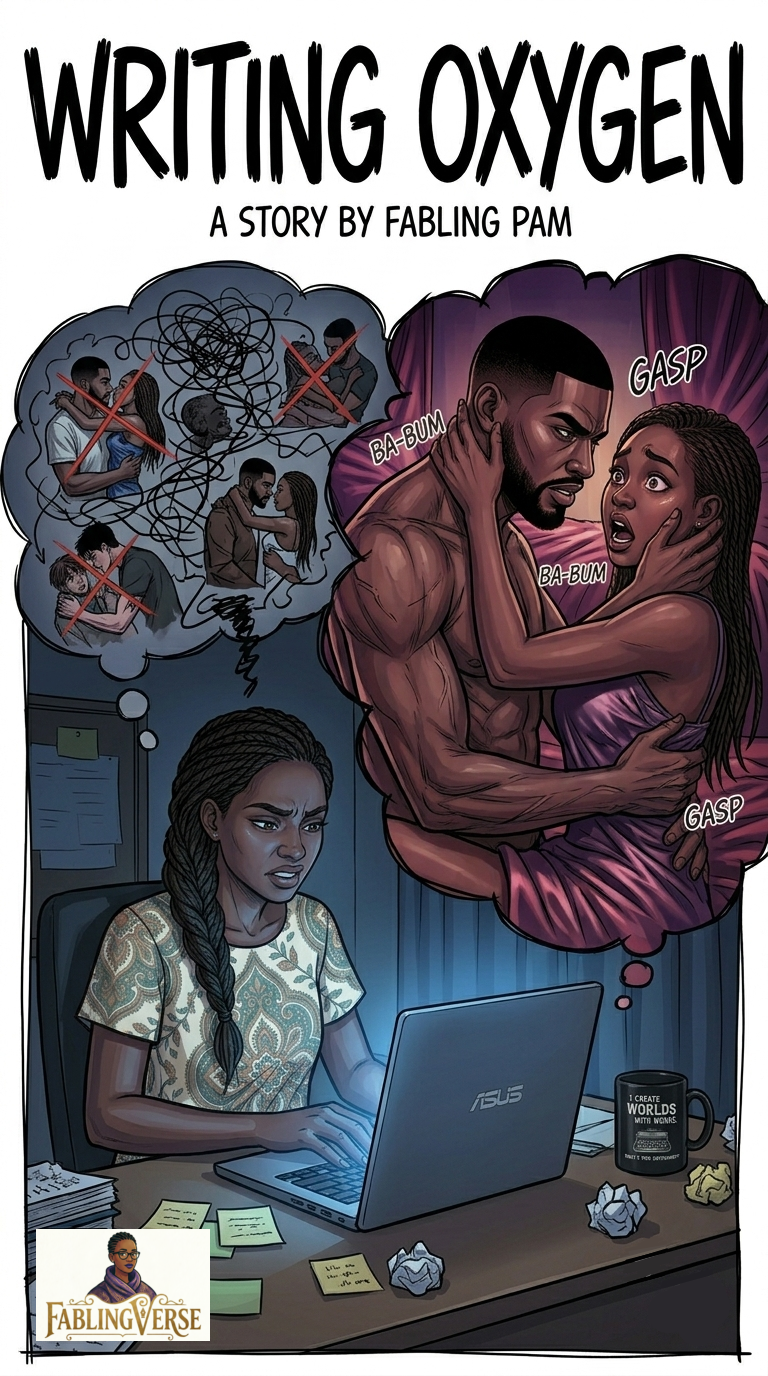
 

Chichi was in her mid-twenties, and the tick of the clock was growing louder with each passing day. Her friends were all married, settling into lives she felt slipping through her fingers. Men came and went, often leaving her with the same complaint: she was too much to handle. The fear of crossing into her thirties alone gnawed at her, so she took her mother’s advice. She buried her true self deep and wore the cloak of submissiveness like armour. That Sunday, in a church far from home where no one knew her, she hoped to find a fresh start.


Ade was a sight for sore eyes, handsome, well-built, especially for a church boy. Chichi couldn’t help but be drawn to him. He was cute, and after a few dates, she saw something different in him, something she wasn’t sure she liked. His beliefs were rigid, his ideals a throwback to an era long past. He found women in power distasteful, whether in politics or the pulpit, and believed a wife should bow completely to her husband’s will, never daring to raise her voice. He quoted Paul and Timothy with fervour, his eyes gleaming as he spoke of submission. Chichi smiled and nodded along, hiding her true thoughts behind a mask of compliance. Ade was the embodiment of the Traditional Christian Alpha male, her soon-to-be husband.


For Ade, Chichi was perfection. The woman he had prayed for. When he nervously asked if she was a virgin, she lowered her eyes, feigning remorse as she confessed she wasn’t, but assured him of her celibacy since finding Christ four years ago. Her honesty satisfied him, though the thought of not being her first gnawed at him. But he pushed the worry aside, content in the secret they now shared.


Chichi, on the other hand, smiled, pleased with her deception. ‘I won’t have to sleep with this foolish alpha male until we’re married,’ she thought, her stomach turning at the mere idea.


Months passed, and Ade introduced her to his parents. His mother’s eyes narrowed, sensing something amiss, but Chichi played her role flawlessly. She passed every test with ease: cooking, cleaning, and even the respectful kneel as she greeted them. Two months later, the wedding bells chimed at Chichi’s family church, binding them together as husband and wife, married.


The day after they were married, Chichi shed her cloak of submission. At first, the changes were small, almost imperceptible, but soon, the real Chichi emerged. She had promised to quit her job after marriage, but when Ade brought it up, she skilfully convinced him otherwise, quoting Proverbs 31 to support her argument. When he persisted, she ran to their pastor, tears in her eyes, and the pastor, unsurprisingly, took her side.


Chichi played the dutiful wife to perfection. She made sure Ade had food on the table every morning before he left for work and every evening when he returned. On weekends, she kept the house spotless, did the laundry, and shopped like the model wife. In public, she was the epitome of respectfulness, never a harsh word about her husband, and a regular face at church.


But Ade’s initial infatuation began to wane. He started to see flaws where once there had been none. Chichi, ever the strategist, would run to the pastor, tears streaming down her face, painting Ade as the villain who was making her feel worthless. It wasn’t long before Ade confronted her about it. She smirked, a subtle challenge in her eyes, and said, “Since I’m just a woman, and my opinions mean nothing to you, it’s better that a man of God talks some sense into you.” Her mockery was thinly veiled, but Ade swallowed his pride, brushing it off. True to form, Chichi called the pastor right after, letting him know that Ade didn’t want her to involve him in their affairs anymore.


The tension escalated. Ade pulled out of the choir, citing stress and responsibilities. Surprisingly, Chichi’s church attendance became less frequent as well. She no longer reported him to the pastor and joined him in playing truant. On the Sundays they skipped church, she made their home a haven, a slice of heaven where they could pretend all was well.


Two years passed. Ade was no longer the devout man he once was, but his beliefs about women remained unchanged. They were still childless, a fact that gnawed at him. Chichi, on the other hand, had climbed the ranks at her job, her pay cheque now surpassing his. When she excitedly told him about her promotion, jealousy clouded his happiness. He wanted a child, but more than that, he saw the opportunity to make her quit her job if she became a mother.


His frustrations grew, bubbling over into complaints about everything. Chichi, sensing the shift, decided it was time to stop playing nice. Her sharp retorts caught Ade off guard, and the first time she snapped at him, he was stunned. But she didn’t stop.


When he complained about her cooking, she told him to leave the food if it didn’t suit his taste. Eventually, she stopped cooking for him altogether, suggesting he find his meals elsewhere. His criticisms of her washing were met with a challenge to do it himself, and she threatened to stop if he didn’t ease up.


Chichi had taken control of their home, and Ade despised it. She informed him of her whereabouts when she left the house, but his orders not to go out fell on deaf ears. Her style of dressing remained unchanged, and he began to wonder if she knew she was a married woman. Suspicion gnawed at him. Was she having an affair with her boss? His doubts and despair led him to a bar, where he found solace in alcohol.


Three years into their marriage, Ade’s frustration reached a boiling point. After a plea to his mother for help, they found a semblance of peace. They even made love for the first time in what felt like forever. But one night, after drinking himself into a stupor, Ade returned home in the early hours, his mind clouded with alcohol and dark thoughts.


Chichi had stayed up all night, worry gnawing at her. When she heard his car pull into the driveway, relief was quickly replaced by anger. As he staggered toward the door, she made a decision. If she let this slide, he’d think he could get away with it again. When he knocked, she refused to open the door, leaving him out in the cold.


In the morning, Ade was furious. He stormed into the house, demanding an explanation. “Didn’t you hear me knocking, woman?” he shouted.


Chichi raised her hands in mock surrender. “Don’t start with me, Ade.” Their argument escalated, insults flying back and forth like daggers. He called her heartless; she called him a fool. He accused her of witchcraft, and she labelled him a weakling deluded by alpha male fantasies. But it was his final insult that cut the deepest. He called her a prostitute, accusing her of sleeping with her boss to get ahead.


Chichi’s laughter was sharp, a weapon in itself. “Look at this bastard, calling me a prostitute! Better go and ask your mother who your real father is.”


The words hit Ade like a sledgehammer. His response was instant. A slap that echoed through the room. Chichi, stunned but not cowed, retaliated, slapping him twice as hard and calling him a bastard.


Ade’s world tilted. A woman had dared to slap him, to challenge his authority. His ego, bruised and bleeding, demanded retribution. He lunged at her, pushing her to the ground. As he prepared to strike, she grabbed his leg, pulling him down with her. In a flash, she was on top of him, raining blows on his face.


Ade was momentarily stunned. The reality of a woman overpowering him, hitting him, was something he couldn’t comprehend. But he wasn’t done. He struck back, his knee connecting with her ribs, and with a savage head-butt, he knocked her to the side. In a rage, he began to strangle her.


Chichi’s vision blurred as she gasped for air. With the last of her strength, she clawed at his throat, her nails digging into his Adam’s apple. Ade released his grip, clutching his neck. She punched him in the ribs, pushing him off her, and scrambled to her feet, searching for something, anything, to defend herself. But Ade wasn’t finished.


He grabbed her leg, pulling her back down. This wasn’t over. When he looked into her eyes, he realized something had changed. The woman he married was gone, replaced by someone he no longer recognized. And in that moment, Chichi saw the same in him, a monster she needed to vanquish before he killed her.


As Chichi felt the weight of her husband’s body dragging her down, the room seemed to shrink around them, the air thick with tension. Her heart pounded as she reached for the side table, a desperate act of survival. With a surge of adrenaline, she lifted it, and as Ade lunged toward her, she swung it with all the force she could muster.


The sound of the impact was muted by the silence that followed. Time seemed to stop, holding its breath as blood trickled from Ade’s head onto her trembling chest. The table slipped from her grasp and hit the floor with a dull thud that went unnoticed. The only sound that filled the room was the frantic beating of their hearts, syncing in a moment of violence and vulnerability.


When time finally resumed its relentless march, Chichi’s breath hitched. “What have I done?” she whispered, her voice barely audible. Panic surged through her as she scrambled to sit up, cradling Ade’s head in her lap. Her fingers trembled as she checked for signs of life, relief washing over her when she felt his shallow breaths. But fear quickly replaced that relief, fear that those breaths could stop at any moment.


Fighting back the rising tide of dread, she gently placed a cushion beneath his head. Her hands shook as she reached for her phone, her voice quavering as she called for help, first the hospital, then the police.


A week later, Ade lay in a hospital bed, surrounded by his family. The room was filled with a heavy silence, the aftermath of a story that had already spread beyond its walls. Chichi entered, holding a brown envelope that felt like the weight of all her regrets. She greeted them, her eyes lingering on Ade’s mother, who glared back with a mixture of disdain and accusation. Ignoring the woman’s scowl, Chichi approached Ade’s father, handing him the envelope.


“When he wakes up, please have him sign it,” she said, her voice steady despite the turmoil within. “We’ll be out of each other’s lives for good.”


Ade’s father looked at her, the words he wanted to say dying in his throat as he glanced at his wife and son. Finally, he nodded, his expression unreadable. Chichi turned to leave, her bruised face a testament to the battle she had fought, both within and without. The swelling was almost gone, but the pain lingered.


As she walked out the door, she felt a strange sense of clarity. She had spent a week in reflection, coming to terms with the choices that had led her here. Desperation had driven her into marriage, but now she realized that freedom was more valuable than the facade she had tried to maintain. Being single no longer frightened her; in fact, the solitude of the past week had been the most peaceful time she’d had in years.


And then there was the child growing inside her, a secret she would guard until the baby was born. It was her decision to make, her life to live. Ade would never know. This child would be hers, and hers alone.


The End

Did you enjoy reading …and She Got Married? Was it too short?

Visit our Web Series Page for longer stories

1